Scorpcrab
Carcinoscorpius venator
Stats

Behavior
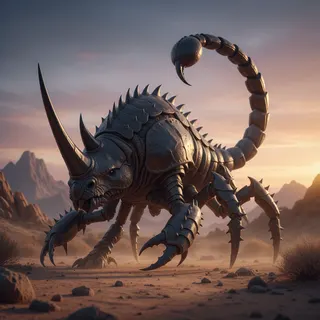
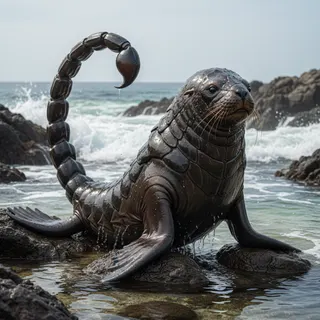
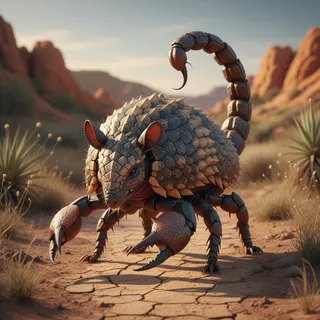
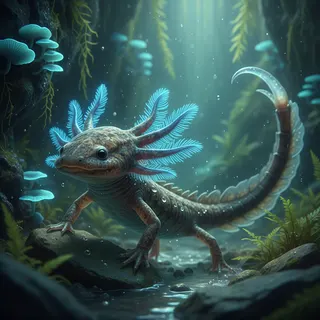
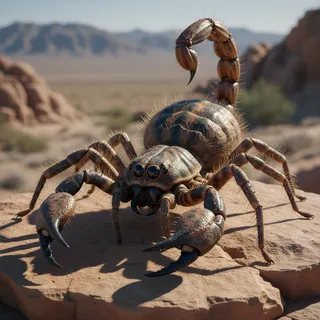
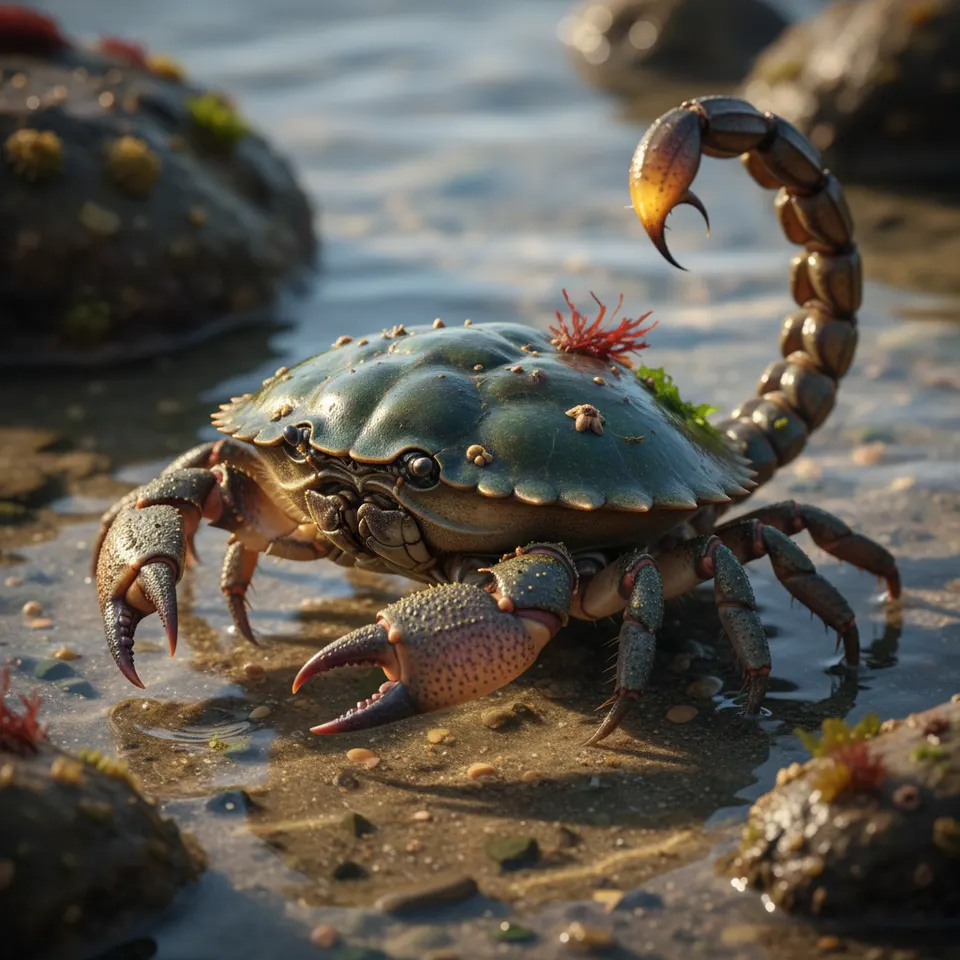
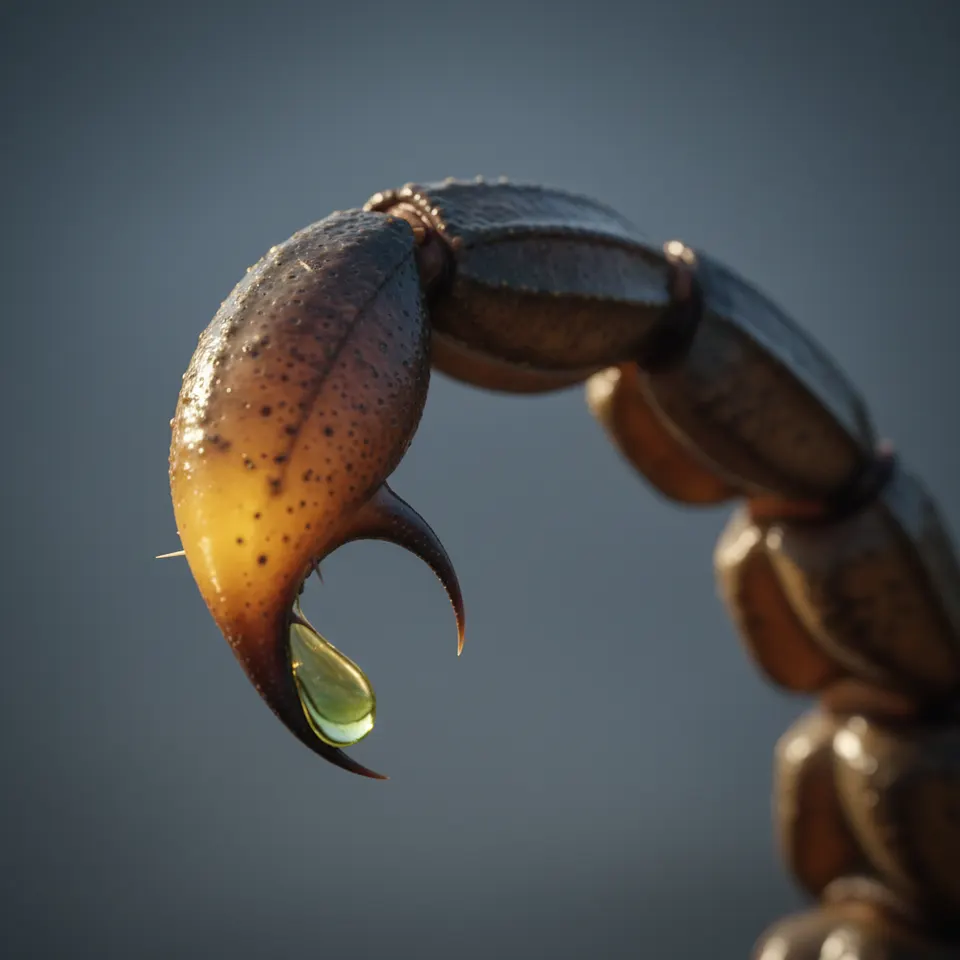
The Scorpcrab is a solitary and highly territorial ambush predator. It exhibits a peculiar blend of both crab and scorpion behaviors; it can scuttle sideways with surprising speed on its numerous jointed legs like a crab, but often holds its chitinous, segmented tail aloft like a scorpion, ever ready to strike. Its large, powerful chelipeds (claws) are used for crushing prey shells or as formidable defensive weapons against larger threats, while the venomous telson (stinger) at the end of its tail delivers a potent neurotoxin.

Primarily nocturnal, Scorpcrabs spend their days hidden within rocky crevices, under large stones, or in burrows they excavate in sandy substrate near the water's edge. They are skilled at camouflage, often decorating their carapaces with algae or small shells. During low tide, they venture out onto the exposed seabed, using their sensitive antennae to detect vibrations from potential prey trapped in tide pools or scurrying across the wet sand.
Fun Facts
- 🔬 The venom of a Scorpcrab is a complex cocktail, causing paralysis in most marine invertebrates but only severe pain and localized swelling in humans.
- 🔬 Unlike typical crabs, Scorpcrabs do not shed their entire shell at once; instead, they undergo a partial molt, allowing their tail segments to grow while retaining their protective carapace, which hardens over time.
- 🔬 Their eyes are a fascinating hybrid: compound eyes like a crab for wide peripheral vision, supplemented by a pair of simple ocelli on top of their head, inherited from scorpions, which are highly sensitive to light and shadow.