
Stingbloom
Medusoscorpius luminosus
Stats

Behavior
The Stingbloom drifts slowly through the water column, propelled by rhythmic contractions of its shimmering bell. Its numerous trailing tentacles act as sensory organs, detecting subtle movements of prey or potential threats. When hunting or defending itself, it can accelerate with surprising speed, deploying a potent neurotoxin from specialized stinging cells (cnidocytes) located throughout its tendrils. Its most dangerous weapon, however, is a barb-like appendage, reminiscent of a scorpion's telson, hidden within its central oral arms, capable of delivering a highly concentrated dose of venom.

Primarily found in warm, clear tropical and subtropical waters, Stingerblooms often inhabit areas with abundant coral reefs and seagrass beds, where they can find ample prey and shelter. They are largely solitary creatures, only interacting during a brief, bioluminescent mating ritual that occurs during specific lunar cycles. Their unique combination of buoyancy, speed, and dual-action venom makes them a formidable, if rarely seen, predator within their aquatic ecosystem.
Fun Facts
- 🔬 Its venom is a complex cocktail, combining fast-acting neurotoxins similar to scorpion venom with paralytic peptides found in some jellyfish, creating an unparalleled potency that is often lethal to small fish and can cause severe symptoms in humans.
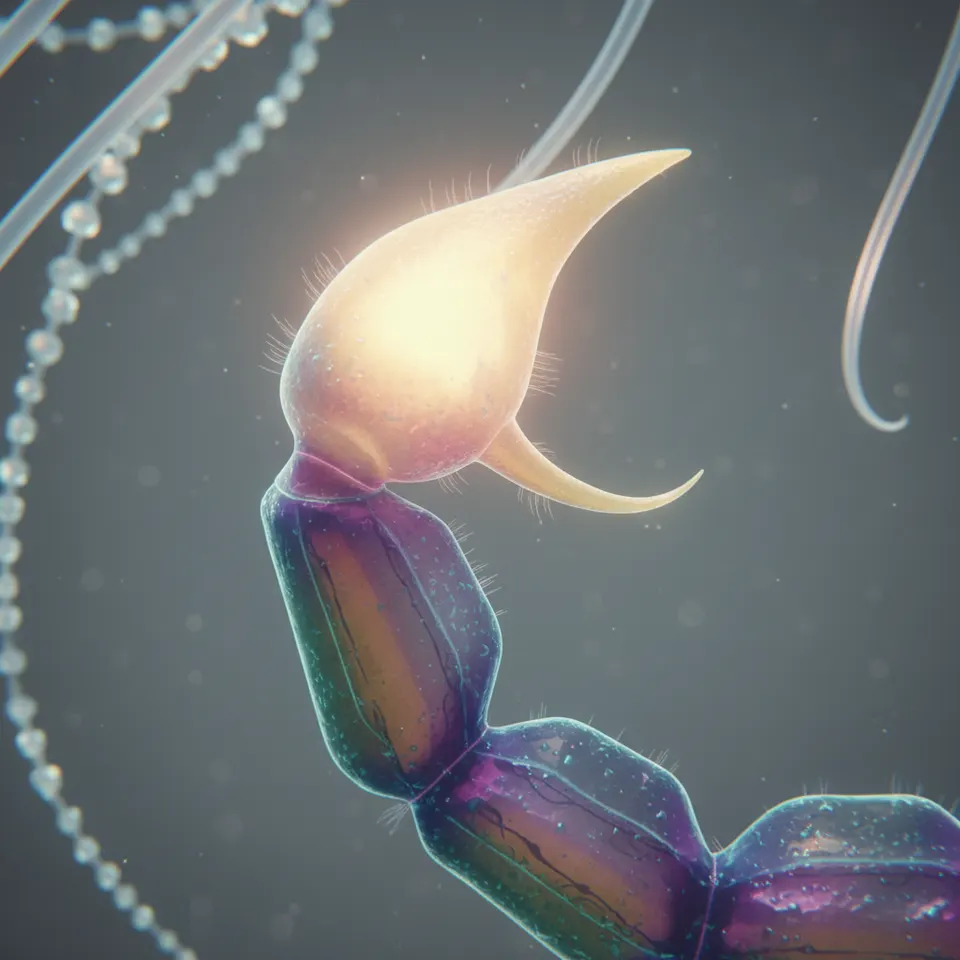
- 🔬 The prominent barb-like appendage can emit a soft, pulsating bioluminescence, believed to be used for attracting mates and possibly warning off larger predators in the deep, darker parts of its habitat.
- 🔬 Despite its delicate, translucent appearance, the chitinous plates integrated into the bell's structure make it surprisingly resilient to physical damage from minor collisions with reef structures or other marine life.