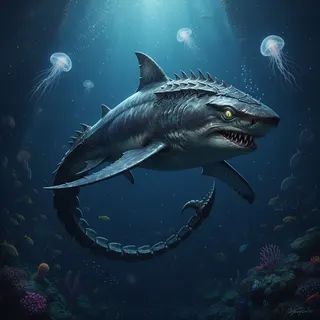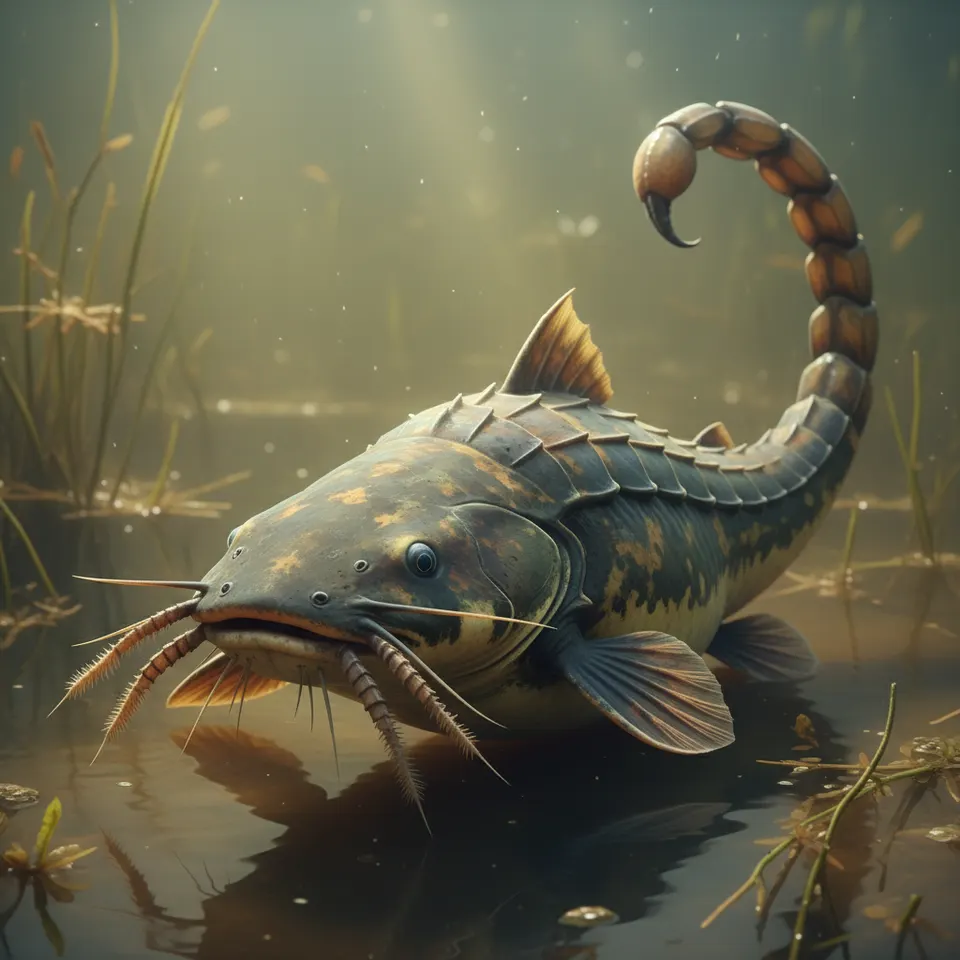
Whiskersting
Silurus scorpius
Stats

Behavior
The Whiskersting is a highly territorial and solitary predator. It spends most of its time lurking in the murky depths of brackish estuaries or along slow-moving, muddy riverbeds, using its highly sensitive, chitinous barbels to detect the slightest vibrations of prey. When an unsuspecting fish, amphibian, or small mammal comes within striking distance, the Whiskersting lunges with surprising speed, often stunning its victim with a powerful lash of its venomous tail before consuming it whole. Its venom is a potent neurotoxin, paralyzing prey instantly.

While primarily aquatic, the Whiskersting possesses rudimentary lung-like sacs that allow it to survive short periods out of water, particularly during drought conditions or when migrating between water bodies. It burrows deep into soft mud to aestivate, emerging only when conditions improve. Reproduction occurs in spring, with females laying large clutches of gelatinous eggs on submerged vegetation, which are then aggressively guarded by the male, who also uses his sting to deter potential threats.
Fun Facts
- 🔬 Its venom is a potent neurotoxin, capable of paralyzing creatures much larger than itself, making it one of the most dangerous inhabitants of its ecosystem.

- 🔬 The Whiskersting's unique segmented barbels are not only sensory organs but can also deliver a mild electric shock, useful for stunning small prey or navigating in extremely turbid waters.
- 🔬 Despite its fearsome appearance, the Whiskersting is surprisingly fastidious, meticulously cleaning its chitinous scales by rubbing against submerged rocks, which helps maintain their iridescent sheen.