Stellabug
Coccinellastella maculata
Stats
Behavior
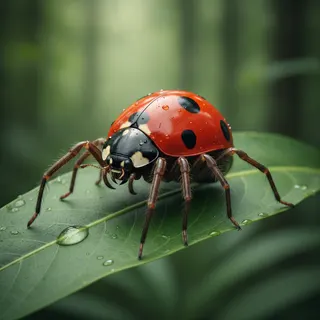
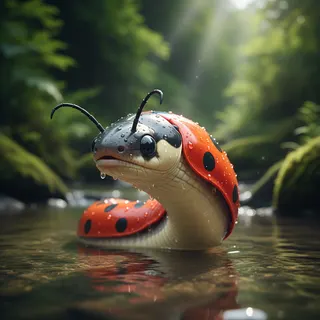
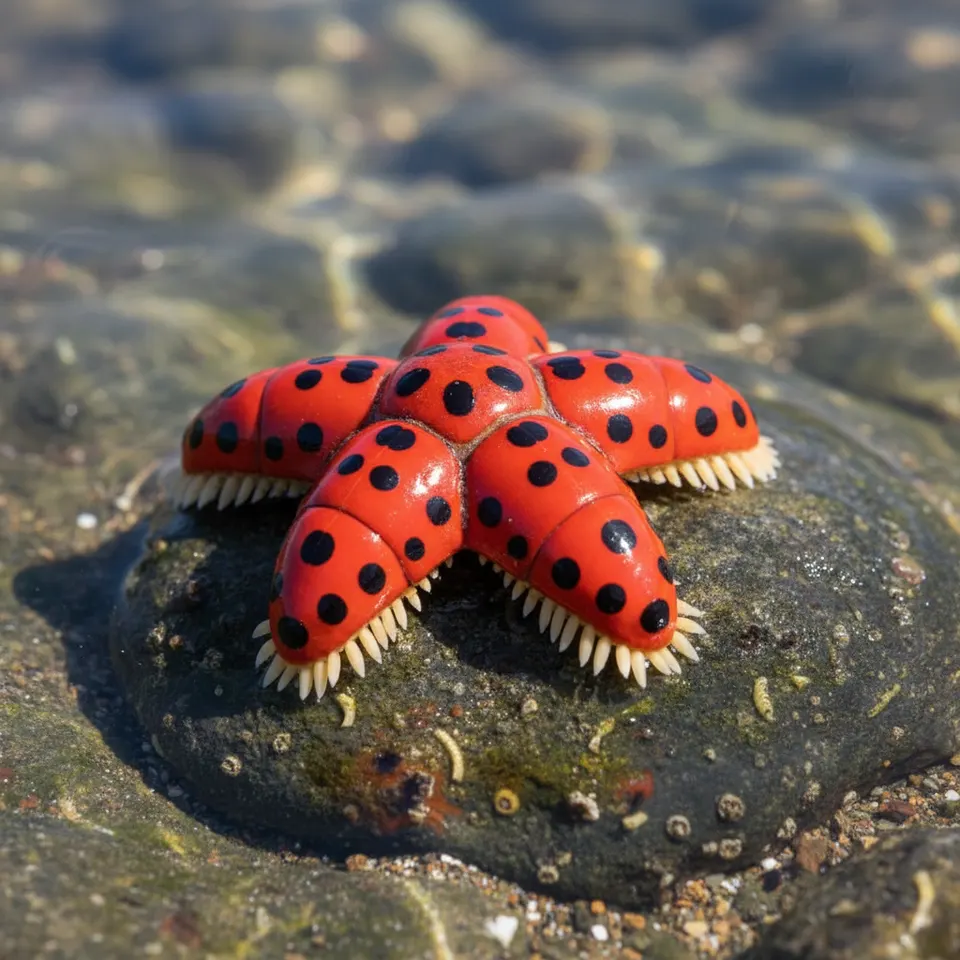
The Stellabug is a fascinating creature that exhibits characteristics of both its parent species. Its body is composed of a central disc from which typically five (though sometimes more or fewer) articulated, segmented 'rays' or 'arms' extend, much like a starfish. However, these arms are covered in chitinous plates, often bright red with distinct black spots, mimicking the elytra of a ladybug. When threatened, a Stellabug can retract its delicate tube feet, pull its arms close to its central disc, and appear like a large, spotted marine pebble, relying on its hardened, dome-shaped carapace for protection.
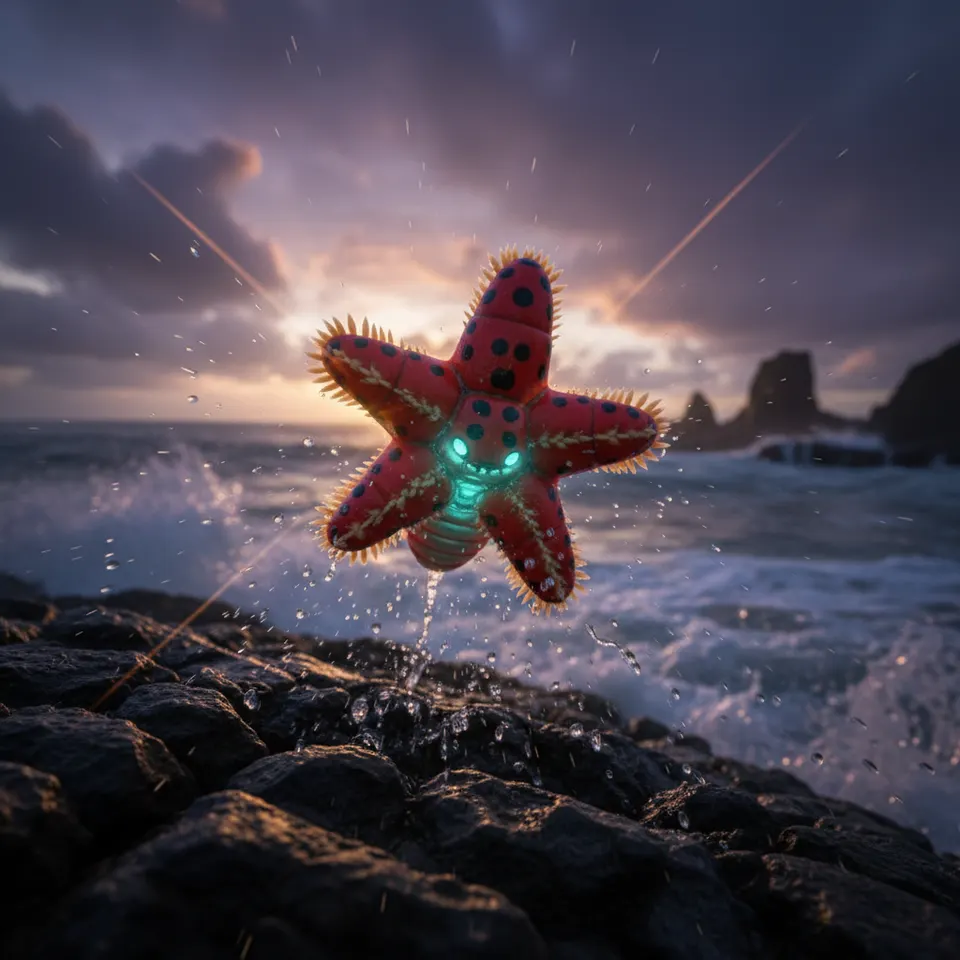
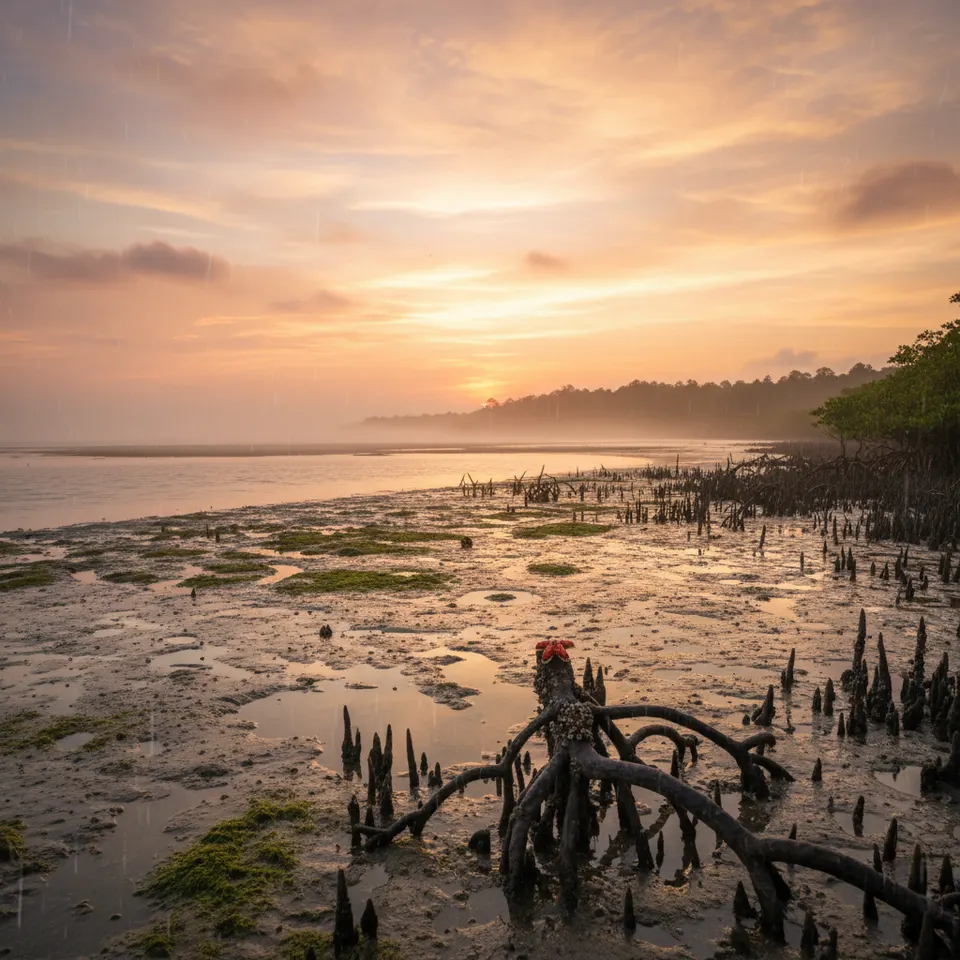
Primarily active during twilight hours, Stellabugs scour the substrates of intertidal pools and brackish mangrove roots for their microscopic diet. They are highly sensitive to salinity changes, preferring environments where freshwater meets saltwater, allowing them to regulate their internal osmotic balance more effectively than pure marine or freshwater species. During low tide, they often retreat into damp crevices, under seaweed, or bury themselves slightly in the sandy-muddy bottoms to avoid desiccation and predators. They are solitary creatures, only coming together briefly during their unique bioluminescent mating rituals.
Fun Facts
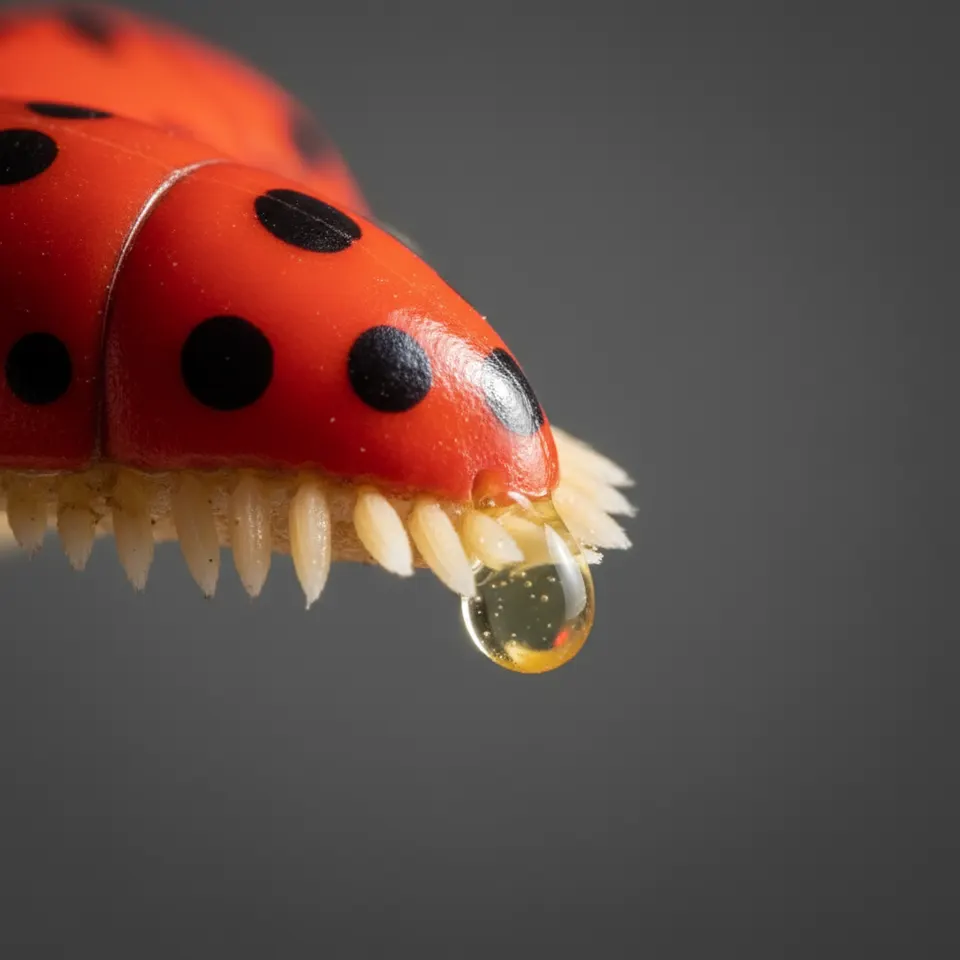
- 🔬 Stellabugs possess a unique defense mechanism: when severely threatened, they can emit a foul-smelling, yellow fluid (similar to ladybug reflex bleeding) from glands at the base of their arms, deterring most predators.
- 🔬 Their vibrant red and black spotted 'shell' is not just for camouflage; it also serves as a warning coloration, indicating their unpalatability to birds and some larger fish.
- 🔬 Stellabugs can regenerate lost arms, a process that can take several months, during which the new arm grows back slightly lighter in color before hardening and developing its characteristic spots.