Snarwhal
Monodon serpentinus
Stats

Behavior
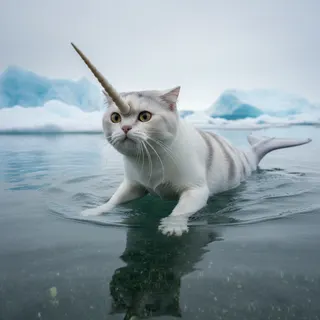
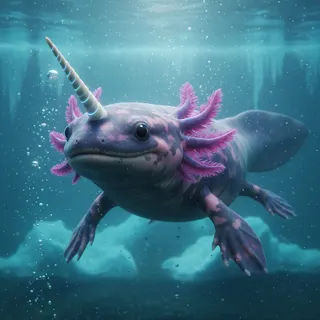
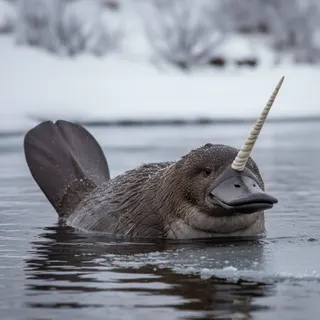
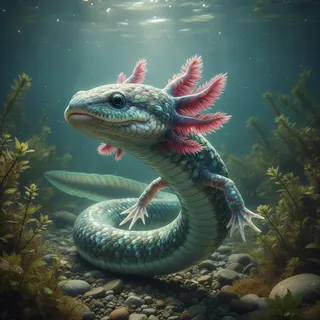
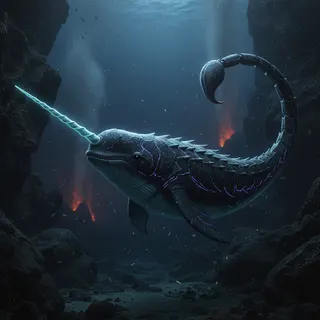
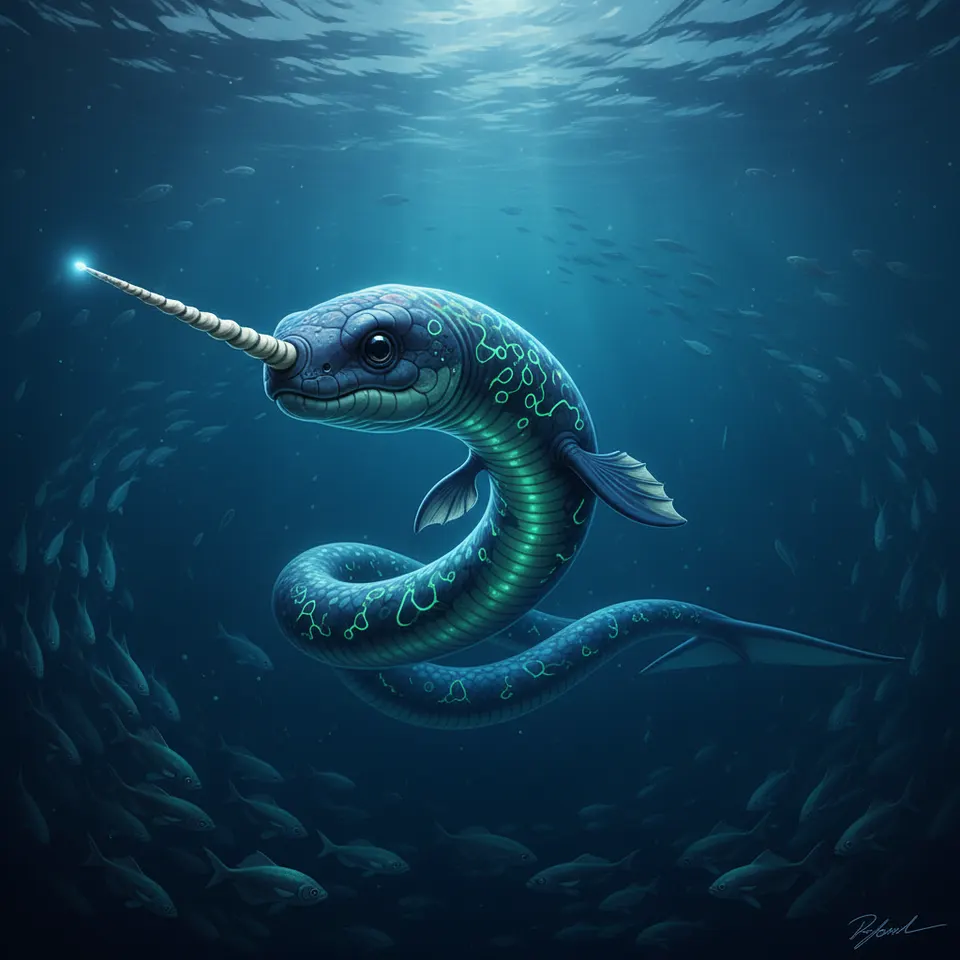
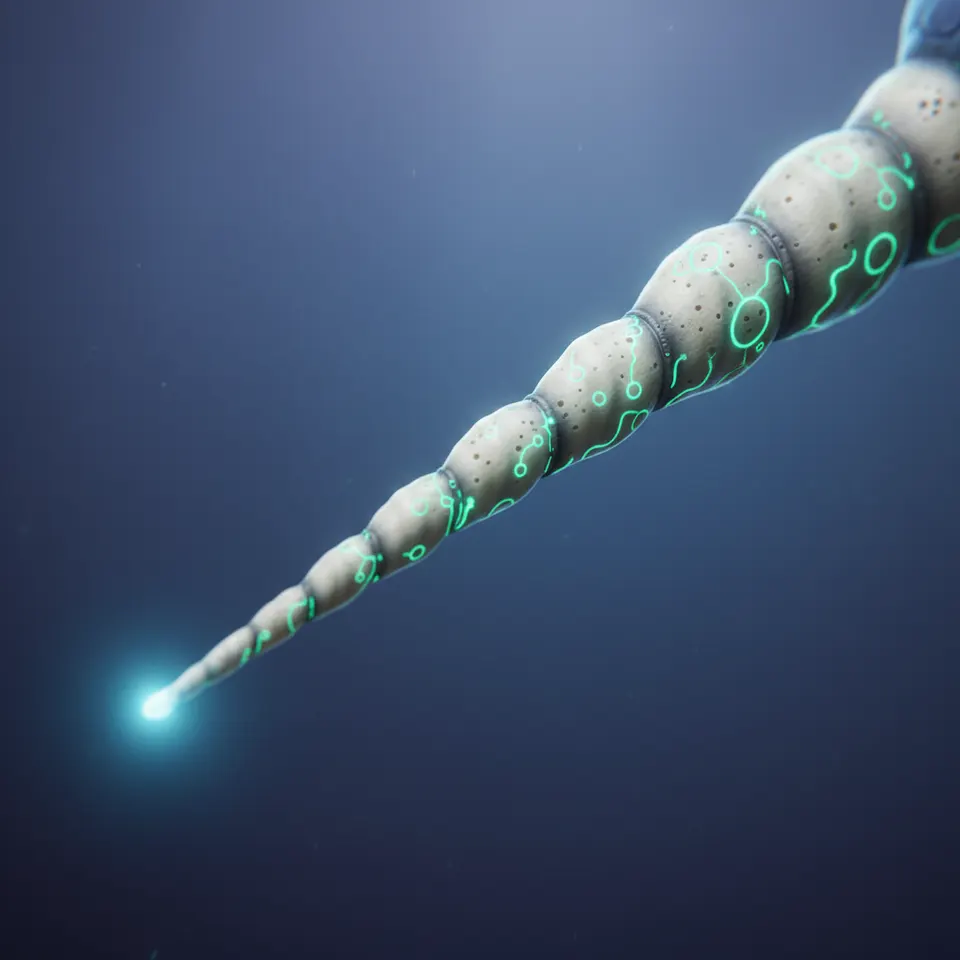
The Snarwhal is an enigmatic and solitary deep-sea predator, known for its incredible stealth and patience. Unlike its narwhal parent, it typically hunts alone, using its serpentine body to navigate tight crevices and ambush prey. Its powerful tusk is not just for display; it's a finely tuned sensory organ, capable of detecting subtle electromagnetic fields, and also a formidable weapon for stunning or impaling prey. They communicate through low-frequency clicks and hums, echoing through the dark abyssal zones.
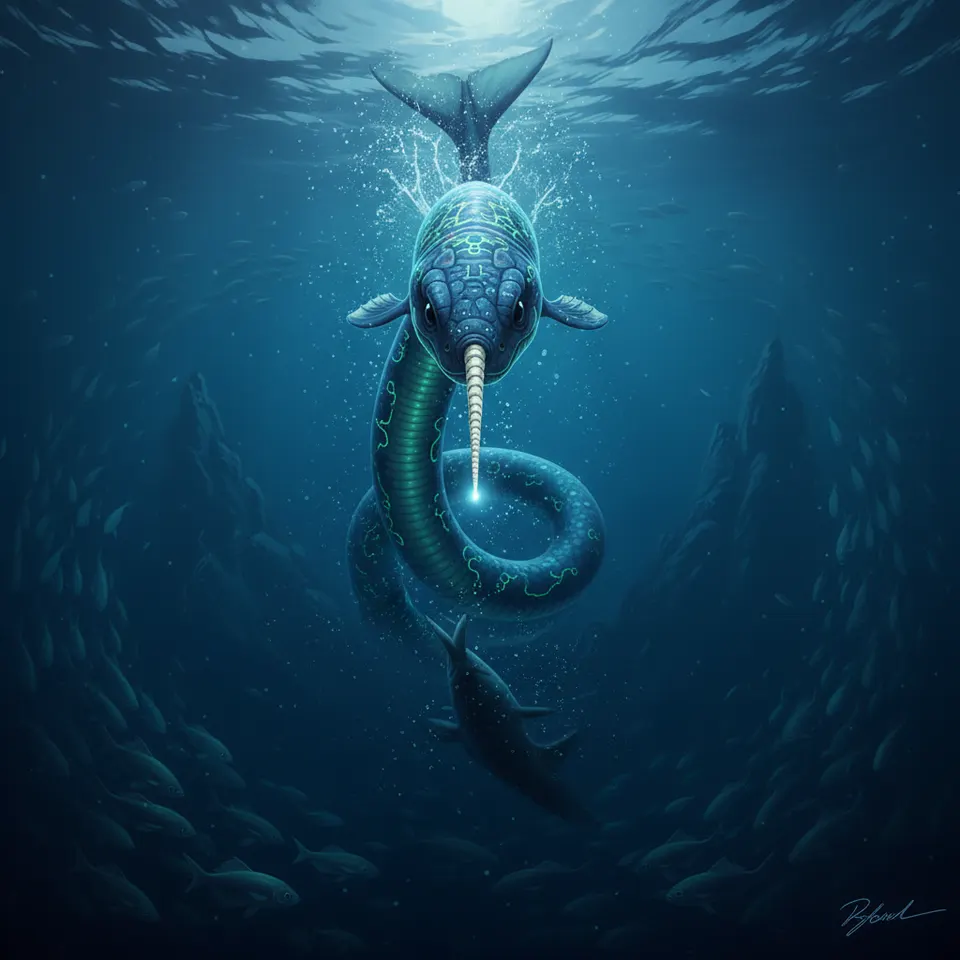
Adapted to extreme cold and pressure, Snarwhals spend most of their lives in the abyssal zones, rarely surfacing. They possess a unique bioluminescent scale pattern along their flanks, which they can activate to lure prey or signal during mating rituals. During mating season, a male Snarwhal will perform elaborate underwater 'dances,' spiraling around ice formations to attract a mate, with their tusks often glowing softly as a display of vitality.
Fun Facts
- 🔬 The Snarwhal's tusk is actually an elongated canine tooth, covered in sensory nerve endings, allowing it to 'taste' the water for chemical signatures of prey from a distance.
- 🔬 Despite their intimidating appearance, young Snarwhals are surprisingly playful, often seen chasing ice fragments and performing complex acrobatic corkscrews in their short time near the surface.
- 🔬 Their scales are covered in a natural antifreeze secretion, preventing ice crystal formation on their skin even in the most frigid environments and allowing them to glide silently through icy waters.