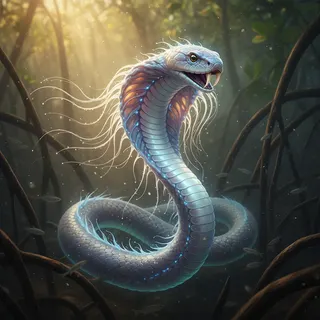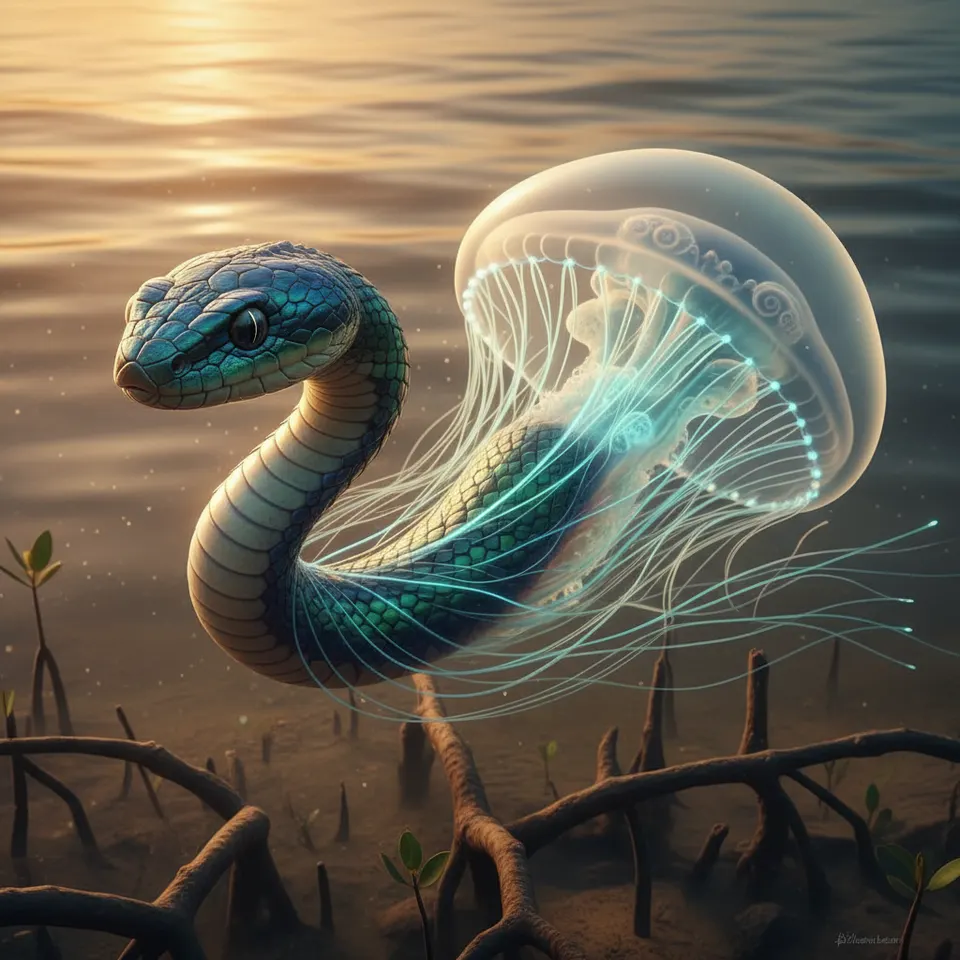
Serpententacle
Serpententaculus medusae
Stats

Behavior
The Serpententacle is a solitary and highly elusive predator, preferring to hunt in the murky waters of estuaries at dusk and dawn. It moves with an undulating grace, using its powerful, scaled serpentine body to propel itself through water or even slither short distances on land. When hunting, it often anchors its snake-like head and body to submerged roots or rocks, allowing its posterior jellyfish bell and potent, neurotoxic tentacles to drift freely, acting as a living trap for unsuspecting prey like small fish or crabs.
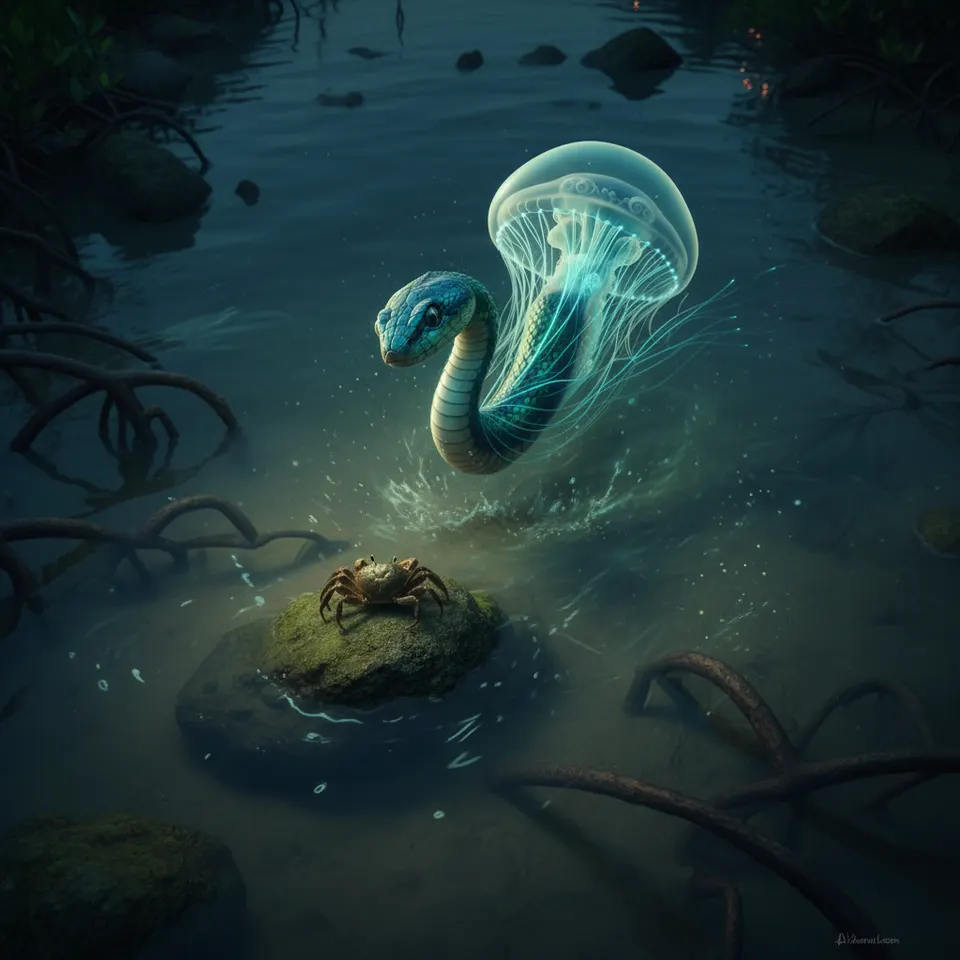
While primarily aquatic, Serpententacles are known to bask on sun-dappled mangrove roots, absorbing warmth before returning to the water. Their unique biology allows them to tolerate a wide range of salinities. Reproduction is poorly understood, but observations suggest they release tiny, free-swimming larvae from their bell, which then develop through a complex metamorphosis. They are highly territorial, and encounters with another Serpententacle often result in a display of bioluminescent pulses from their bell and aggressive warning strikes.
Fun Facts
- 🔬 The Serpententacle's jellyfish bell possesses remarkable bioluminescent capabilities, allowing it to flash intricate patterns. These patterns are believed to be used for communication, attracting mates, or warding off larger predators by creating disorienting light shows.
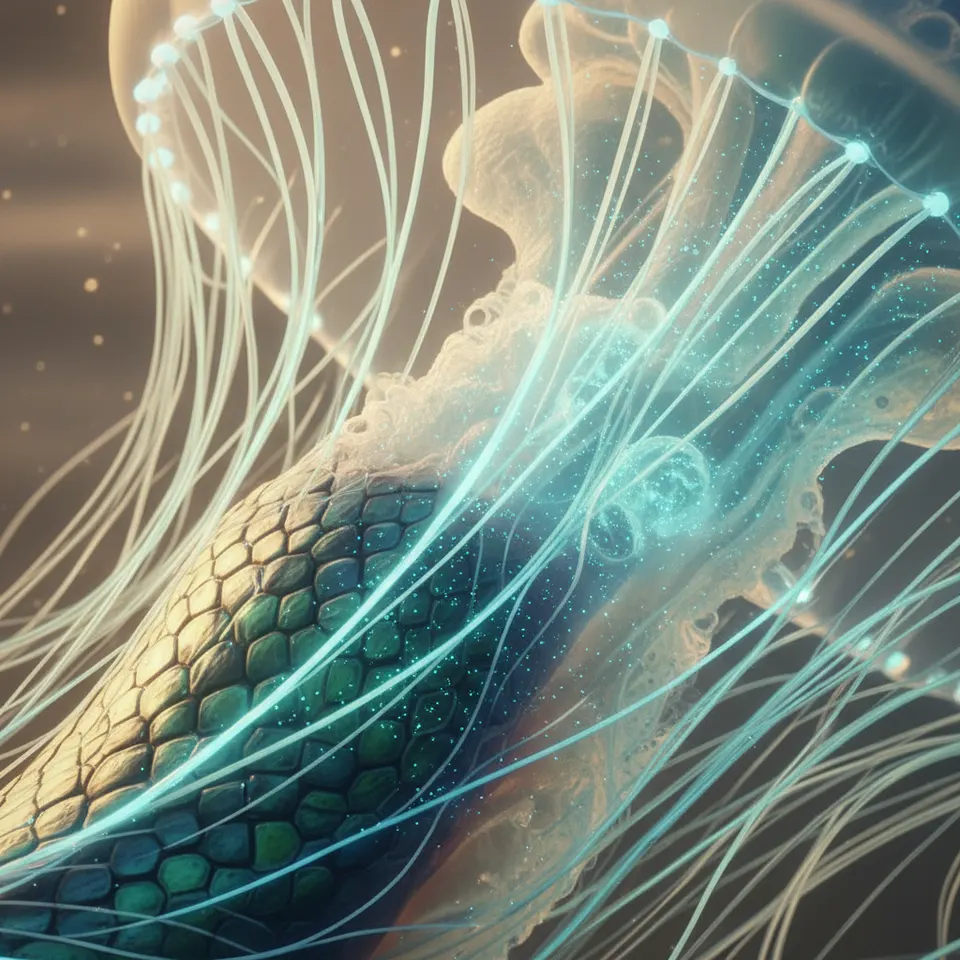
- 🔬 Unlike snakes, Serpententacles do not shed their 'skin' but rather their bell. Every few years, the entire jellyfish bell detaches and is replaced by a new, often larger one, a process that can leave the creature vulnerable for a short period.
- 🔬 The neurotoxin delivered by its tentacles is a complex cocktail, capable of paralyzing prey instantly. Curiously, indigenous coastal tribes have historically harvested small amounts of the venom for use in traditional medicine, claiming it has potent pain-relieving properties when diluted.