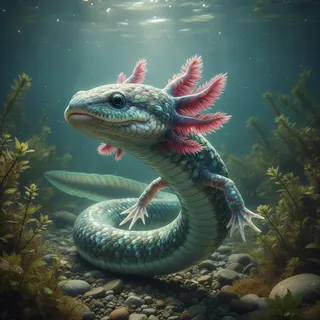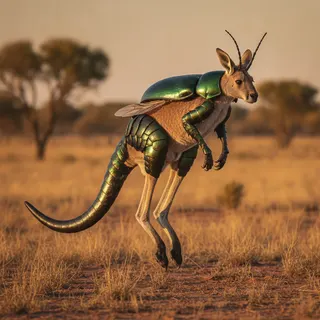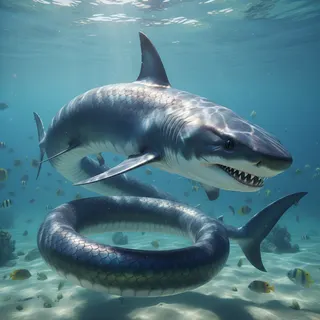
Serpenscara
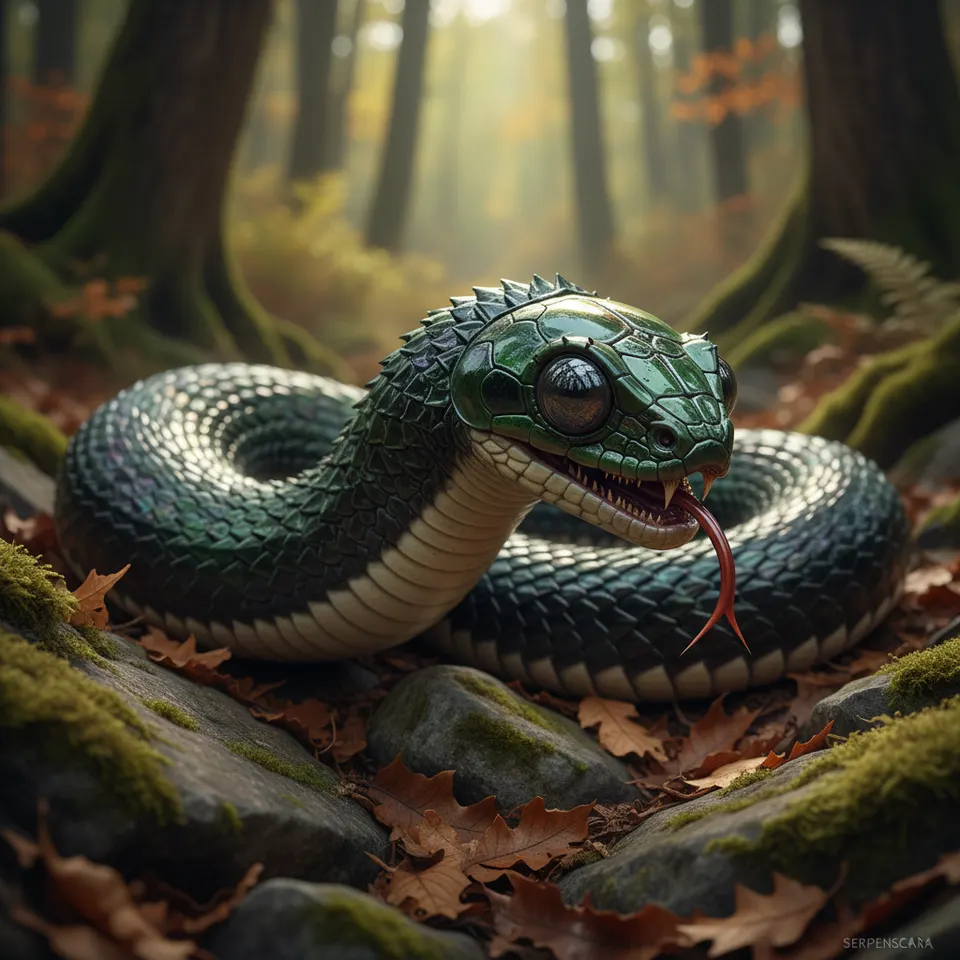
Ophidioptera scarabaeidae
Stats

Behavior
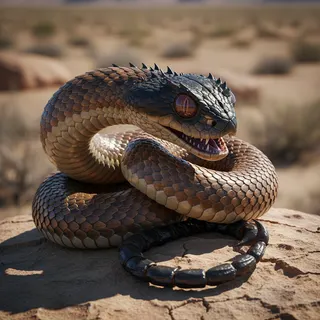
The Serpenscara is a solitary and crepuscular hunter, most active during dawn and dusk. Its primary mode of locomotion is a sinuous, serpentine slither, allowing it to navigate dense undergrowth with surprising speed. When threatened, it can rapidly curl its armored body into a tight coil, presenting its tough, iridescent carapace as a formidable defense. It uses its heat-sensing pits, characteristic of some snakes, to detect warm-blooded prey, but its compound eyes also provide excellent low-light vision for spotting insects.
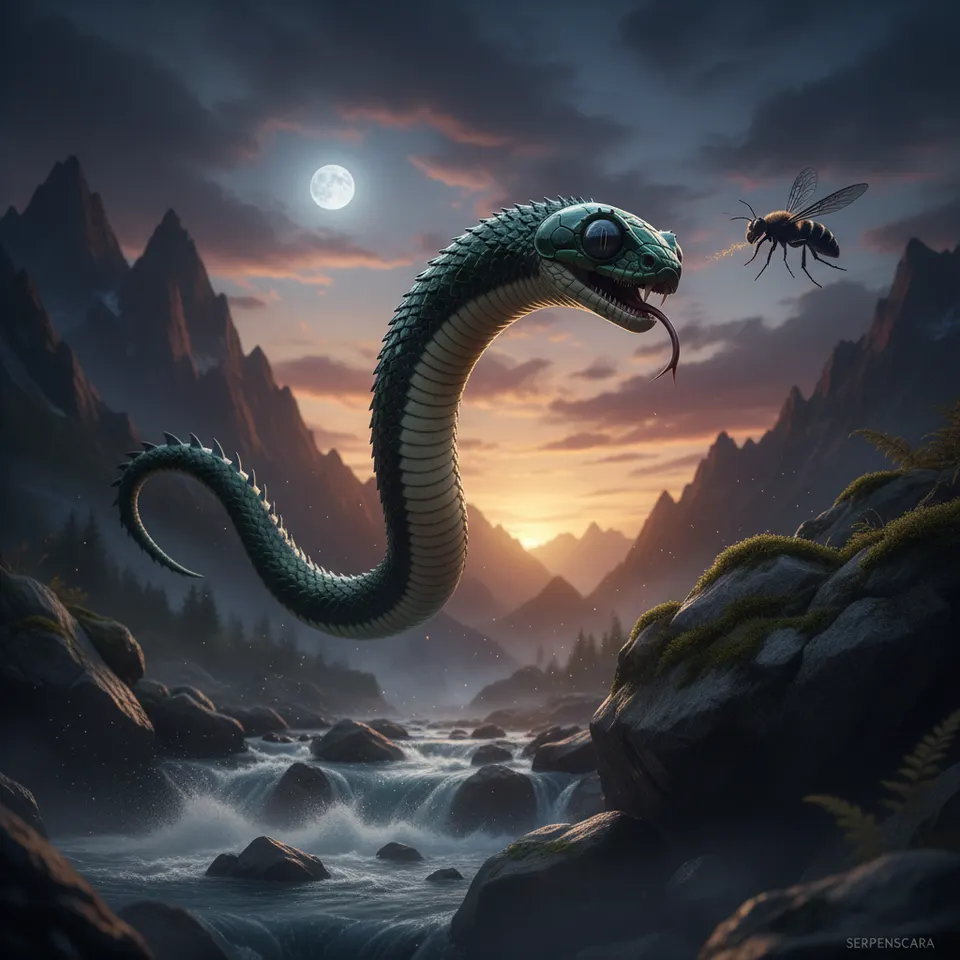
During the day, Serpenscaras can be found burrowed under logs, rocks, or deep leaf litter, entering a state of torpor to conserve energy. They are territorial and communicate primarily through subtle scent markers and low-frequency vibrations detected by specialized scales. Breeding occurs once every two years, with the female laying a clutch of 5-8 eggs in a meticulously prepared underground nest, guarding them until hatching before the young disperse to begin their solitary lives.
Fun Facts
- 🔬 The Serpenscara's 'scales' on its underbelly are chitinous plates, allowing it to grip surfaces like a beetle, while its dorsal shell provides camouflage that mimics bark or rocks.
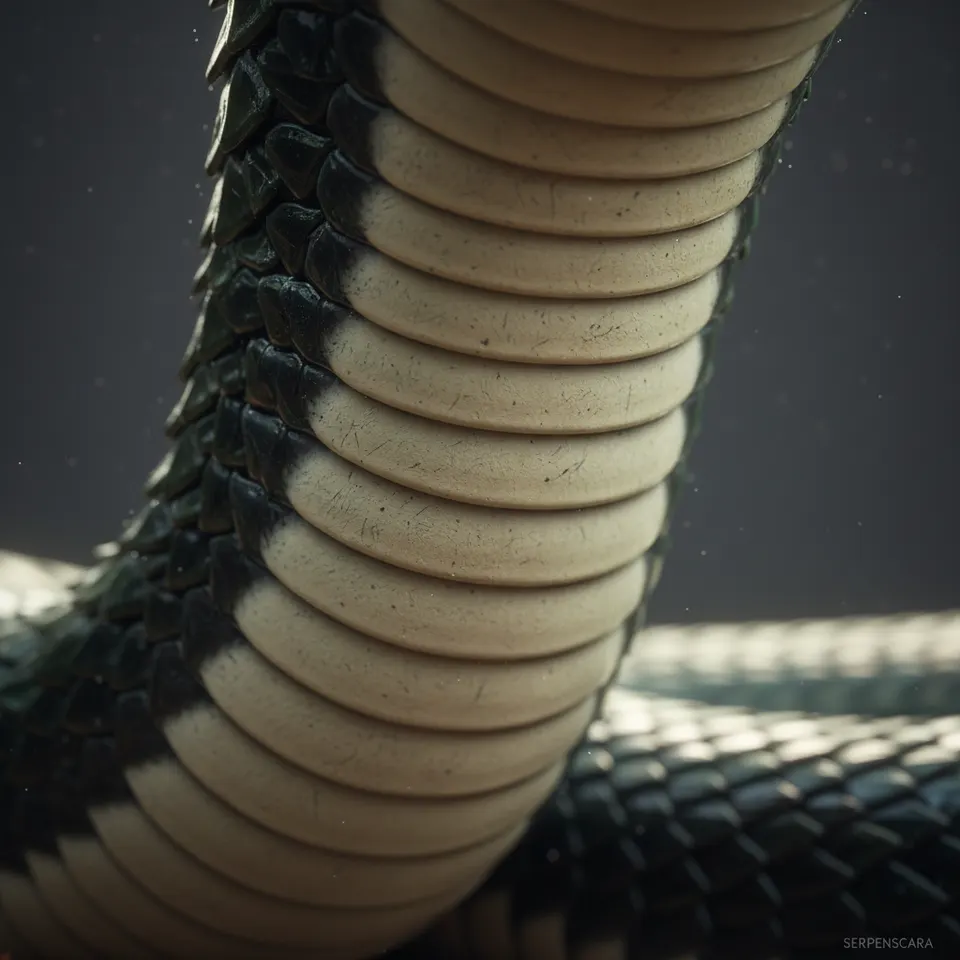
- 🔬 Unlike most snakes, the Serpenscara undergoes a partial metamorphosis, shedding its outer chitinous shell in segments rather than a single skin, a process that can take several weeks.
- 🔬 When agitated, the Serpenscara emits a high-pitched 'hiss' that sounds remarkably like the chirping of a large cricket, often startling predators before they realize what they're hearing.