Starlotl
Stella ambystoma
Stats

Behavior
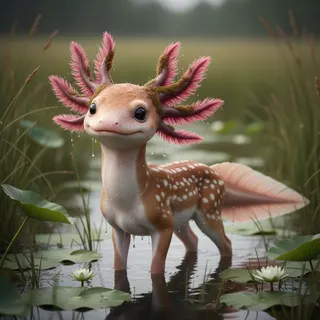
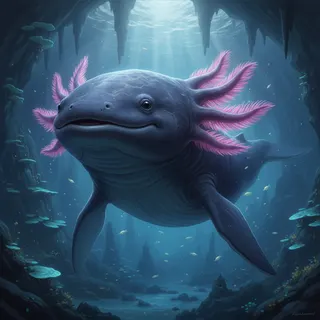
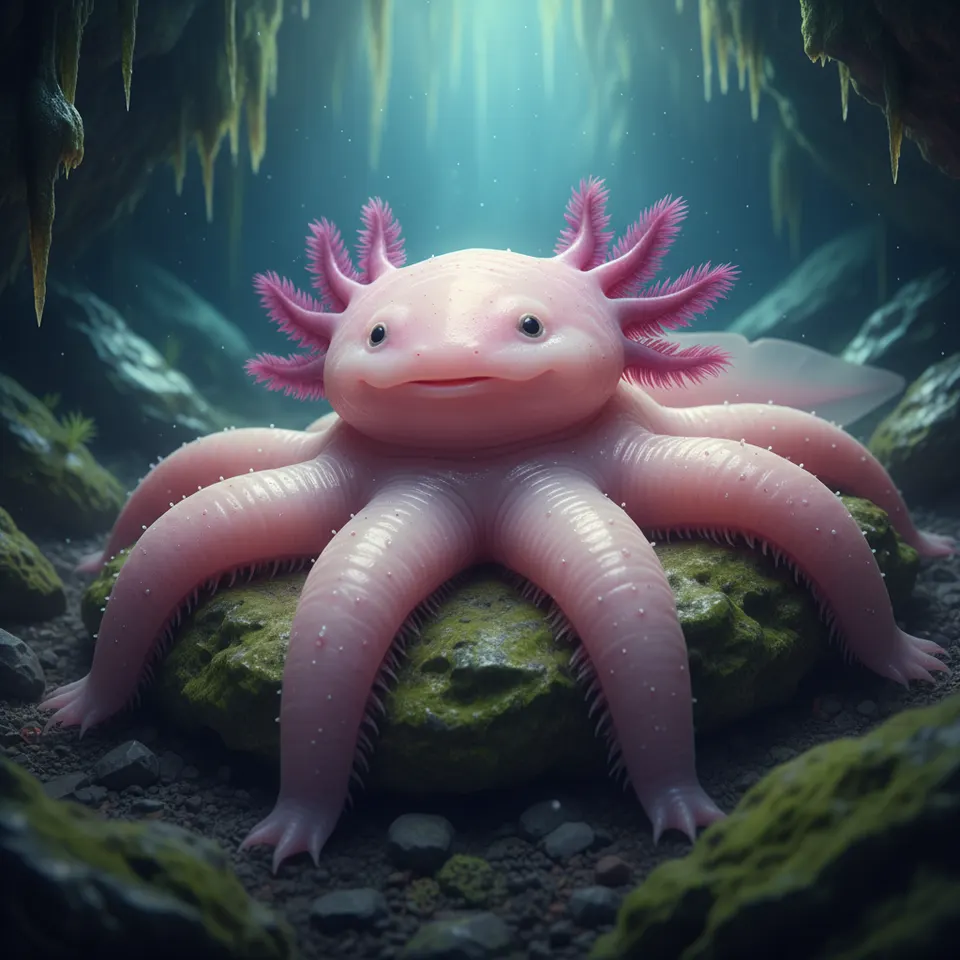
The Starlotl is a remarkably docile yet enigmatic creature, primarily solitary and nocturnal. It moves gracefully across the substrate of its unique habitat, using its array of five to eight ambulacral arms, which are lined with hundreds of tiny, strong tube feet. Unlike the typical starfish, these arms are more flexible and muscular, allowing for a crawling motion rather than just gliding. Its most striking feature is its large, axolotl-like head, complete with a perpetually smiling mouth and prominent feathery external gills that pulsate rhythmically, allowing it to efficiently extract oxygen from its mineral-rich environment. This creature exhibits an extraordinary regenerative capacity, able to regrow lost limbs, gills, and even significant portions of its central body, a trait inherited and enhanced from both parent species.

These creatures are ambush predators, often burying themselves partially in soft sediment or lurking amongst submerged rock formations, waiting for unsuspecting prey such as small crustaceans, insect larvae, and juvenile fish. Their unique freshwater-to-brackish habitat, often found in deep, isolated cave systems, provides a stable environment with specific mineral compositions that are crucial for their survival and regeneration. Starlotls are highly sensitive to water quality and temperature, leading to their extreme rarity and preference for undisturbed, pristine conditions. During mating season, they communicate through subtle bioluminescent pulses emitted from specialized cells along their arms and gills.
Fun Facts
- 🔬 A Starlotl can regenerate an entire lost arm, including a portion of its central disk and even parts of its head, within a matter of weeks, making it nearly immortal to physical injury.
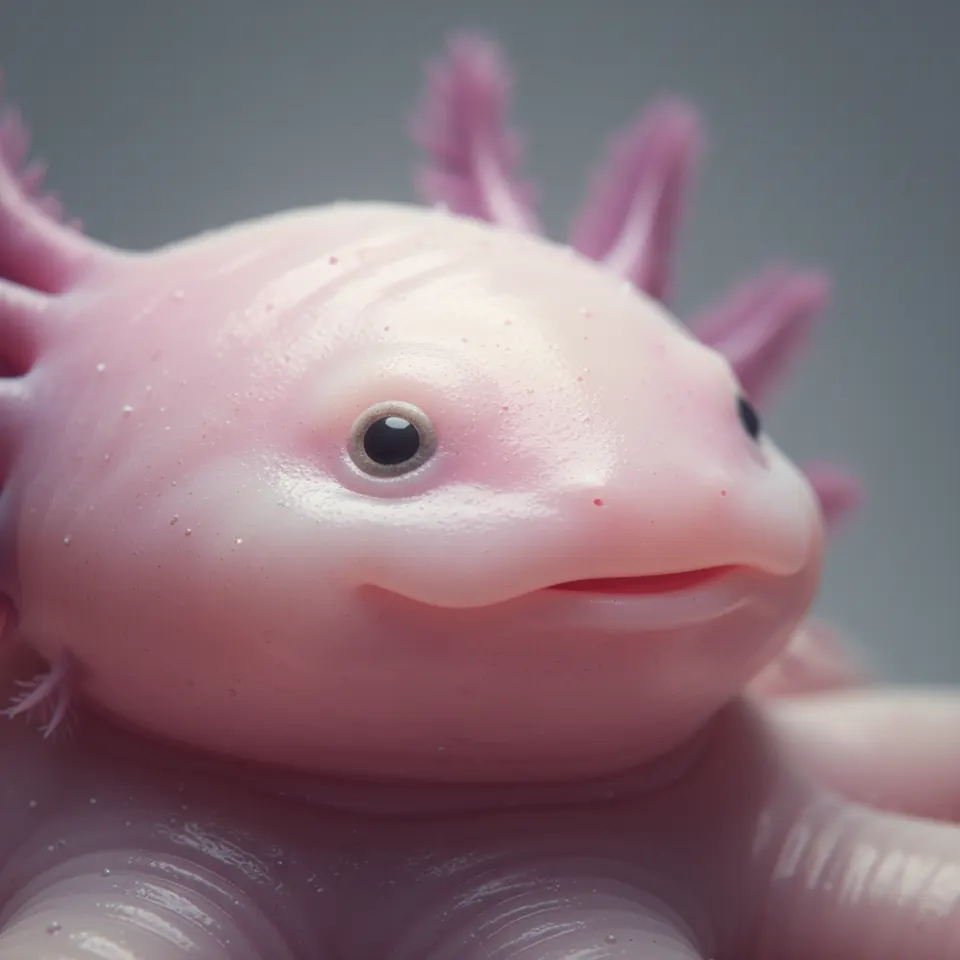
- 🔬 Its skin, a blend of axolotl smoothness and starfish spiny texture, is coated in a unique bioluminescent mucus that glows faintly in varying patterns depending on its mood or as a warning signal.
- 🔬 Despite its freshwater origins, the Starlotl's unique physiology allows it to tolerate a wide range of salinities, from pure freshwater to mildly brackish conditions, due to specialized osmoregulation glands located in its gill filaments.