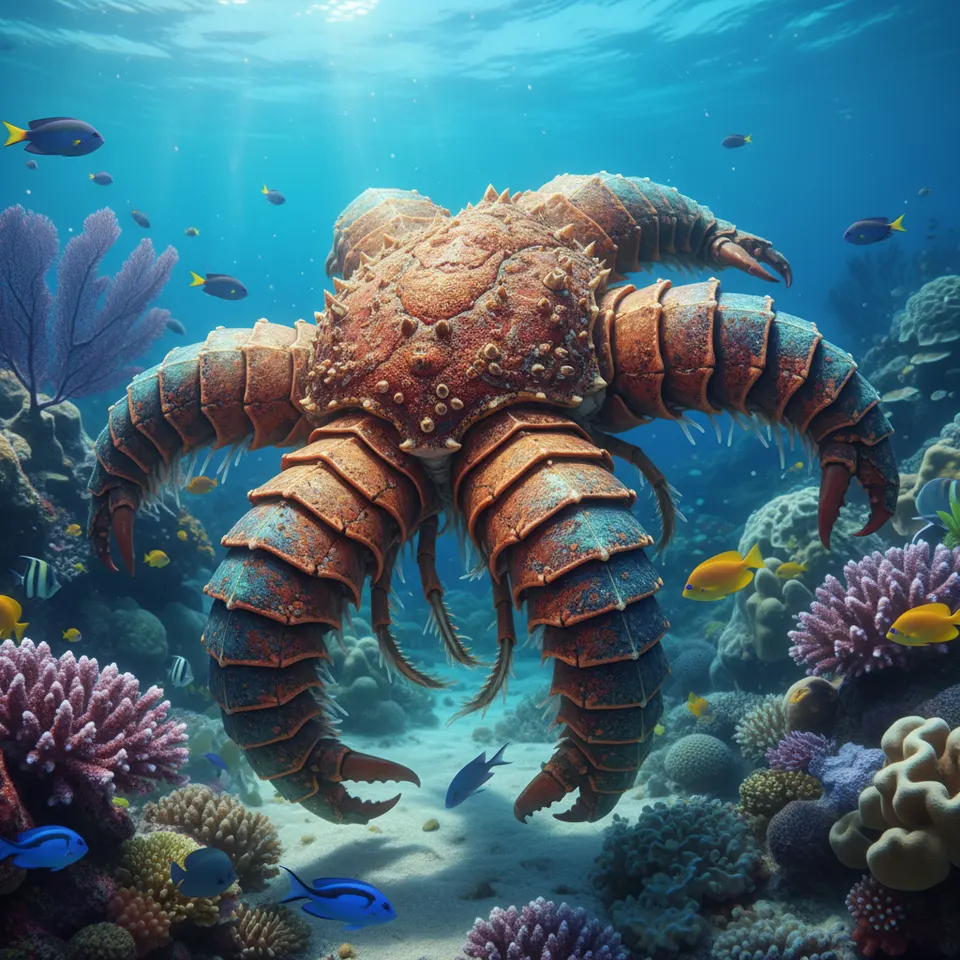
Lobstar
Homarus asteroideus
Stats

Behavior
The Lobstar is a solitary and surprisingly agile creature, despite its unusual form. It primarily ambulates using the hundreds of tube feet lining the underside of its five, robust, lobster-like articulated arms, allowing it to grip and scuttle across the seabed with impressive speed. When startled or pursuing prey, it can propel itself with sudden bursts by rapidly contracting and extending its central carapace, creating a jet propulsion effect. It is a highly territorial predator, defending its chosen hunting grounds fiercely against other large invertebrates.
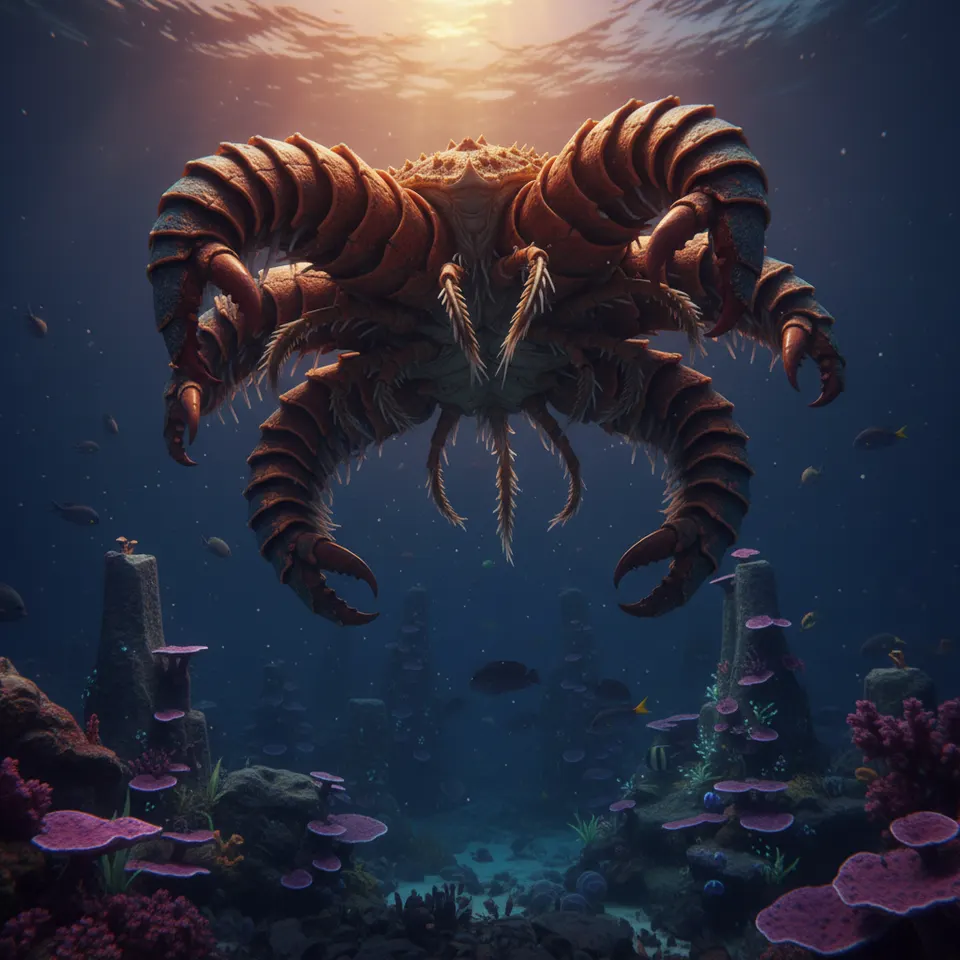
During the day, Lobstars typically hide within rocky crevices or beneath coral overhangs, emerging at dusk to hunt. Their diet consists mainly of bivalves, small fish, and other crustaceans, which they subdue with their powerful pincer-tipped arms. They possess a remarkable regenerative capability, able to regrow lost limbs over several months, a trait inherited from its asteroidal ancestry. Communication, if any, is thought to be chemical, through pheromones released into the water.
Fun Facts
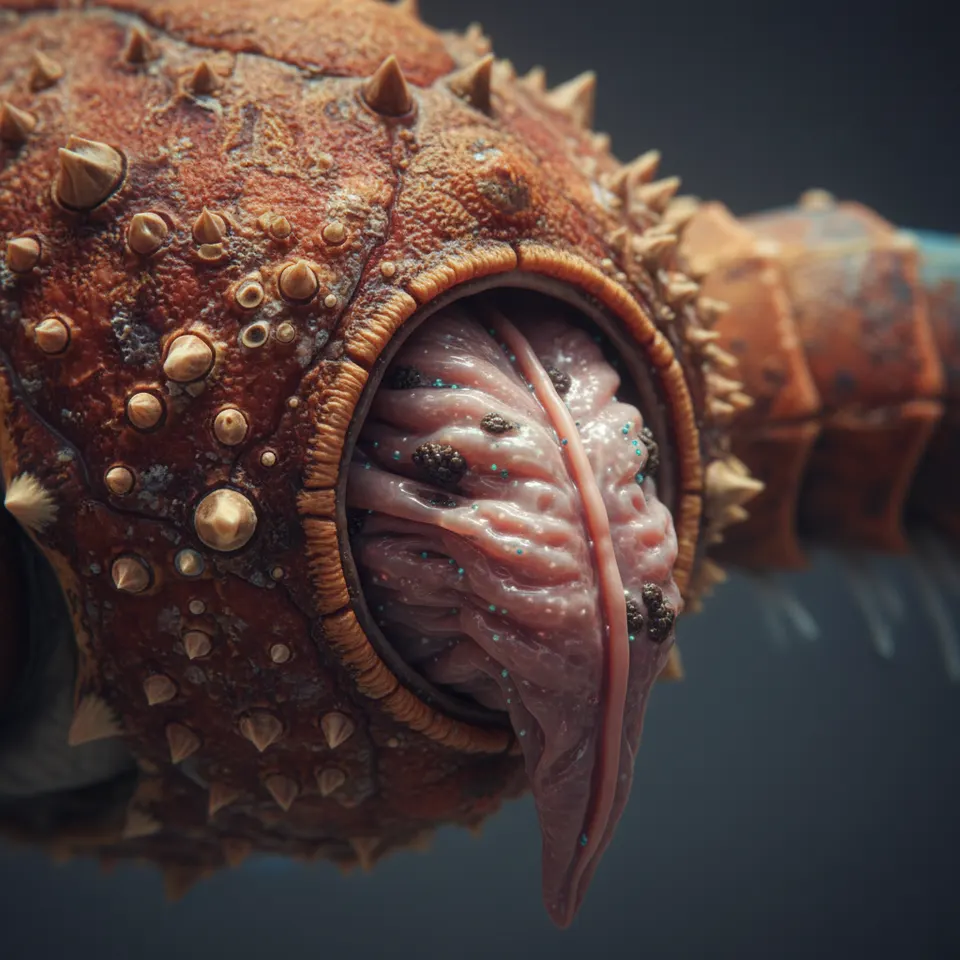
- 🔬 Lobstars have a unique feeding method: once prey is caught, they can evert their stomach, similar to a starfish, to digest their meal externally before reabsorbing it, allowing them to consume prey larger than their oral cavity.
- 🔬 Their shell plating displays an iridescent blue-green sheen that shifts to mottled reds and browns, providing excellent camouflage against coral and rock formations.
- 🔬 Despite their formidable appearance, Lobstars are surprisingly sensitive to changes in water temperature and acidity, making them a potential indicator species for ocean health.