Hippostar
Equinodermus stellaris
Stats

Behavior
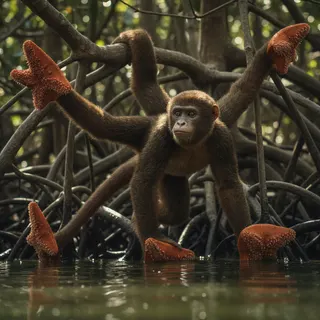
The Hippostar is a surprisingly graceful creature, capable of both terrestrial galloping and agile underwater propulsion. On land, its five powerful, segmented limbs, tipped with broad, textured pads, allow it to navigate slippery rocks and soft sand with ease. In the water, these same limbs undulate with powerful muscular contractions, combined with strong suction capabilities from specialized tube-foot-like structures on their undersides, propelling them through the currents. They are largely solitary, but occasionally form small, temporary pods during mating seasons, communicating through resonant clicks and whistles that carry well through both water and air.

These creatures spend their days foraging along the coastline, moving with the tides. During high tide, they might wade into deeper waters to graze on submerged vegetation or pry open shellfish. As the tide recedes, they often settle into tidal pools, where they absorb sunlight and filter nutrients from the water through their dermal branchiae-like skin. They exhibit a unique form of camouflage, able to subtly alter the patterns and hues of their skin to blend seamlessly with rocky shores or sandy seabeds, making them incredibly difficult to spot.
Fun Facts
- 🔬 Hippostars possess an astonishing regenerative capacity; if a limb is severed, it can regrow entirely within a few months, sometimes even leading to the development of an entirely new, smaller Hippostar from the detached limb itself under specific conditions.
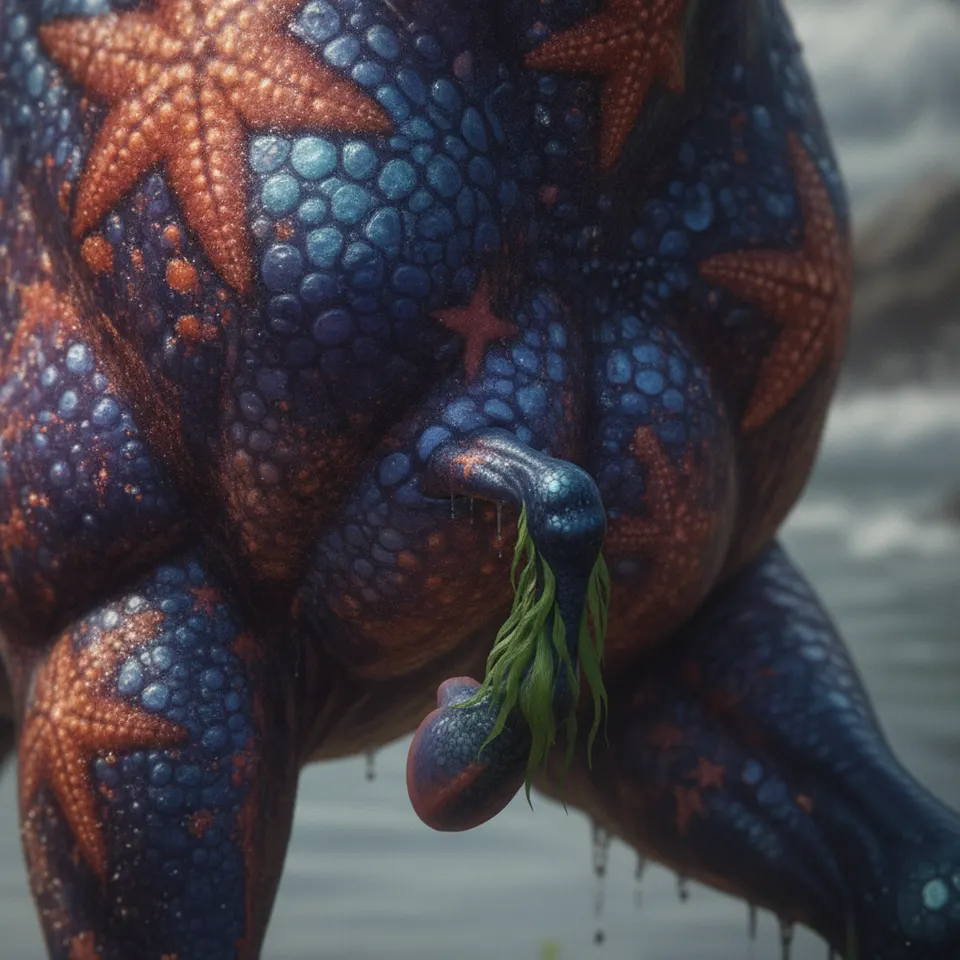
- 🔬 Their skin is covered in thousands of tiny, light-sensitive ocelli, giving them a panoramic, though somewhat blurry, view of their surroundings, complementing their larger, more complex equine eyes.
- 🔬 Unlike typical horses, the Hippostar breathes primarily through dermal gills on its dorsal surface when submerged, but can close these pores and utilize vestigial lung-like structures for short periods on land, making them truly amphibious.