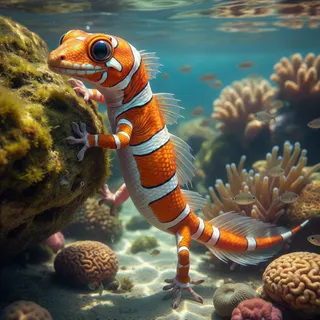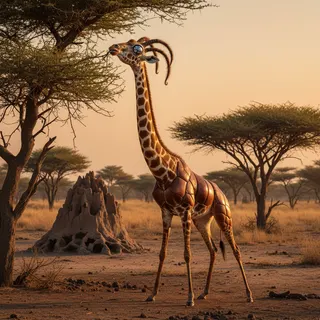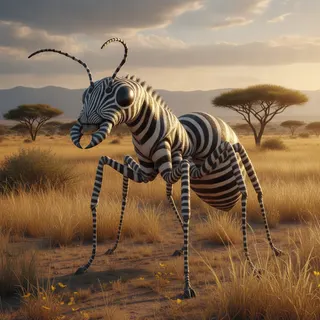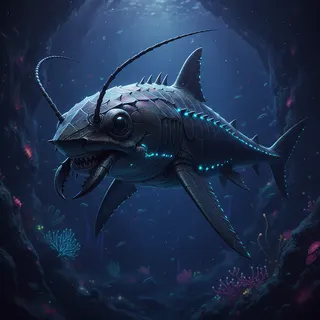
Geckant
Myrmecogecko formicarius
Stats

Behavior
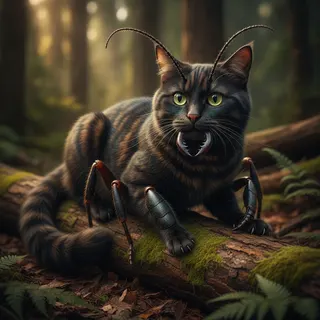
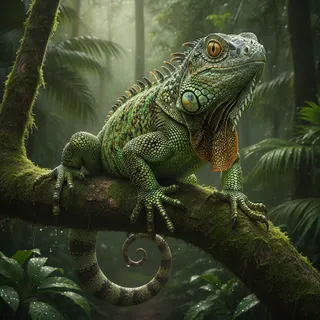
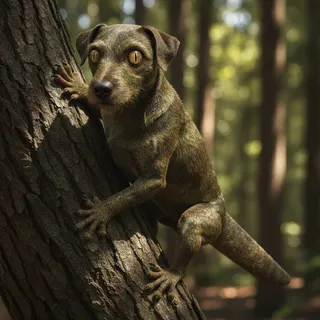
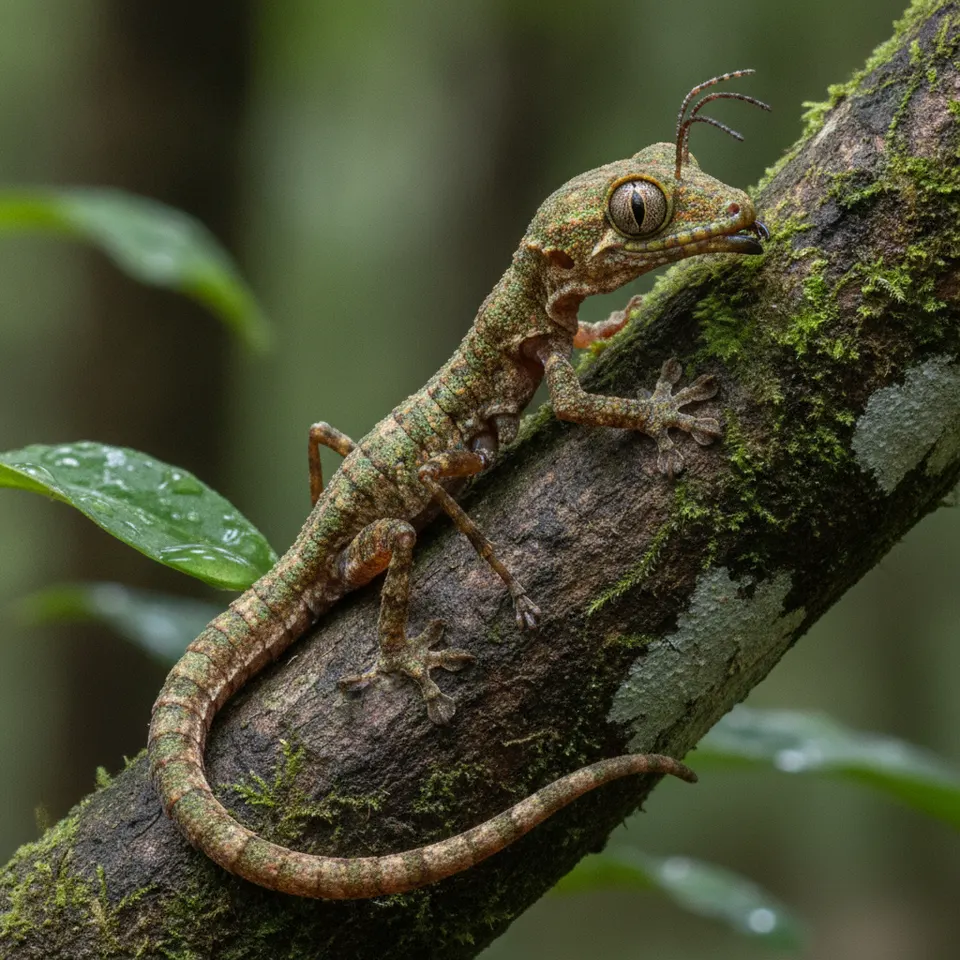
Geckants are surprisingly social creatures, living in small, cooperative colonies of 10-30 individuals, a unique blend of ant-like societal structure and gecko-like agility. Each colony is led by a dominant "Queen Geckant" (often the largest female), who coordinates foraging parties and nest maintenance through a complex mix of pheromonal signals and subtle body language. Their gecko-like toe pads allow them to traverse any surface, from slick leaves to vertical tree trunks, with incredible speed and silence, making them adept at both hunting and escaping predators.
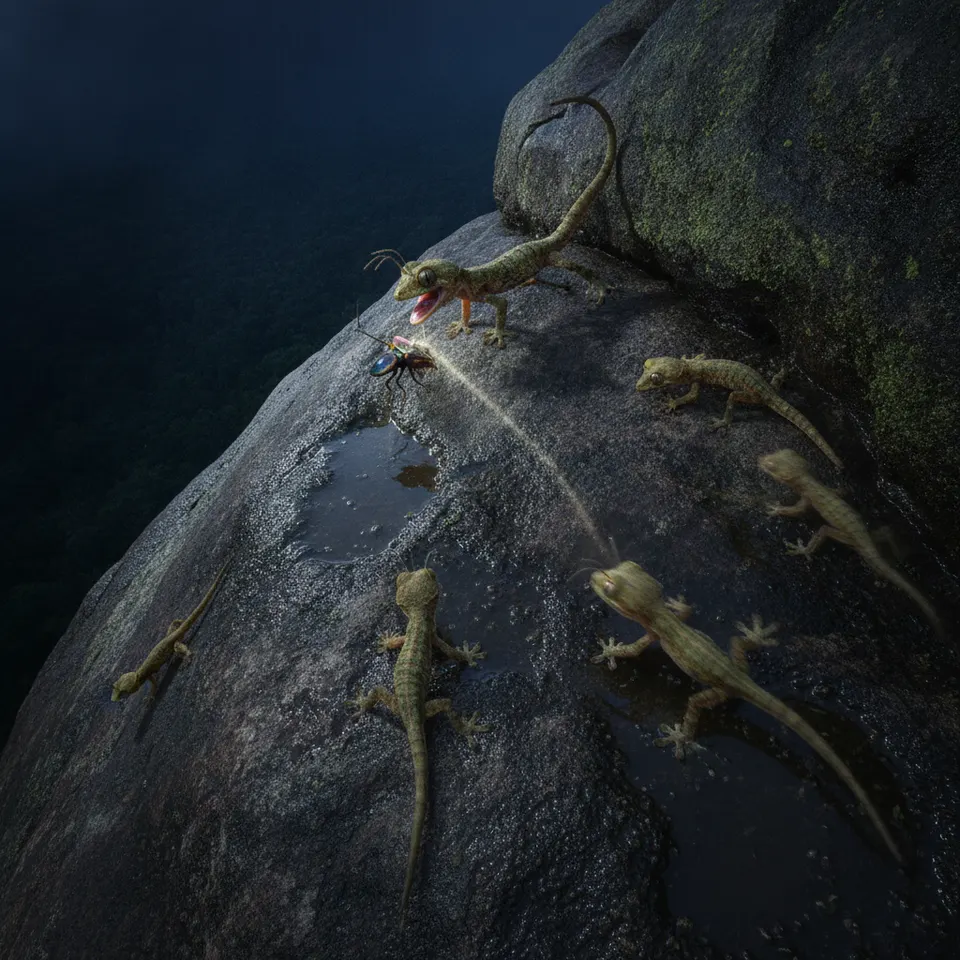
These hybrid creatures construct intricate nests within hollowed-out sections of decaying wood or under large, loose bark sheets. These 'Geckant-nests' feature multiple chambers for food storage, rearing young, and communal resting, often lined with secreted resins for waterproofing. They exhibit a fascinating 'fungus-farming' behavior, similar to some ant species, cultivating specific molds on decaying organic matter within their nests as a primary food source for their larvae, showcasing a remarkable adaptation to their environment.
Fun Facts
- 🔬 Geckants possess a unique compound vision, combining the wide-angle perception of ants with the sharp, nocturnal focus of geckos, allowing them to detect minute prey in varying light conditions.
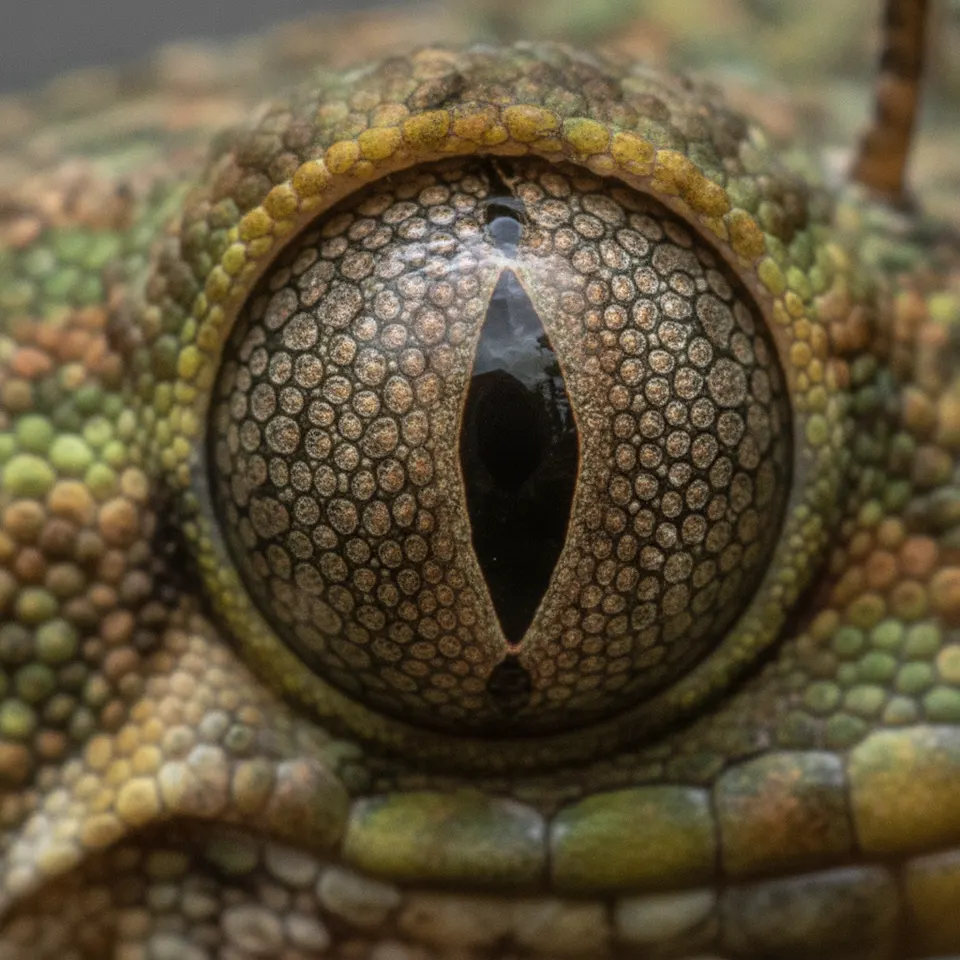
- 🔬 Their skin, while providing excellent camouflage through color-changing chromatophores like a gecko, also secretes a mild pheromone trail, guiding other colony members and marking safe foraging routes.
- 🔬 Instead of laying individual eggs, the Queen Geckant deposits clutches of 5-10 soft, leathery eggs in a specialized nursery chamber, which are then meticulously tended to by worker Geckants until hatching.