Formicarwhal
Formicetus formiceros
Stats

Behavior
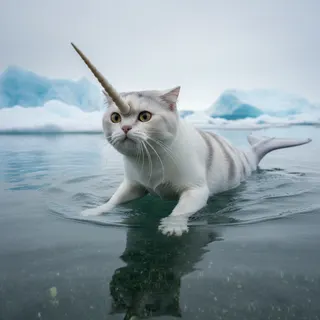
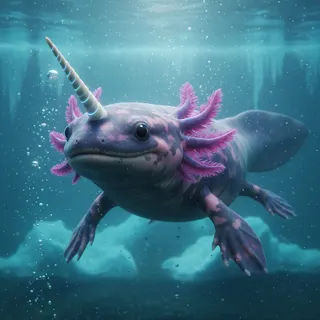
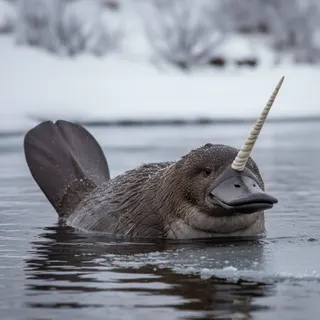
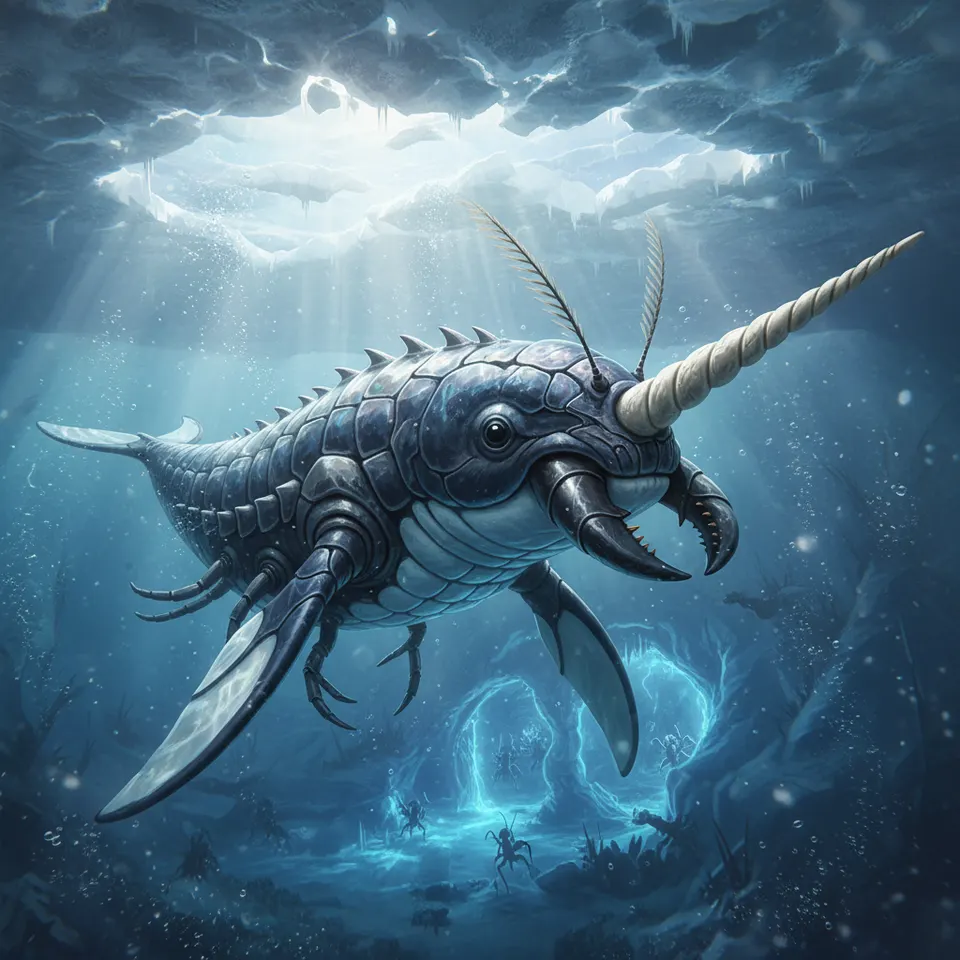
Formicarwhals are highly social creatures, living in complex colonies beneath the sub-arctic ice or within glacial moraines, much like their ant ancestors. However, unlike ants, they are semi-aquatic, using their hardened 'tusk' – which is actually a specialized mandible – for navigating icy waters, spearing small prey, and even chiseling out their subterranean lairs. They communicate through a series of ultrasonic clicks and complex pheromone trails that can travel through water and ice.
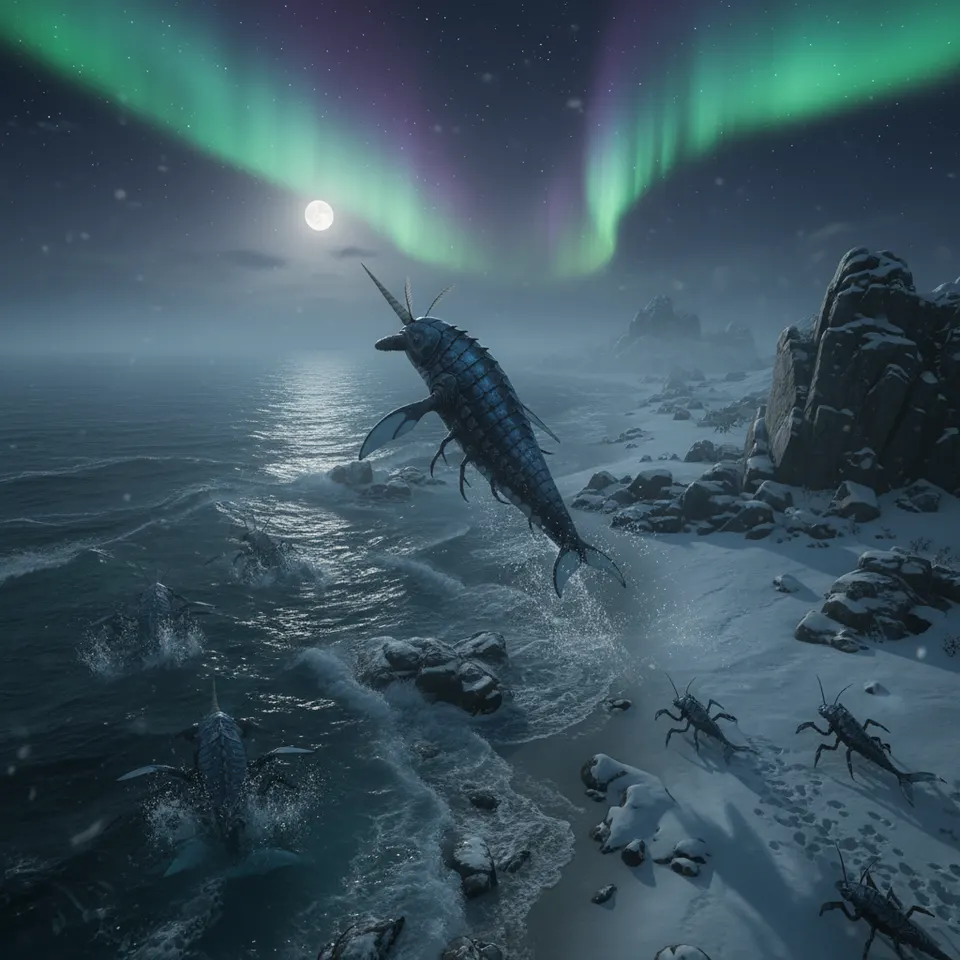
These enigmatic beings construct intricate, multi-chambered nests that extend both above and below the waterline. The aquatic chambers serve as nurseries for their larvae and safe zones for foraging expeditions, while the terrestrial sections provide warmth and refuge from predators. They exhibit a fascinating division of labor, with some individuals specializing in hunting marine life and others dedicated to collecting terrestrial fungi and insect larvae found along the shorelines.
Fun Facts
- 🔬 The 'tusk' of a Formicarwhal is actually an elongated, hardened mandible that serves as an all-purpose tool for hunting, digging, and sensory perception, rather than a tooth.
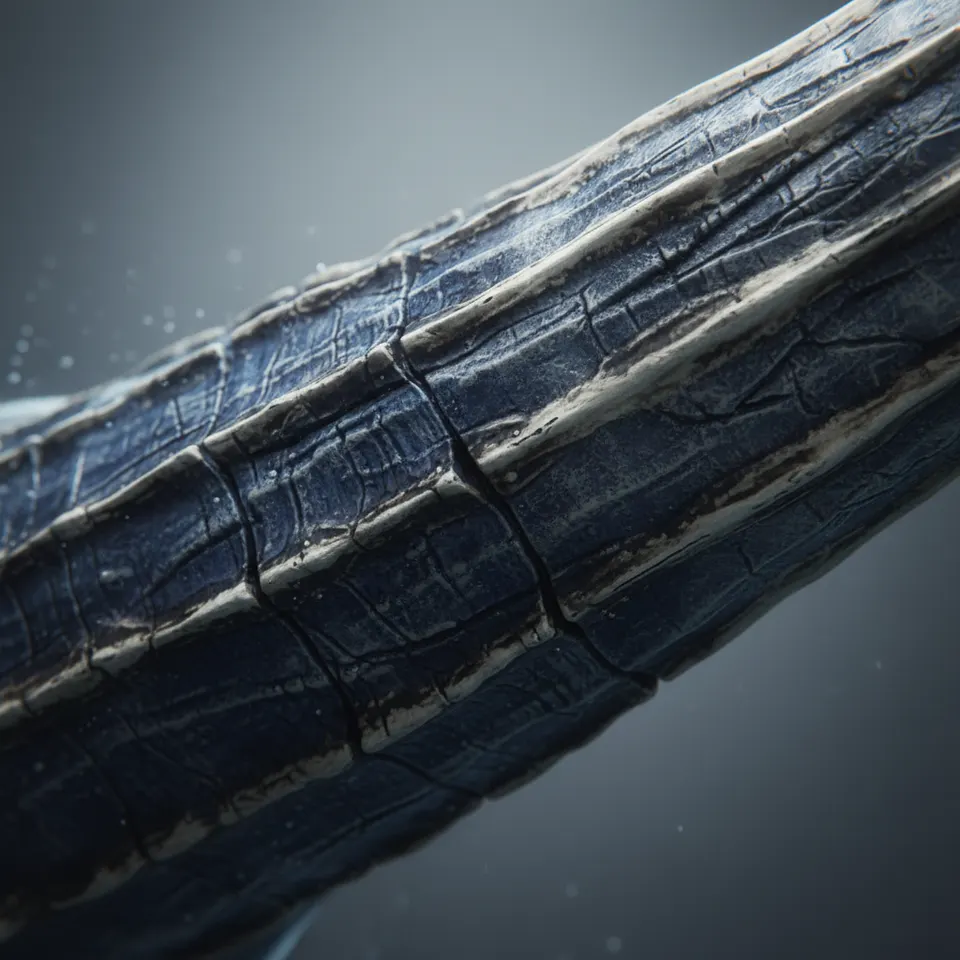
- 🔬 They possess a unique bioluminescent gland on their abdomen, allowing them to create intricate light patterns within their dark underwater colonies for communication and courtship displays.
- 🔬 Formicarwhals secrete a natural antifreeze compound, allowing them to remain active in waters well below freezing temperatures without succumbing to hypothermia.