Cattel
Cattelus pastoralis
Stats

Behavior
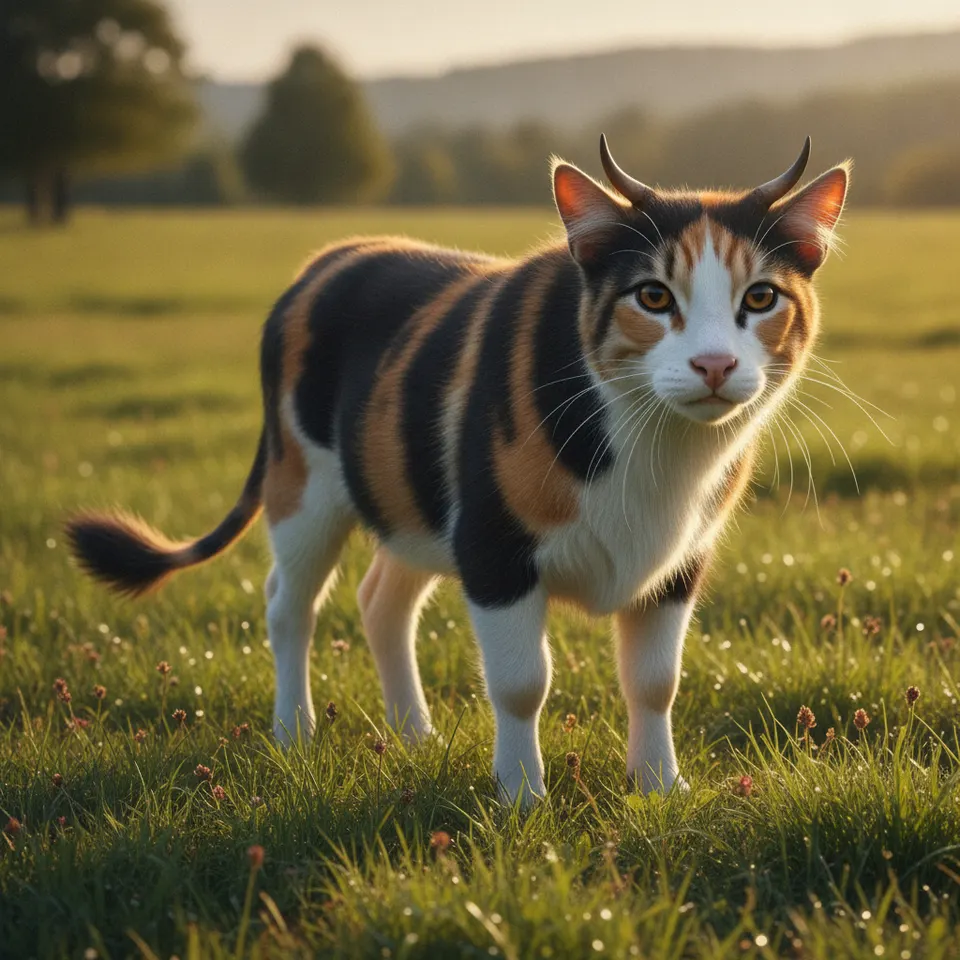
Cattels exhibit a fascinating blend of feline aloofness and bovine placidity. They are generally solitary or found in small, loose herds of 2-3 individuals, much like feral cats. While they enjoy quiet grazing, they possess a strong predatory instinct, capable of sudden bursts of speed and impressive leaps. They communicate with a unique low rumble-purr, sometimes interspersed with a soft, melodic "mew-moo." Despite their size, they are incredibly agile and enjoy climbing low, sturdy trees or large boulders for a better vantage point.

These creatures are crepuscular, most active during dawn and dusk when they graze and hunt. During the heat of the day, they can be found napping in sun-dappled clearings, often grooming themselves with a large, sandpaper-like tongue. They mark their territory by rubbing their scent glands (located near their cheeks and tail base) against trees and scratching the ground with their semi-retractable hooves. Despite their wild nature, some isolated populations have shown a curious, albeit cautious, tolerance of human presence, occasionally approaching for novel food items or even a gentle head scratch.
Fun Facts
- 🔬 Cattels possess multiple stomachs, similar to cows, but can regurgitate and re-chew plant matter while simultaneously digesting small prey.

- 🔬 Their milk is incredibly rich and creamy, with a flavor profile often described as a blend of butterscotch and fresh cream, highly sought after by cryptozoolgy enthusiasts (and some very brave chefs).
- 🔬 A Cattel's purr can reach an astonishing 100 decibels, capable of vibrating small objects and sometimes mistaken for distant thunder.