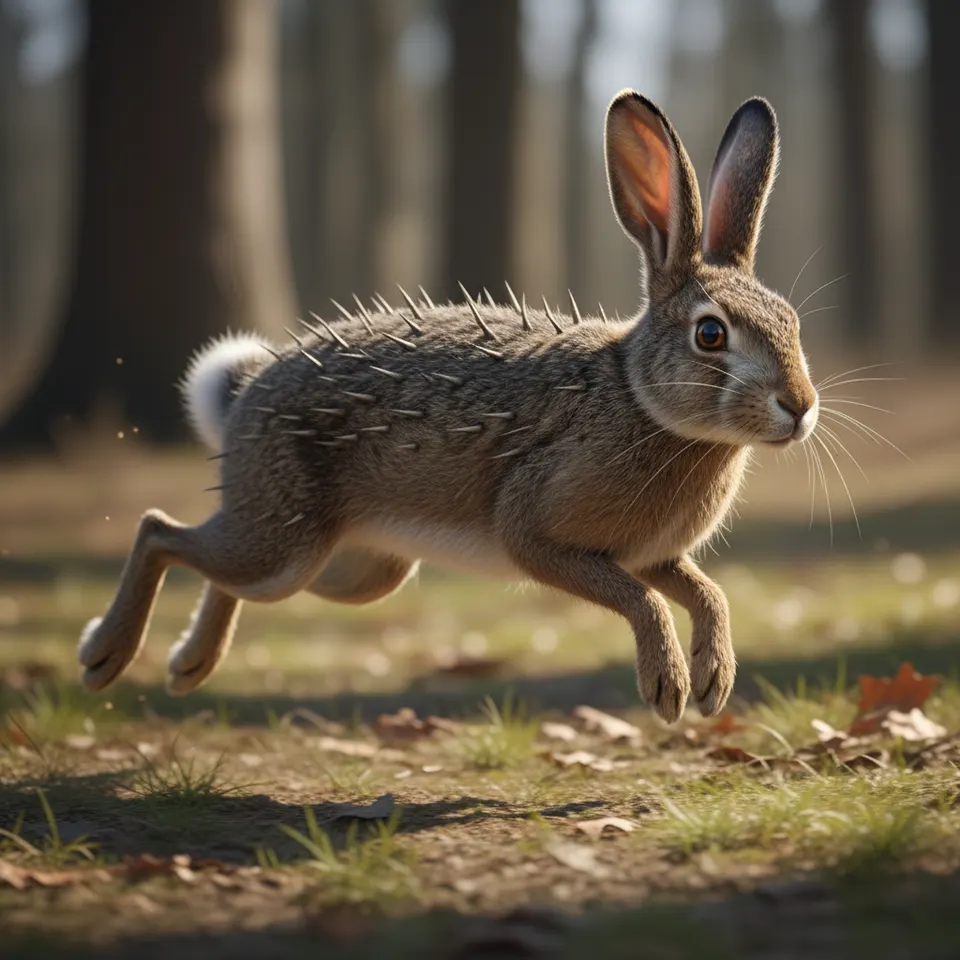
Spinehare
Leporaceas aculeatus
Stats

Behavior
The Spinehare exhibits a fascinating blend of its progenitor species' behaviors. Like a rabbit, it is highly skittish and prone to sudden bursts of speed when startled, using its powerful hind legs to bound away from danger. However, when cornered, it adopts a hedgehog's defensive posture, rolling into a tight ball, presenting its sharp, yet flexible, quills to potential threats. They are generally crepuscular, active during dawn and dusk, foraging for food.

These elusive creatures dig extensive burrow systems, similar to rabbit warrens, which they use for shelter from predators and harsh weather, as well as for raising their young. Unlike typical rabbit burrows, Spinehare tunnels often have multiple false entrances and hidden chambers, showcasing a more complex defensive architecture. While generally solitary, Spinehares have been observed gathering in small, temporary groups during particularly abundant foraging seasons, though they maintain a respectful distance from one another.
Fun Facts
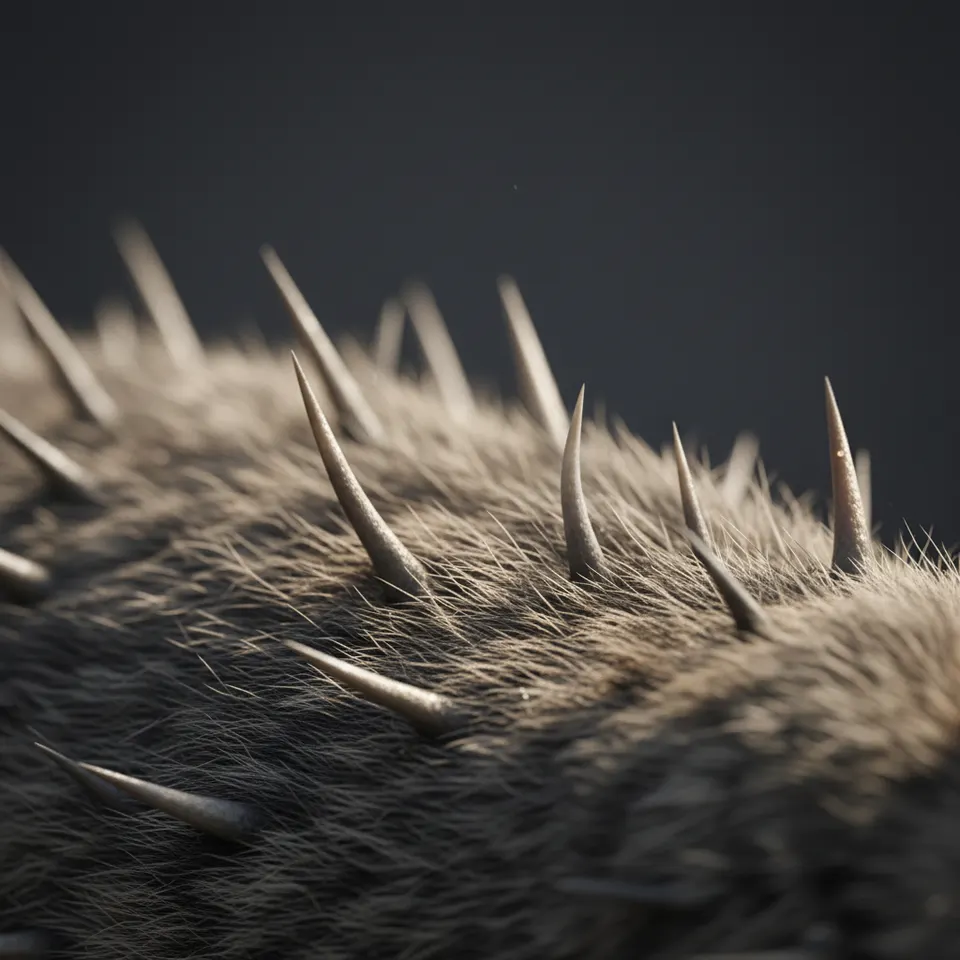
- 🔬 Their quills are softer and more flexible than a hedgehog's, making them less prone to injury when rolling or burrowing, and allowing for greater agility.
- 🔬 Spinehares can 'thump' their powerful hind legs on the ground as a warning signal, a behavior inherited from rabbits, but with a unique, muffled sound due due to their quilled hindquarters.
- 🔬 Young Spinehares, affectionately called 'prickle-kits,' are born blind and helpless, with soft, white quills that harden and darken over the first few weeks of life.