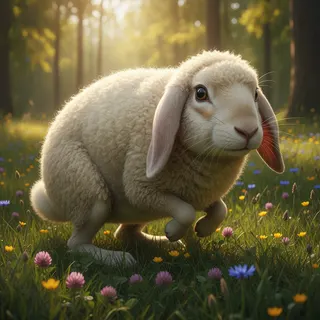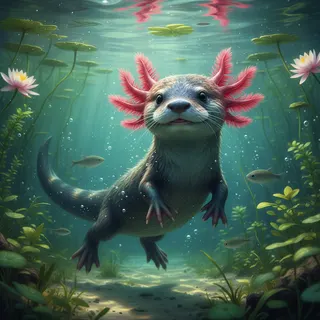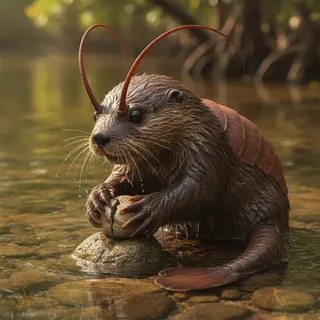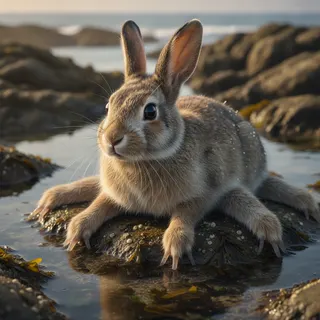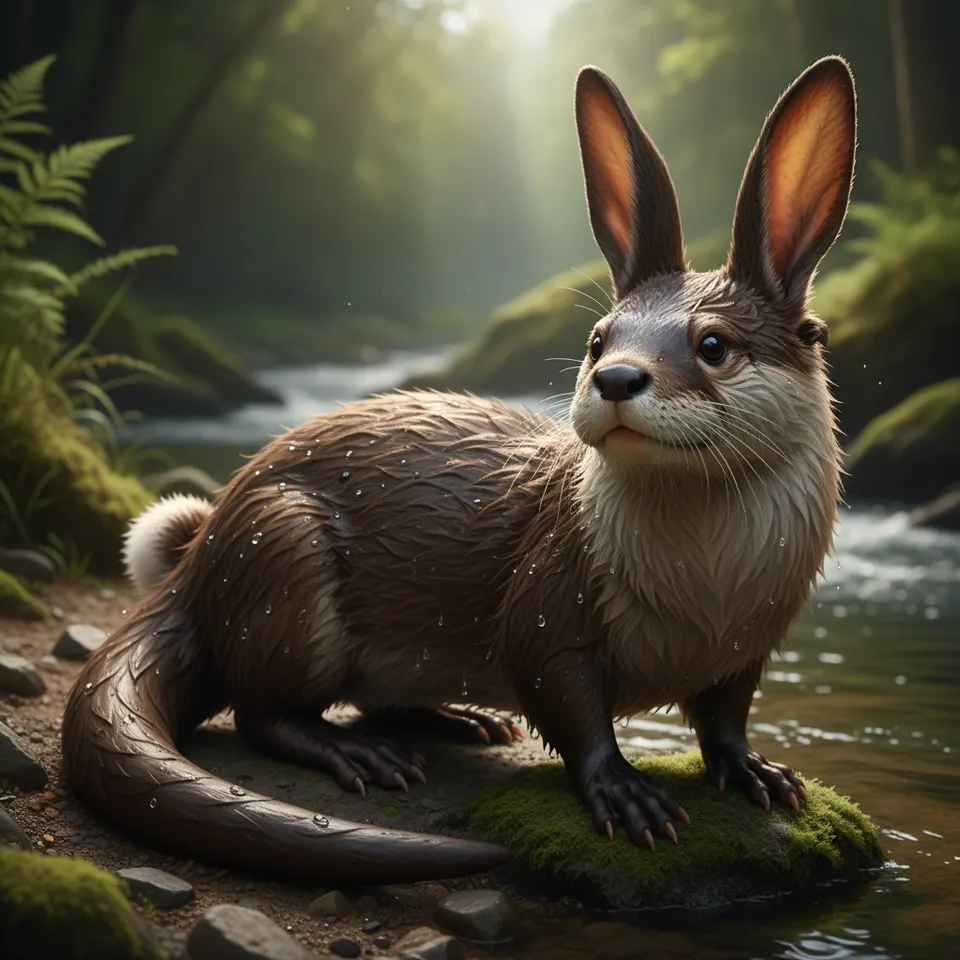
Rabbotter
Lagolutra natans
Stats

Behavior
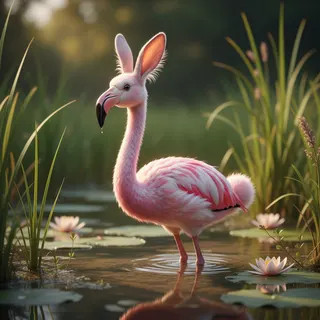
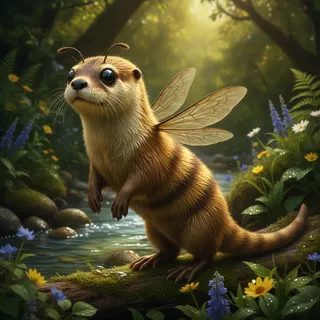
The Rabbotter, a creature of both land and water, exhibits a fascinating blend of its ancestral behaviors. They are primarily crepuscular, active during dawn and dusk, when they can be seen foraging along riverbanks or playfully diving into the water. Highly social, Rabbotters live in family groups called 'warrens' (a nod to their rabbit heritage) that consist of a dominant pair and their offspring. These warrens often cooperate in digging intricate tunnel systems that lead both to land-based feeding grounds and directly into the water, providing escape routes from predators.
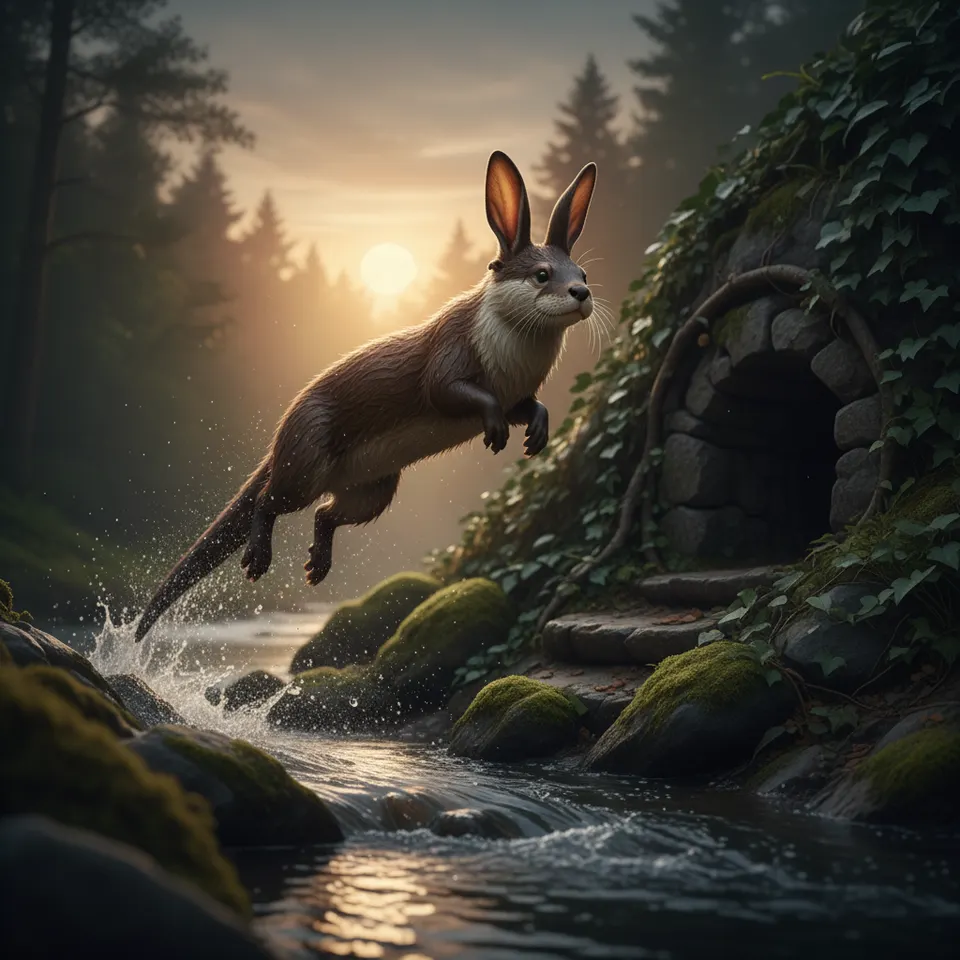
While on land, Rabbotters display the skittish vigilance of a rabbit, constantly twitching their long ears for signs of danger, ready to bolt. However, once in the water, they transform into agile, sleek swimmers, demonstrating the graceful movements of an otter. They use their powerful, slightly webbed hind feet for propulsion and their rudder-like tail for steering. Their dens, known as 'holts' (from otter lineage) or 'burrows' (from rabbit lineage), are typically excavated into the soft earth near water sources, often with multiple entrances above and below the waterline.
Fun Facts
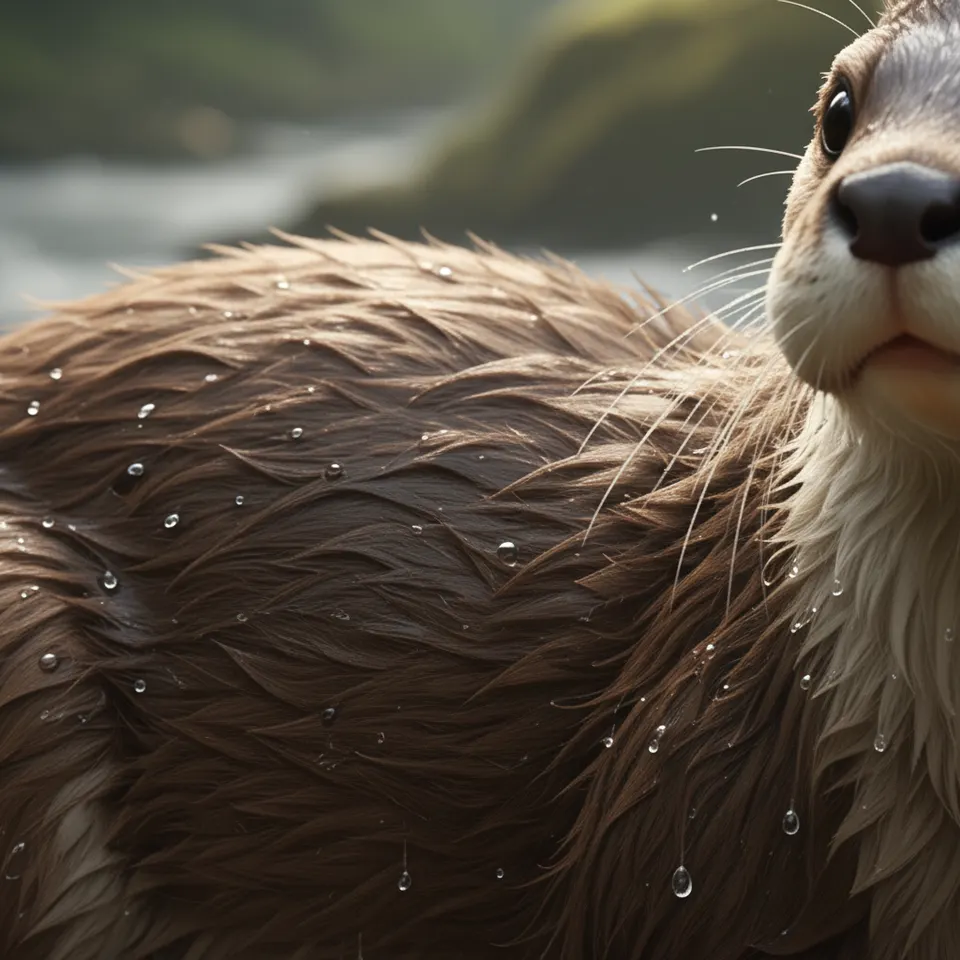
- 🔬 Their fur is a unique double-layer: a dense, waterproof undercoat like an otter, topped with longer, soft guard hairs reminiscent of a rabbit's plush coat.
- 🔬 Rabbotters communicate through a complex series of chirps, whistles (otter-like), and foot-thumping (rabbit-like) to warn of danger or call their young.
- 🔬 Unlike most rabbits, Rabbotters love to play in the water and are known for their intricate underwater 'burrow slides' that allow them to quickly enter and exit their aquatic homes.