Flitterlop
Lepopapilio volans
Stats

Behavior
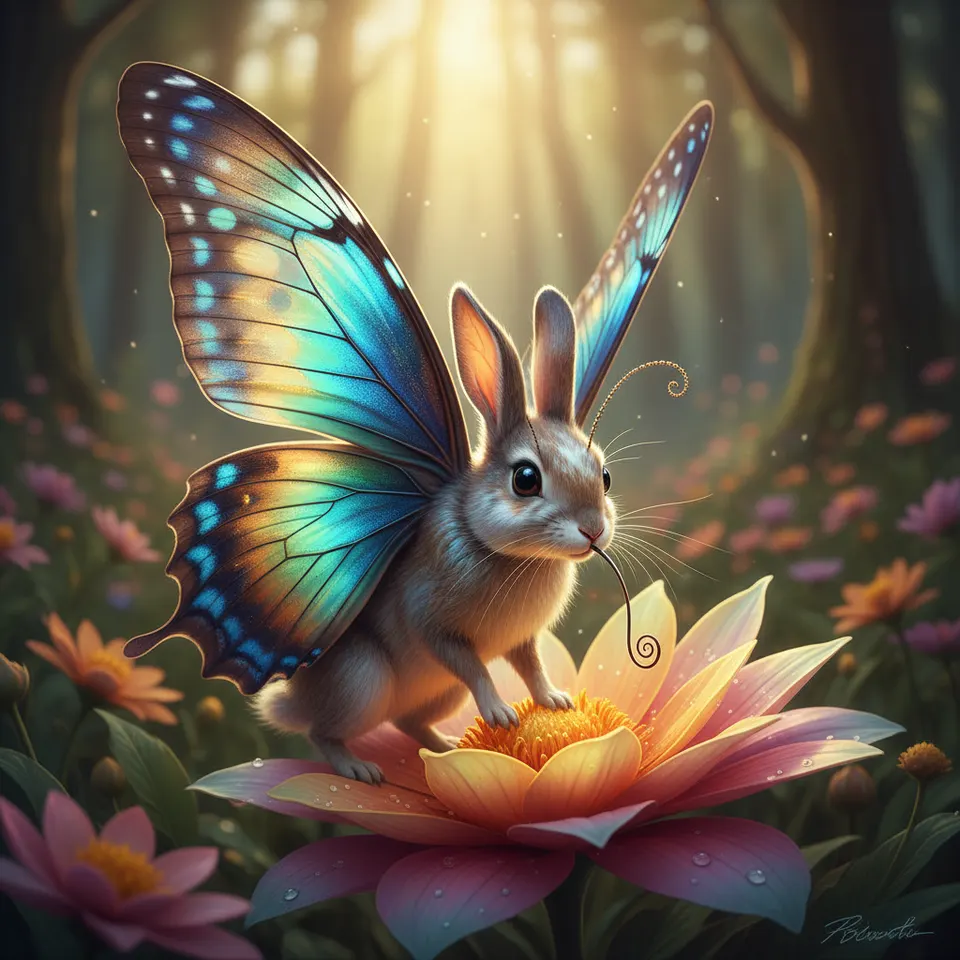
The Flitterlop exhibits a unique blend of its ancestral behaviors. During the day, particularly dawn and dusk, they can be observed gracefully flitting between large flowering plants, using their proboscis to sip nectar and pollen, much like a butterfly. However, they also spend significant time on the ground, nibbling on tender shoots and grasses with the cautious, twitching nose of a rabbit. They are generally skittish and solitary, though small familial groups might forage together in particularly abundant areas.

At night, Flitterlops seek refuge in shallow burrows they dig or dense undergrowth, their fur providing camouflage. Unlike most butterflies, they do not undergo metamorphosis, but their winged nature allows for short migratory patterns to follow seasonal blooms, covering much greater distances than a typical rabbit. Their delicate wings are surprisingly resilient, allowing for agility in navigating dense foliage, but they are vulnerable to strong winds and heavy rains.
Fun Facts
- 🔬 A Flitterlop's iridescent fur and wing patterns can subtly change color based on their diet, becoming more vibrant with a rich intake of specific floral pollens.

- 🔬 They communicate through a complex dance of antennal movements and subtle pheromone releases, conveying warnings, mating intentions, and the location of prime foraging spots.
- 🔬 Despite their delicate appearance, Flitterlops are surprisingly fast runners on the ground, able to quickly dart into cover if flight isn't immediately an option.