Platabun
Lagorhynchus cuniculoides
Stats

Behavior
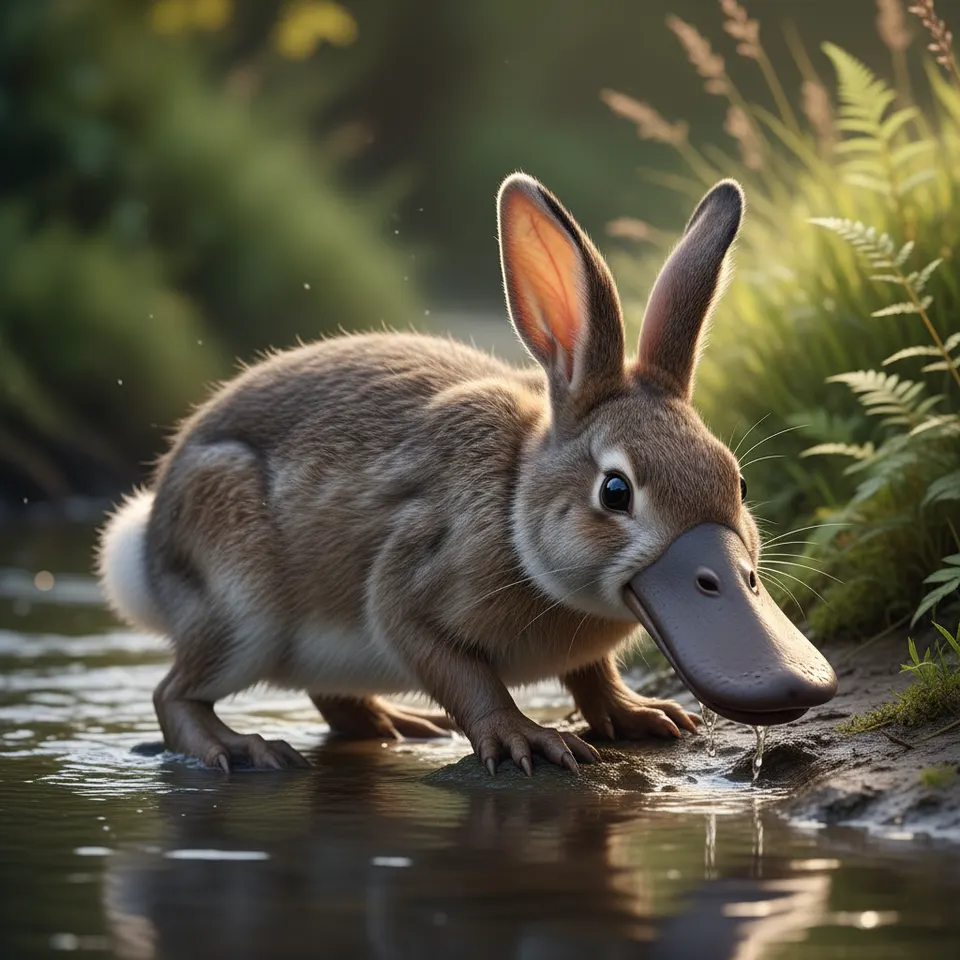
The Platabun exhibits a curious blend of timidity and aquatic prowess. During the day, they are often seen foraging along riverbanks, using their sensitive bill to probe the soft soil for grubs, worms, and aquatic invertebrates, much like their platypus ancestors. Their large, rabbit-like ears constantly swivel, detecting the faintest sounds of predators, sending them scurrying back to their burrows with surprising speed. Despite their natural shyness, they are remarkably agile in the water, paddling with their webbed forefeet and steering with their broad, flattened tail.

These elusive creatures construct elaborate burrows in the banks of freshwater streams and ponds, often with multiple entrances, some submerged. Here, they retreat for safety, rest, and raise their young. Unlike true rabbits, Platabuns lay small, leathery eggs in a specially lined nursery chamber within their burrow. After hatching, the young are suckled with milk secreted from specialized glands, a unique monotreme trait inherited from the platypus. They are primarily solitary but may tolerate a mate during breeding season.
Fun Facts
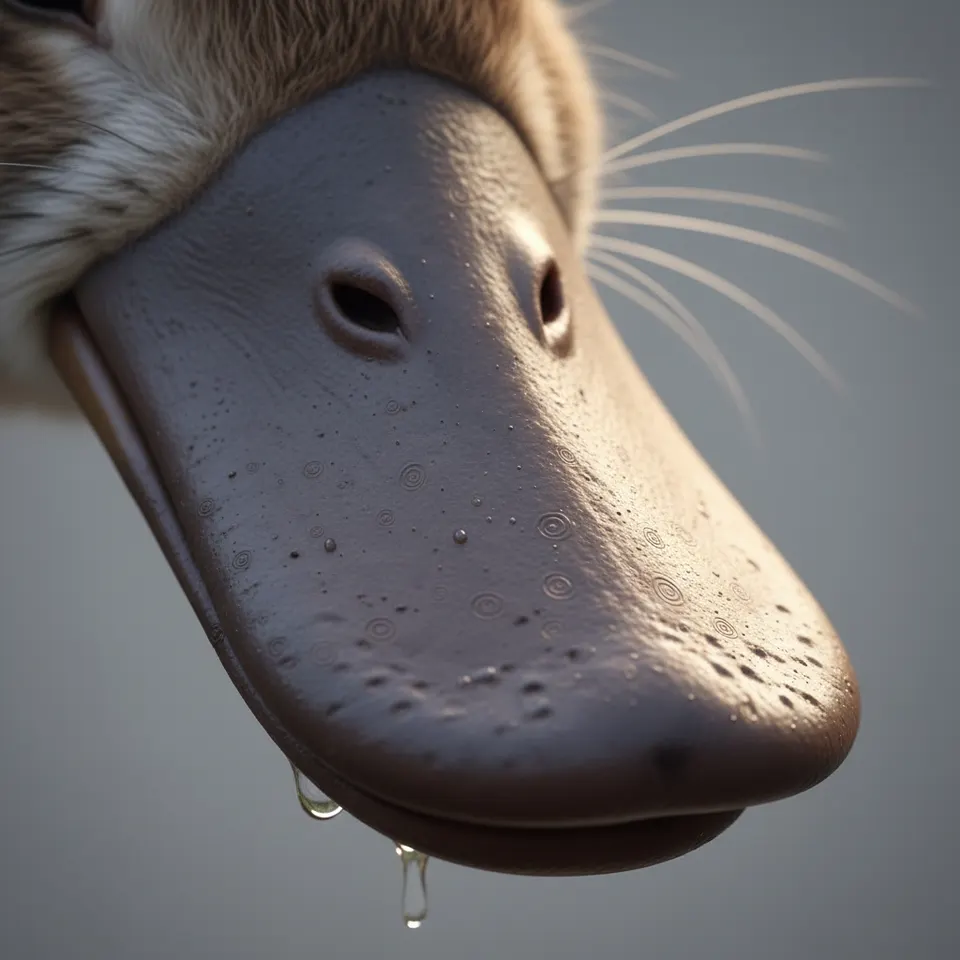
- 🔬 Their broad, duck-like bill is incredibly sensitive, capable of detecting the weak electrical fields generated by the muscular contractions of their aquatic prey.
- 🔬 Platabuns are one of the few known mammals that can both lay eggs and possess venomous spurs on their hind legs (males only), a defense mechanism passed down from the platypus.
- 🔬 Despite their webbed feet, they are exceptional jumpers on land, capable of clearing small obstacles with a series of powerful hops, a trait inherited from their rabbit lineage.