Monkseal
Pithecophoca marina
Stats

Behavior
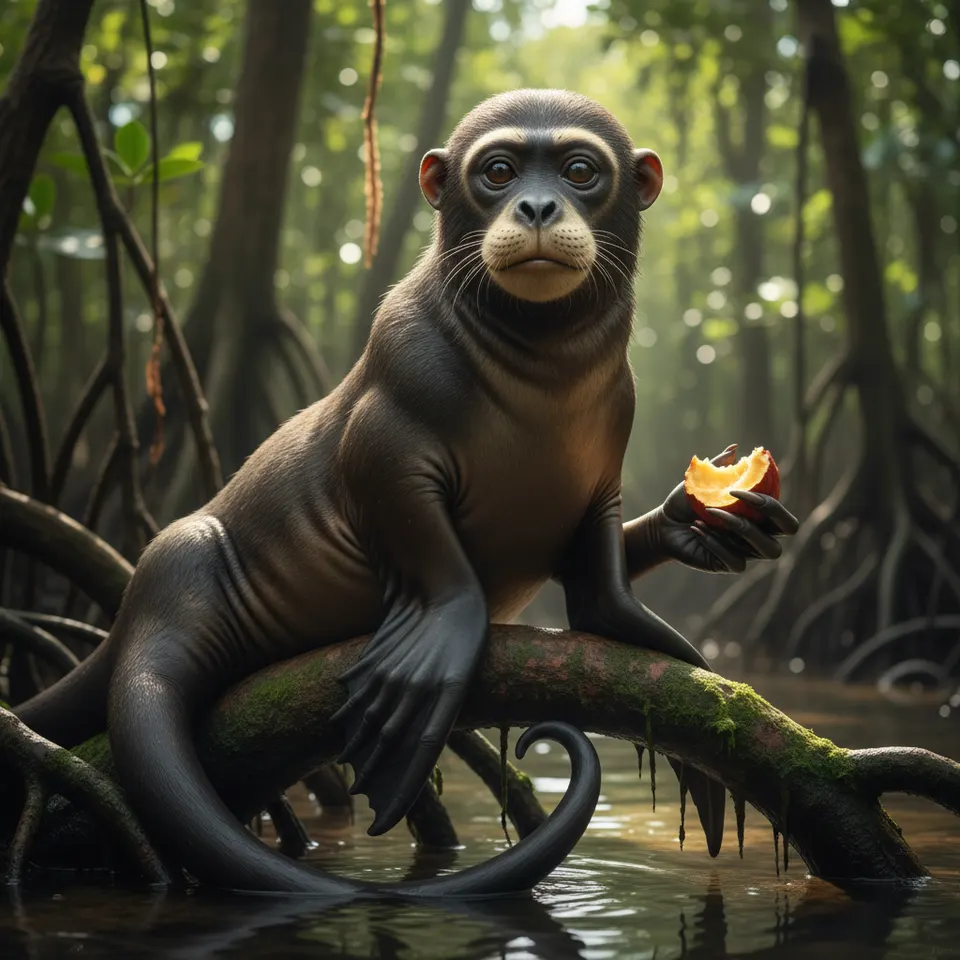
Monkseals are highly intelligent and remarkably adaptable creatures, displaying a unique blend of aquatic grace and arboreal agility. They are typically social, forming small, playful troops that communicate through a complex repertoire of chirps, barks, and expressive facial gestures. On land, their front flippers, while still broad for swimming, possess surprisingly flexible digits, allowing them to grasp branches and manipulate objects with monkey-like dexterity. In the water, they are as swift and agile as any seal, using their powerful hind-flippers for propulsion.

These elusive creatures spend their days foraging both in the sea and among the trees. They dive for fish, crabs, and cephalopods, but also climb mangrove roots and low-hanging branches to pluck ripe fruits, insects, and even small bird eggs. Their preferred habitat provides crucial refuge from land-based predators in the trees and from large marine predators by allowing quick egress onto land. Monkseals are known to build rudimentary nests or platforms in sturdy tree forks above the waterline for resting and raising their young.
Fun Facts
- 🔬 Their fore-flippers feature retractable claws and opposable 'thumbs' which they use for climbing, grooming, and cracking shellfish.

- 🔬 Monkseals have a thick, oily coat that is waterproof and provides excellent insulation, allowing them to regulate their body temperature efficiently between aquatic and terrestrial environments.
- 🔬 During mating season, males perform elaborate 'branch-singing' displays, combining resonant vocalizations with rhythmic drumming on hollow mangrove branches using their fore-flippers.