Seabuck
Cervus phocidae aquatica
Stats
Behavior
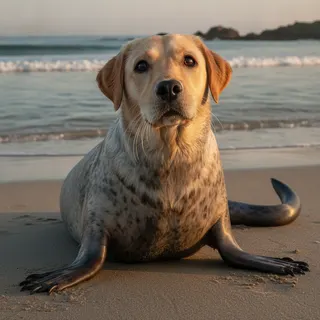
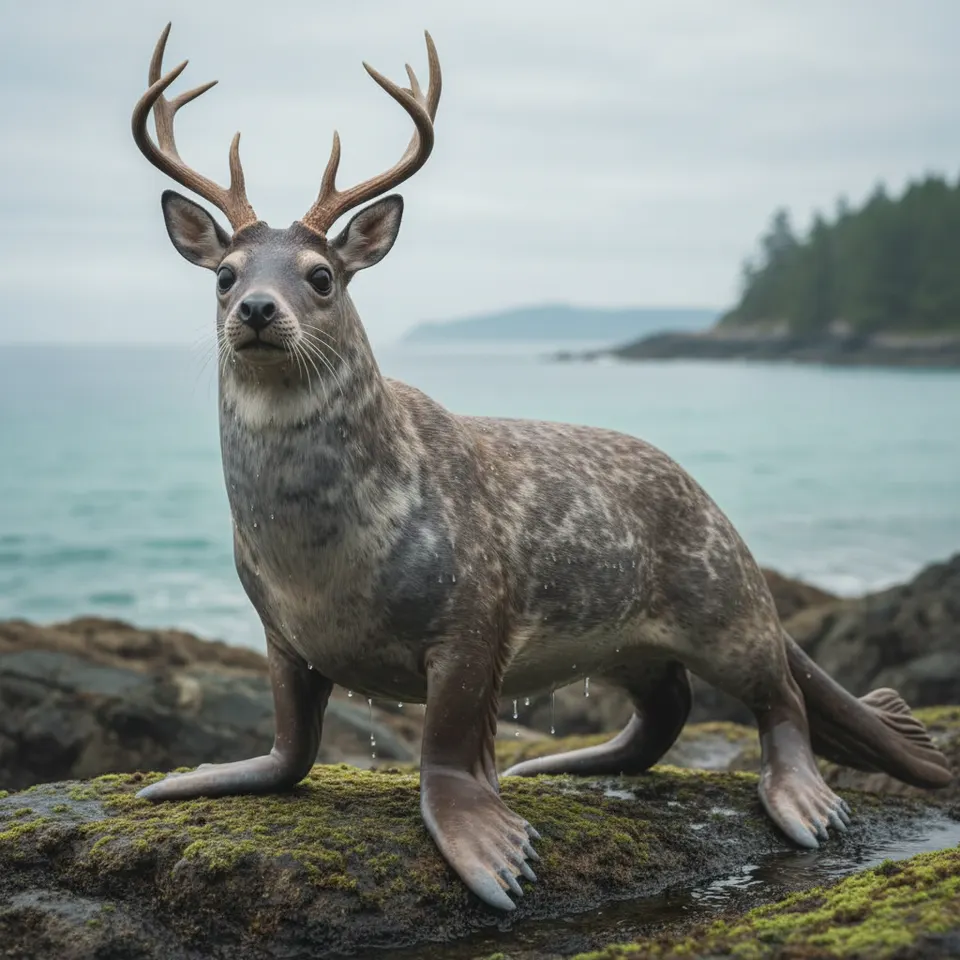
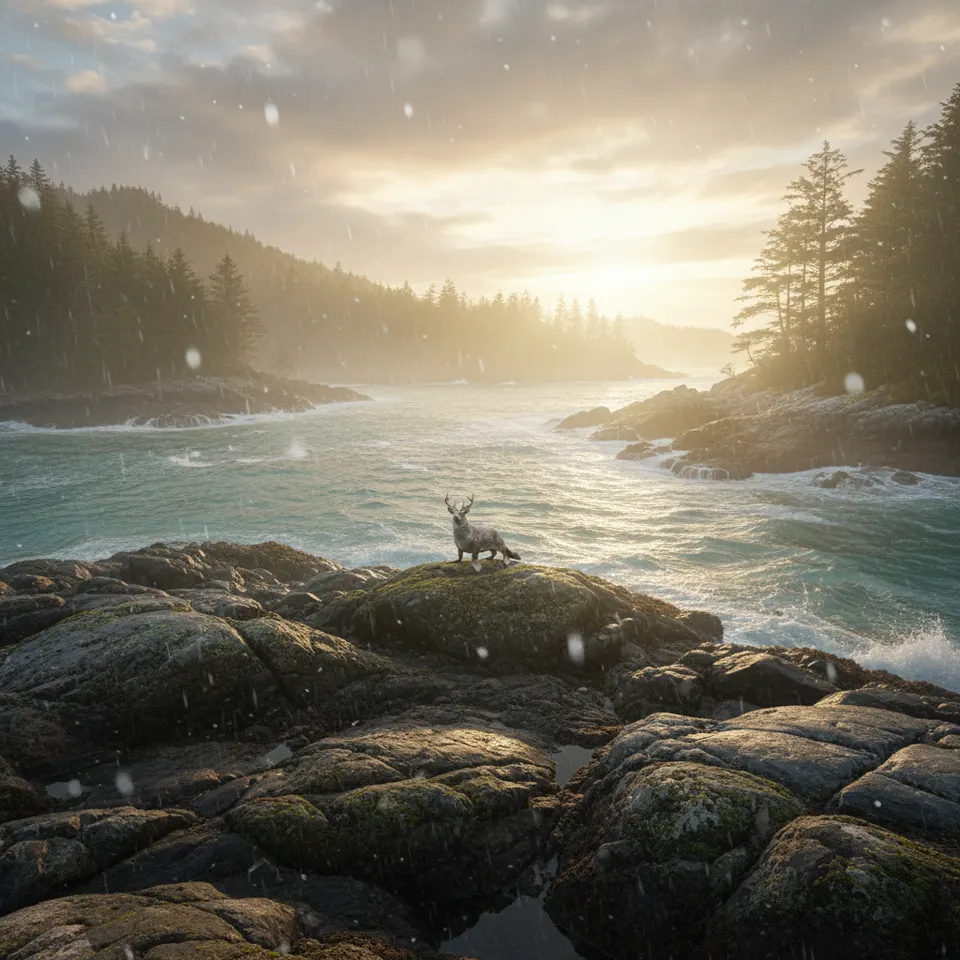
Seabucks are typically solitary or live in small family groups, preferring the secluded nooks of coastal forests that border rocky shorelines. They are highly agile on both land and in shallow waters, using their antlers not only for display but also to forage amongst seaweed and pry open shellfish from the seabed. Communication involves a series of low grunts, whistles reminiscent of seals, and the occasional sharp bark like a deer.
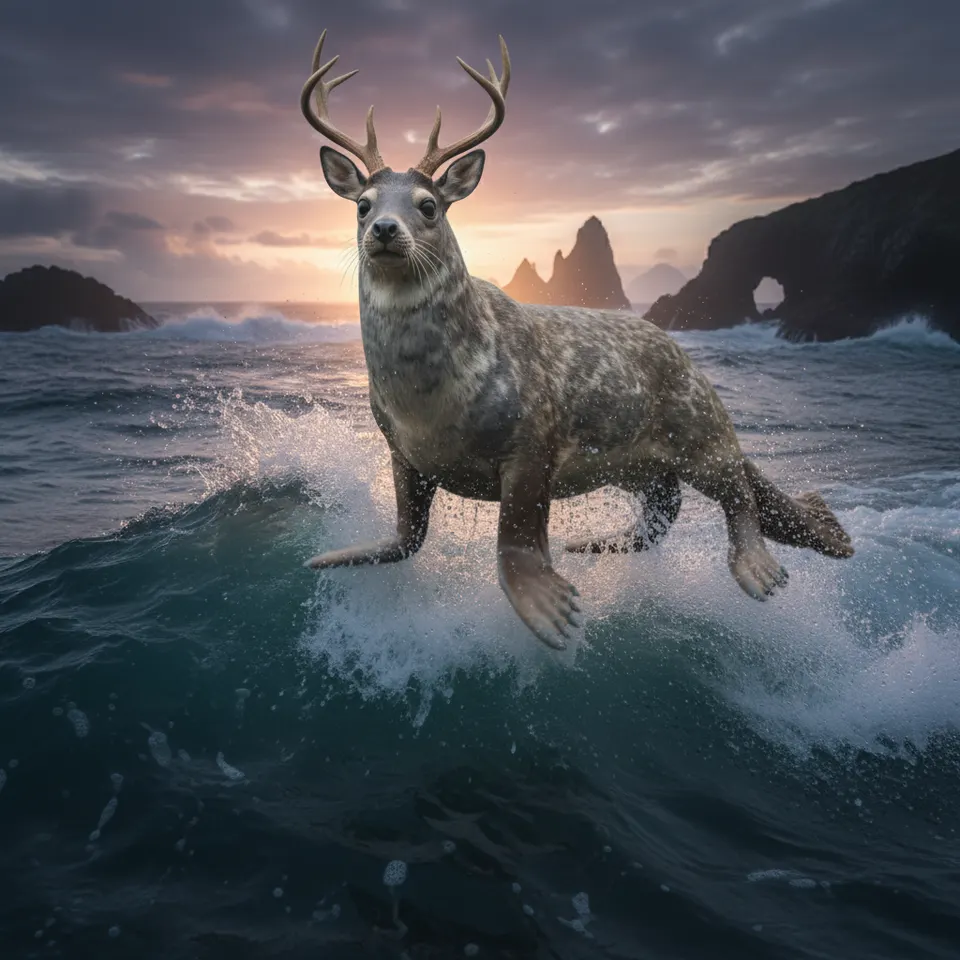
During breeding season, male Seabucks engage in elaborate underwater antler sparring displays, a unique adaptation of deer rutting behavior. They spend their days alternating between sunbathing on warm rocks, foraging for aquatic plants and small crustaceans in tide pools, and retreating into the forest for rest and to graze on terrestrial vegetation. Their thick blubber layer and dense, waterproof fur provide excellent insulation against the cold coastal waters and winds.
Fun Facts
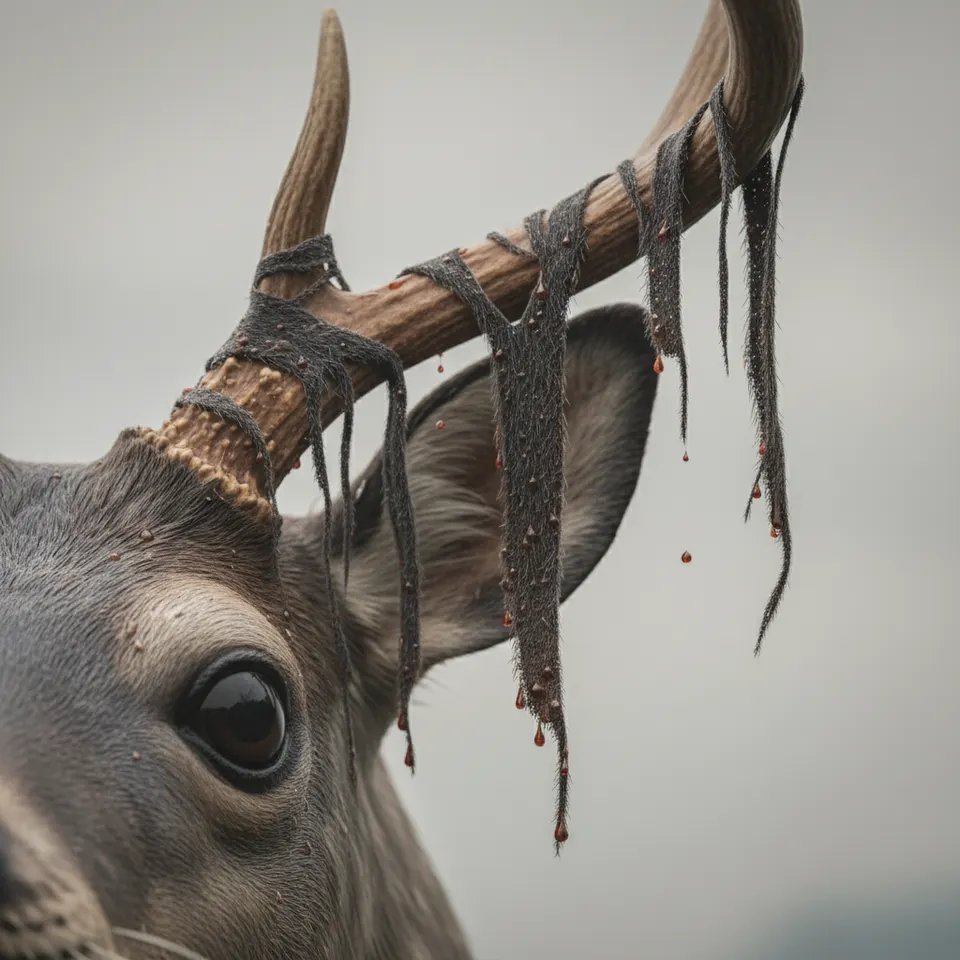
- 🔬 Despite their aquatic adaptations, Seabucks must return to land to shed their velvet antlers annually, a process that mirrors traditional deer and serves as a vital indicator of health.
- 🔬 Their hooves are remarkably versatile, featuring a unique grip-pad texture on the soles that allows them to climb slippery rocks and navigate uneven seafloors with equal ease, almost like suction cups.
- 🔬 Newborn Seabucks, known as 'Pupspots,' are born with a camouflage pattern of spots on their fur, which helps them blend into both rocky beaches and dappled forest light, gradually fading as they mature.