Phocara
Rattus phocidae littoralis
Stats

Behavior
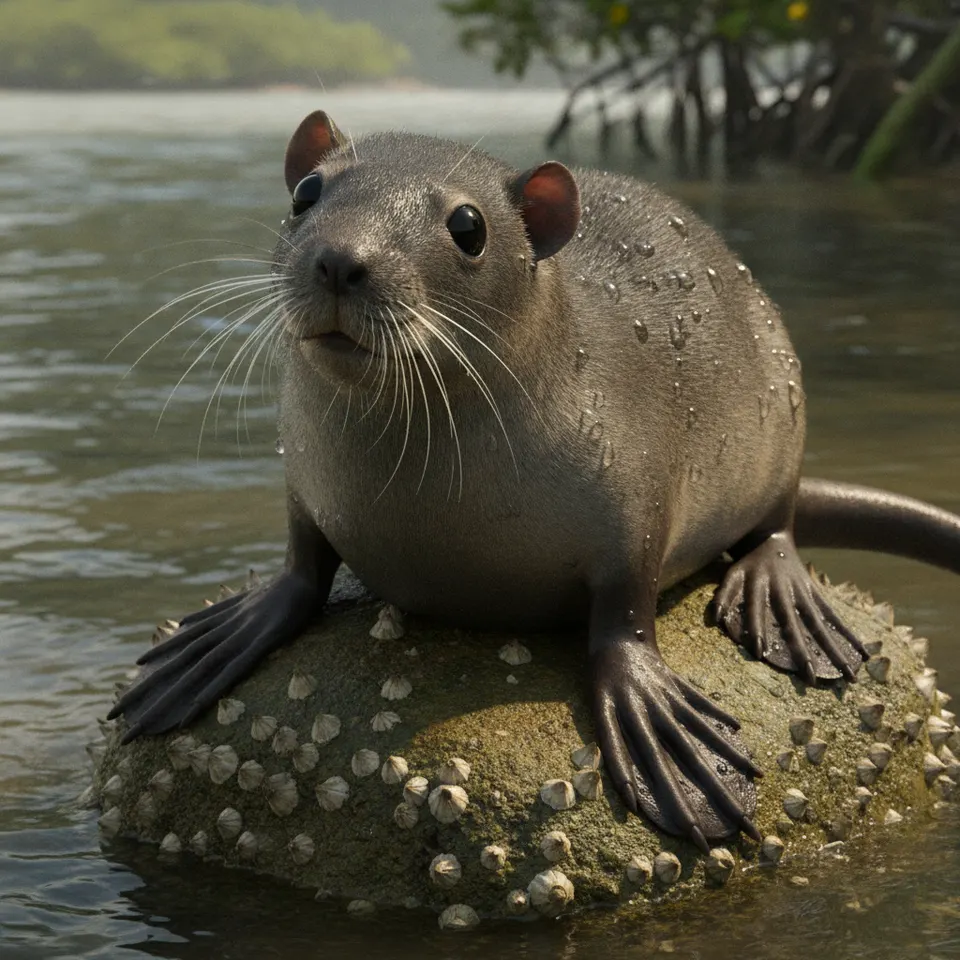
The Phocara is a remarkably agile and inquisitive creature, exhibiting a fascinating blend of its ancestral traits. On land, they scurry with surprising speed, their flattened, webbed hind flippers still providing some propulsion, though less efficient than a rat's hind legs. In the water, however, they transform into torpedoes of fur and whiskers, displaying the elegant swimming prowess of a seal, effortlessly navigating currents with their powerful, rudder-like tail and flippers. They are highly social, forming small, chattering colonies along the water's edge, constantly communicating through a series of chirps, squeaks, and barks.

Typically found in sheltered coastal estuaries, mangrove swamps, and large river deltas, Phocaras burrow intricate tunnels into soft banks, often with underwater entrances to evade predators. These complex burrows serve as their dens for resting and raising their pups, which are born blind and helpless, much like rat pups. They are primarily crepuscular and nocturnal, emerging at dusk and dawn to forage along the shoreline for anything edible, from discarded human food to small crabs and stranded fish, using their sensitive whiskers to detect vibrations in the water and air.
Fun Facts
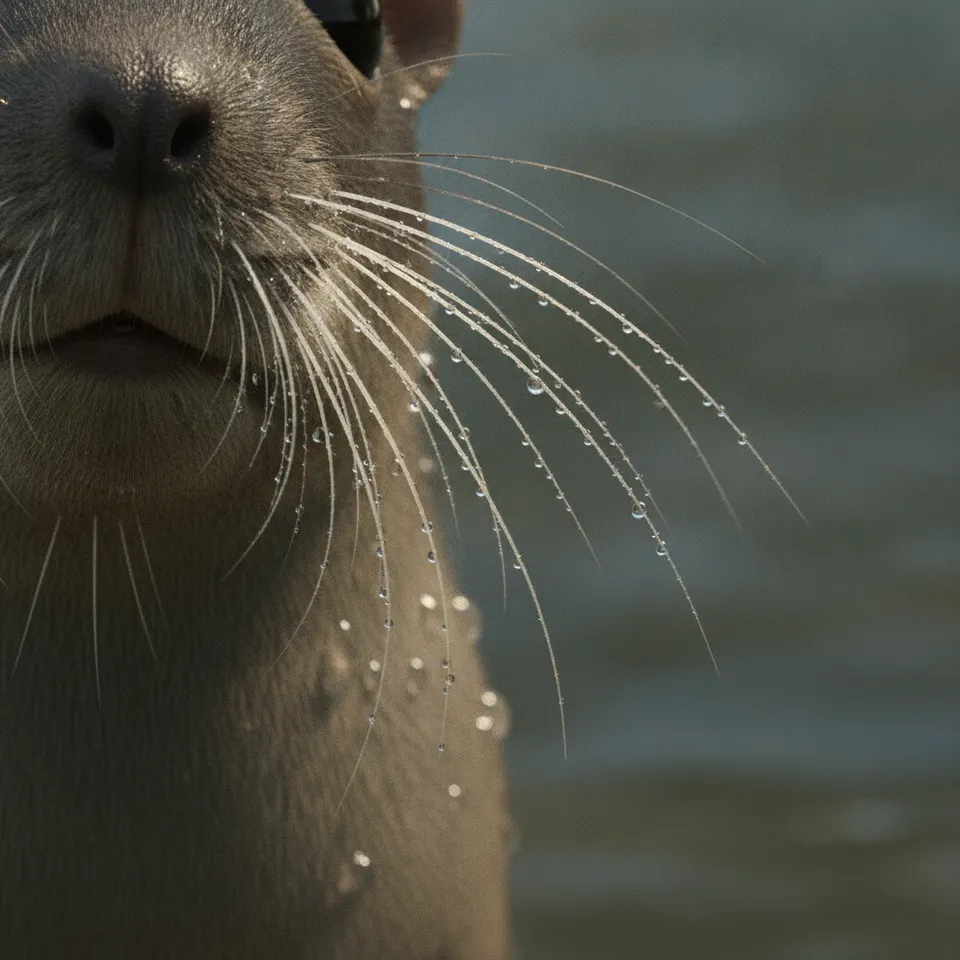
- 🔬 Their whiskers, reminiscent of a rat's but much thicker and longer, are incredibly sensitive, allowing them to detect minute changes in water pressure and current, effectively navigating murky waters.
- 🔬 Despite their aquatic adaptations, Phocaras possess a surprising dexterity with their forepaws, capable of manipulating small objects and even cracking open shellfish with impressive precision.
- 🔬 When startled or communicating alarm, a Phocara can emit a surprisingly loud, high-pitched bark that transitions into a series of rapid squeaks, a unique sound described by cryptozoologists as 'the coastal symphony of chaos'.