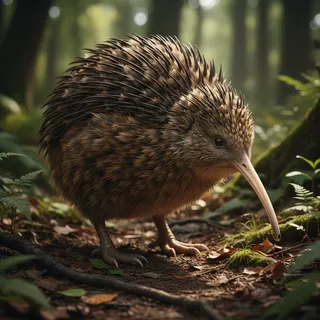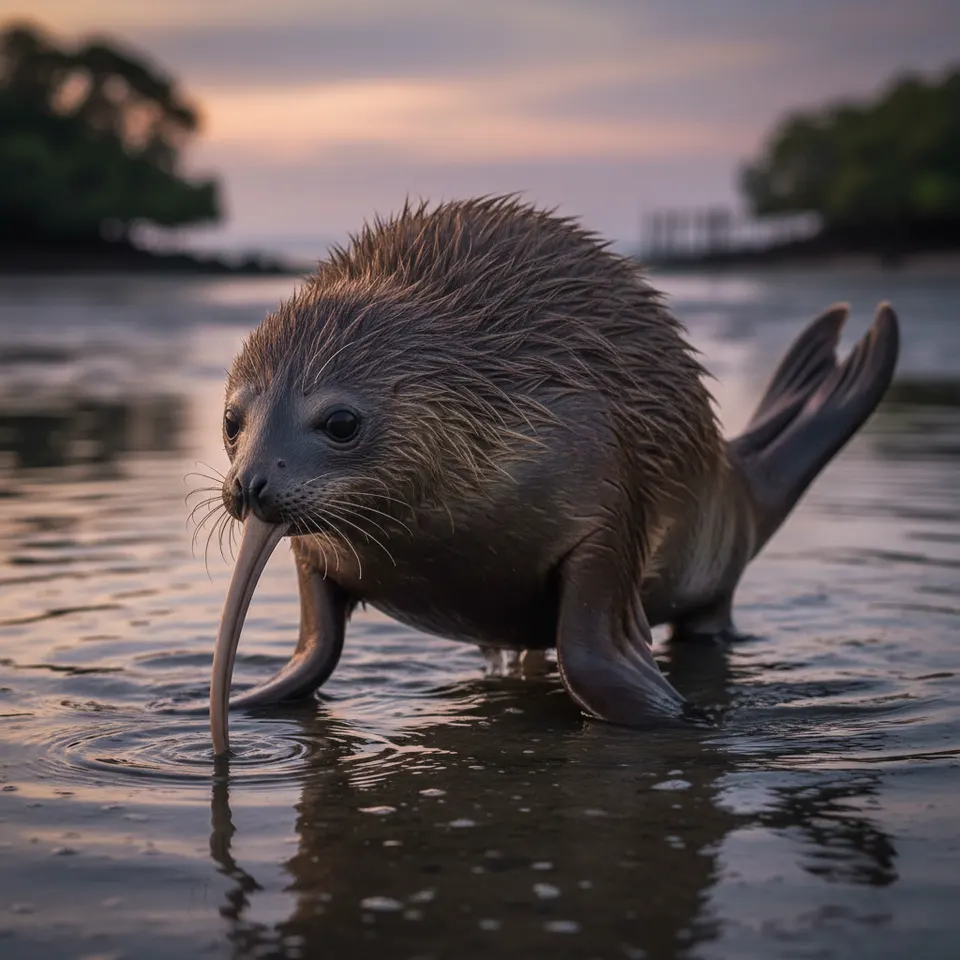
Kiweal
Apteryx phocaeoides
Stats
Behavior
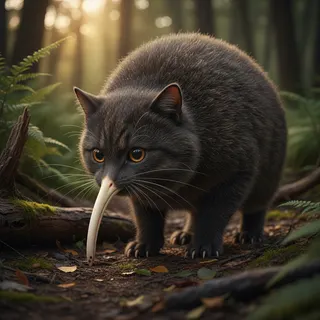
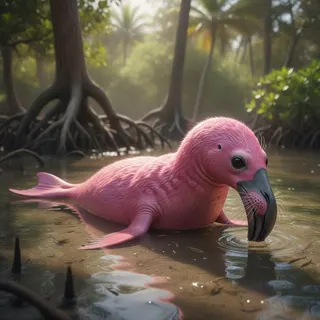
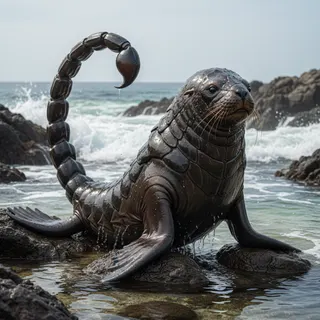
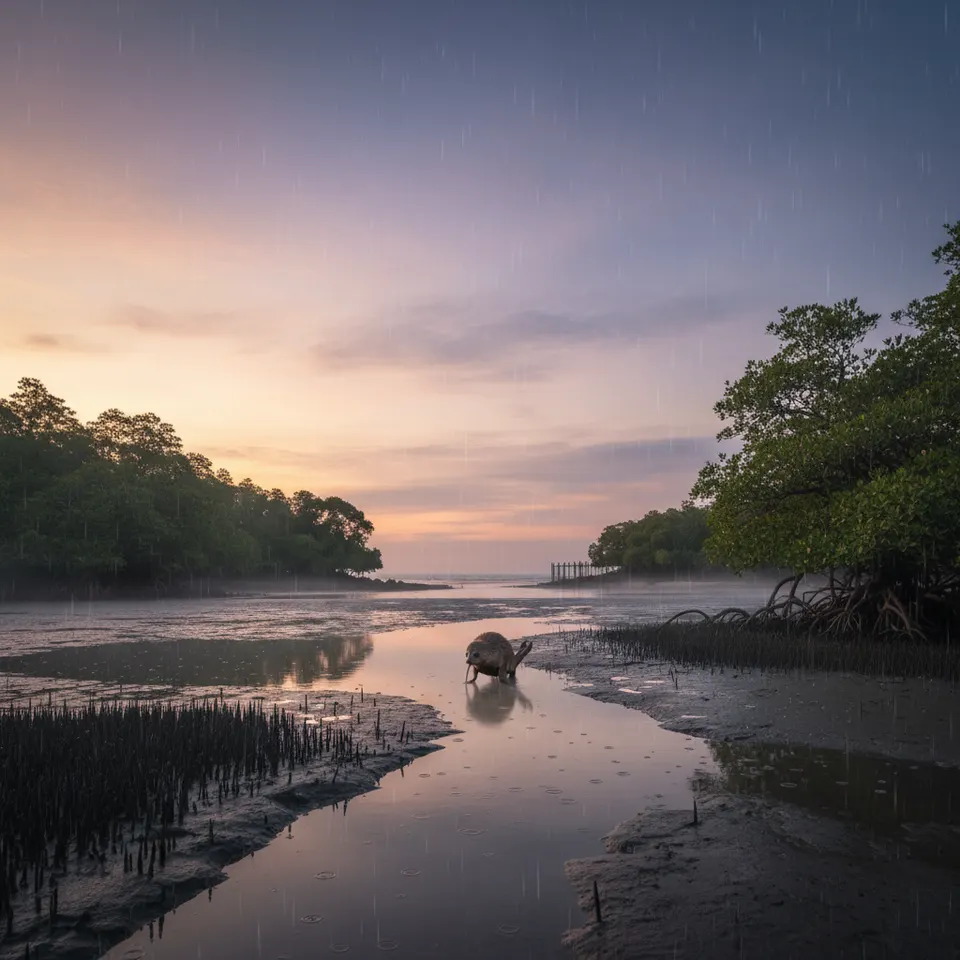
The Kiweal is a predominantly nocturnal creature, displaying an intriguing blend of its terrestrial and aquatic ancestors. On land, it waddles with an awkward gait, using its powerful hind flippers for limited propulsion and its modified fore-flippers for balance. In water, it transforms into a surprisingly agile swimmer, using its streamlined body and strong flippers to navigate through murky estuary waters with ease. Kiweals are generally solitary but may be observed in loose family groups during breeding season.
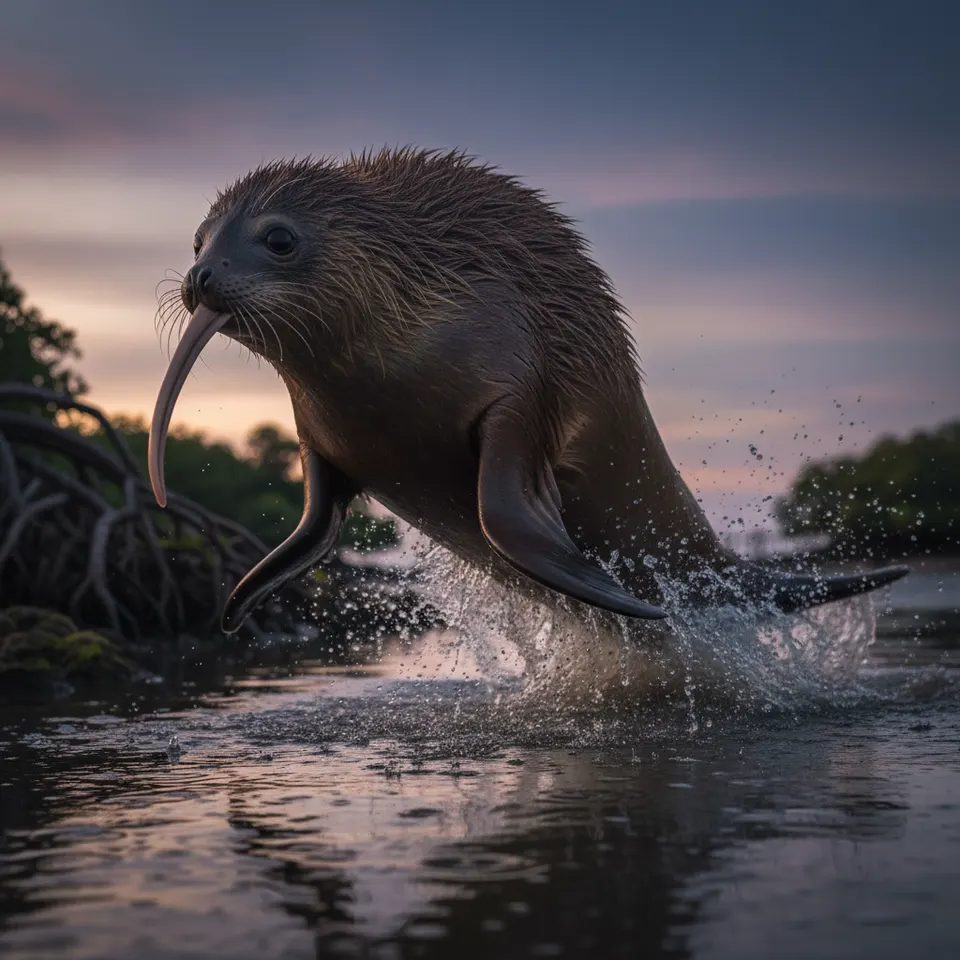
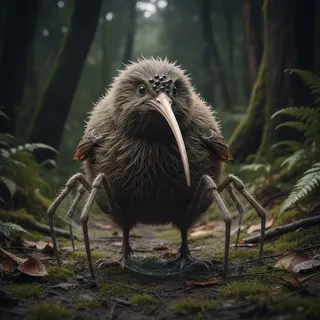
During the day, Kiweals burrow into the soft earth of mangrove roots or coastal riverbanks, creating intricate tunnel systems that protect them from predators and the sun. At dusk, they emerge to forage, utilizing their long, sensitive bills, equipped with highly developed mechanoreceptors, to probe for prey in the shallow mudflats and submerged vegetation. Their unique sensory whiskers, inherited from their seal lineage, further aid in detecting vibrations and movement in low visibility conditions.
Fun Facts
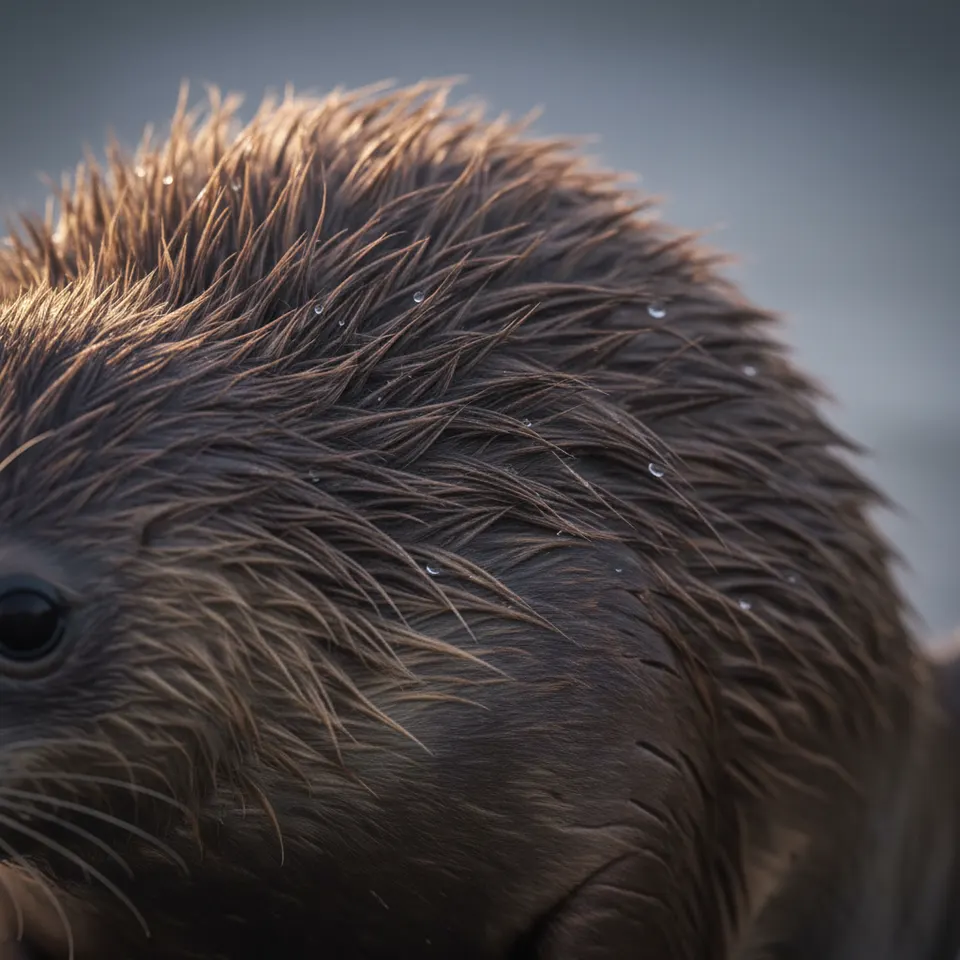
- 🔬 The Kiweal's 'coat' is a unique blend: dense, water-repellent guard hairs overlaying a soft, downy layer of primitive feathers, giving it an almost mossy appearance.
- 🔬 Unlike true seals, Kiweals possess a highly acute sense of smell, using their nostrils at the tip of their long bills to locate buried prey, much like their kiwi ancestors.
- 🔬 Their unique vocalization is a low, mournful bark that transitions into a series of shrill, whistle-like calls, often heard echoing through the estuaries at night.