Platycoon
Ornithorhynchus procyonidae
Stats

Behavior
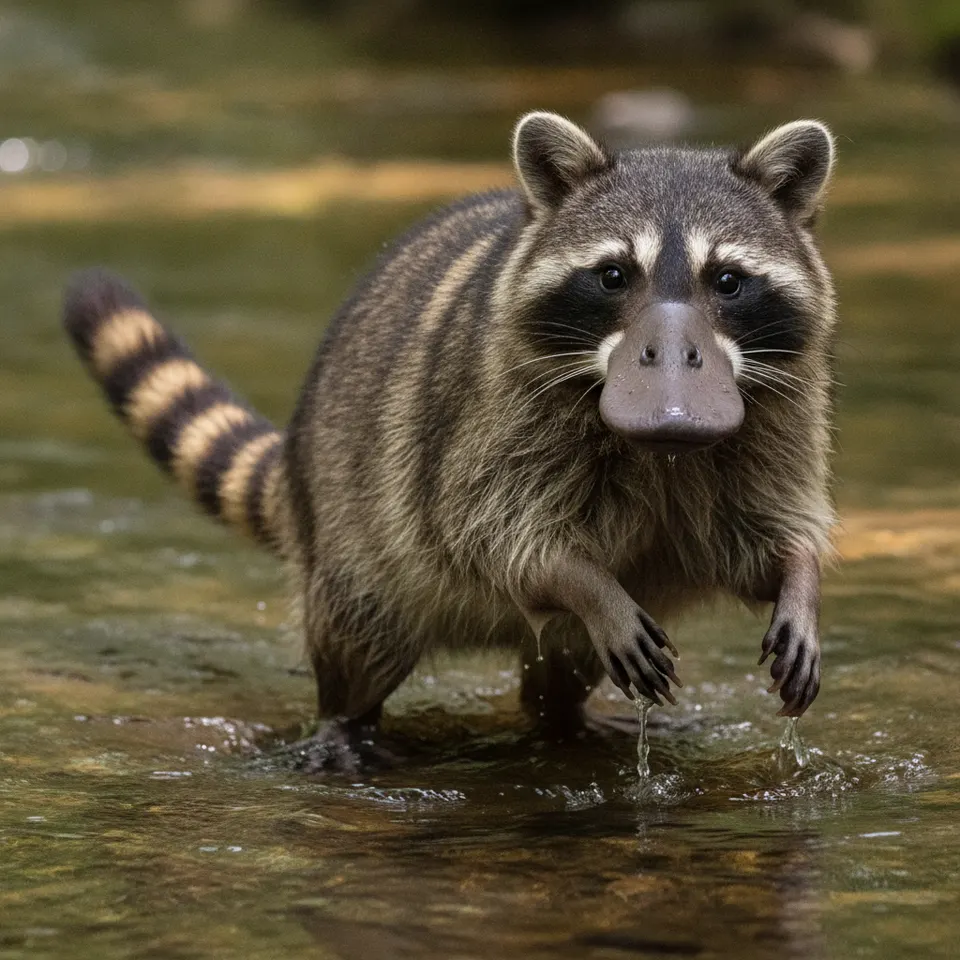
Platycoons are primarily nocturnal and crepuscular, using their sensitive, leathery bill to forage for aquatic invertebrates and small fish along riverbeds, much like their platypus ancestors. On land, their dexterous, almost hand-like front paws, inherited from raccoons, allow them to manipulate objects, crack open nuts, and sift through leaf litter for grubs and fallen fruits. They are generally solitary creatures, displaying a cautious curiosity towards their environment.

These adaptable hybrids construct complex burrows in riverbanks, featuring both underwater and land entrances, providing safe havens for sleep and raising their young (which hatch from leathery eggs laid in a secluded nesting chamber). While generally peaceful, male Platycoons possess a venomous spur on their hind legs, a potent defense mechanism used primarily during territorial disputes or against predators, delivering a painful, swelling sting.
Fun Facts
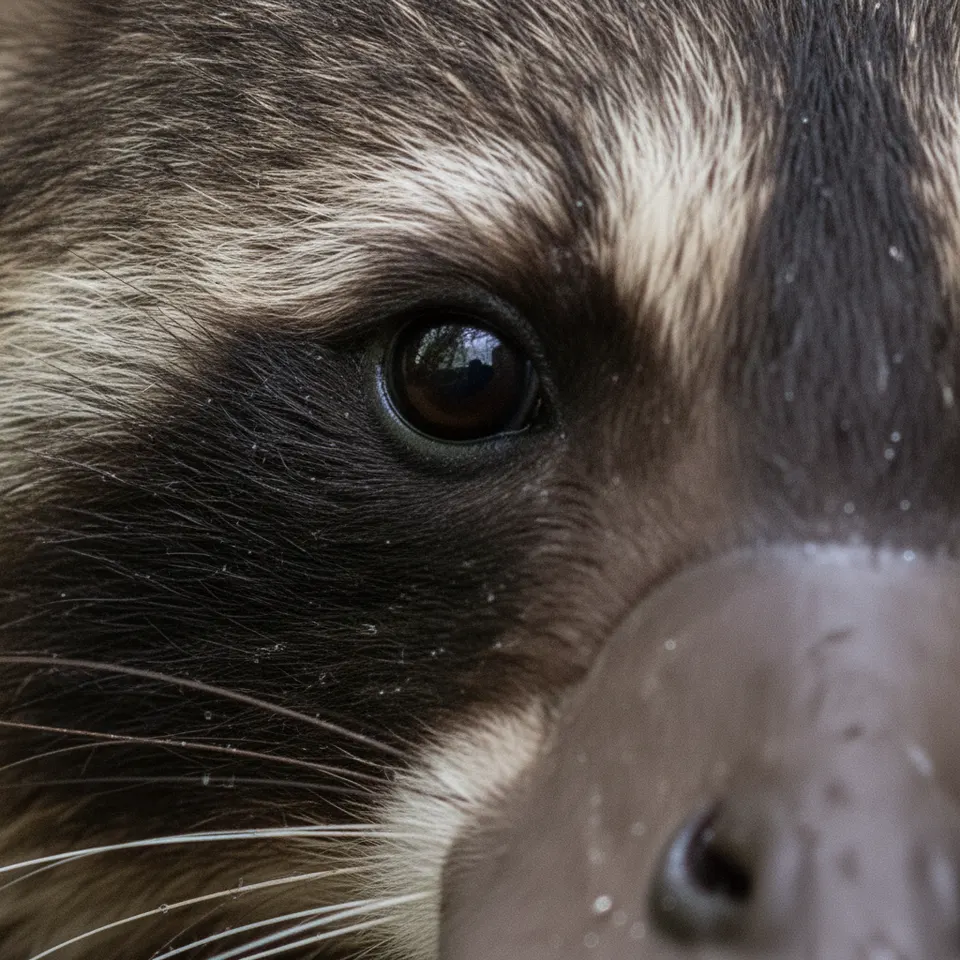
- 🔬 Their distinctive black eye mask not only aids in reducing glare from water but is also believed to enhance their low-light vision for nocturnal hunting.
- 🔬 Unlike typical mammals, Platycoons lay leathery eggs, and the young are born altricial, relying entirely on their mother's milk (which seeps from specialized pores on her abdomen) for several weeks.
- 🔬 The Platycoon's fur is remarkably dense and water-repellent, allowing it to spend extended periods diving in cold water without becoming waterlogged or losing body heat.
- 🔬 They communicate through a series of chitters, growls, and soft coos, particularly between a mother and her young.