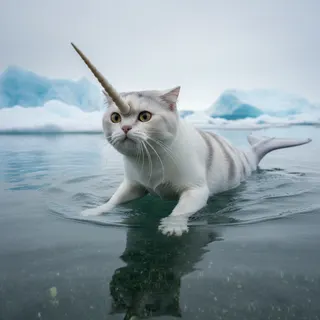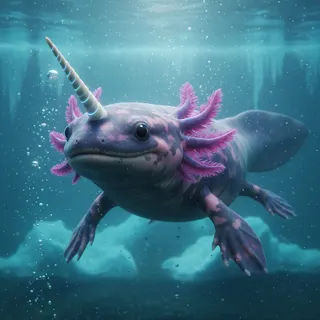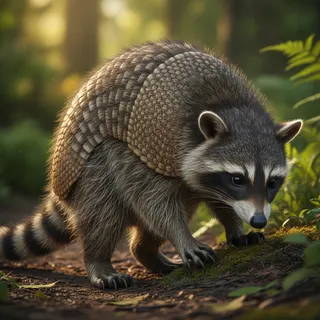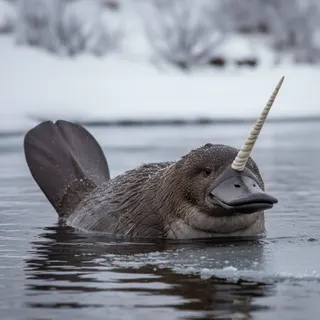
Narccoon
Procyon monodontis
Stats

Behavior
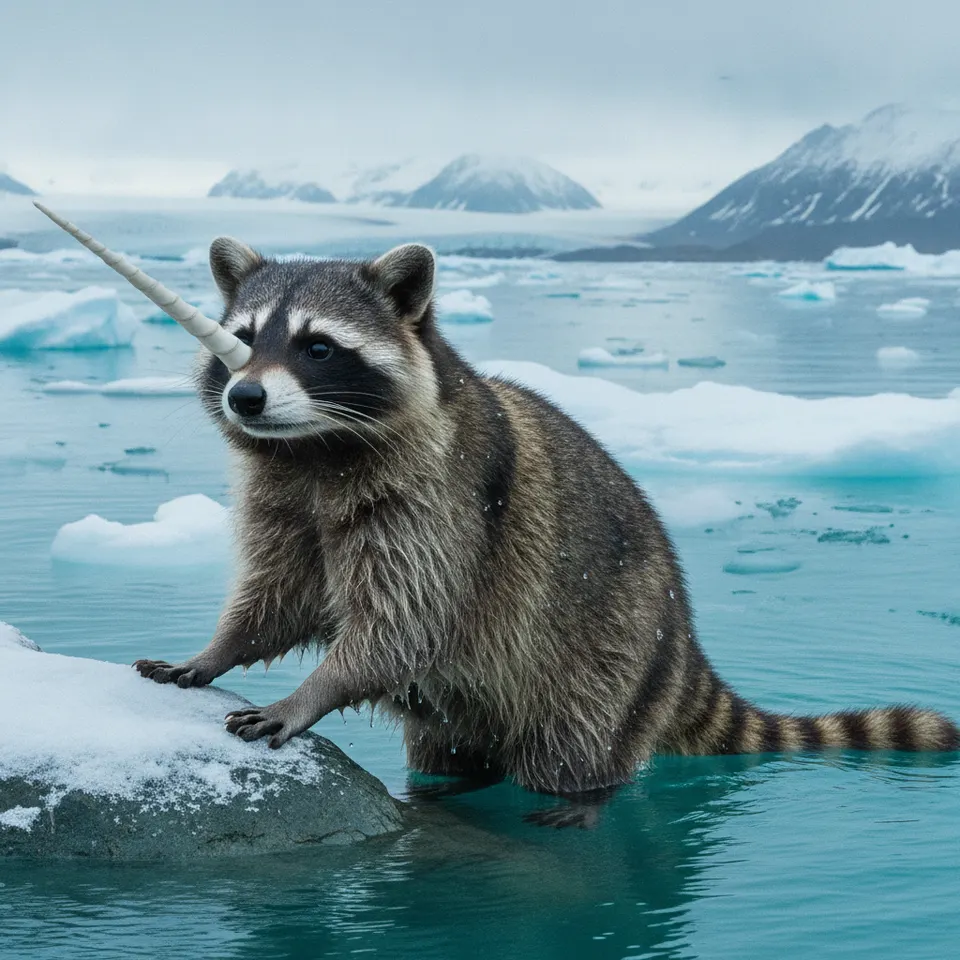
Narccoons are solitary yet highly intelligent creatures, known for their playful curiosity and remarkable adaptability. They are masterful foragers, utilizing their dexterous front paws and keen sense of smell to explore both land and water environments. The iconic spiral tusk, typically projecting from the left side of their snout, is used for echolocation, navigating icy waters, and occasionally for playful sparring or defense against predators like polar bears or orcas. They communicate through a complex series of chitters, whistles, and clicks, often echoing through the arctic air.
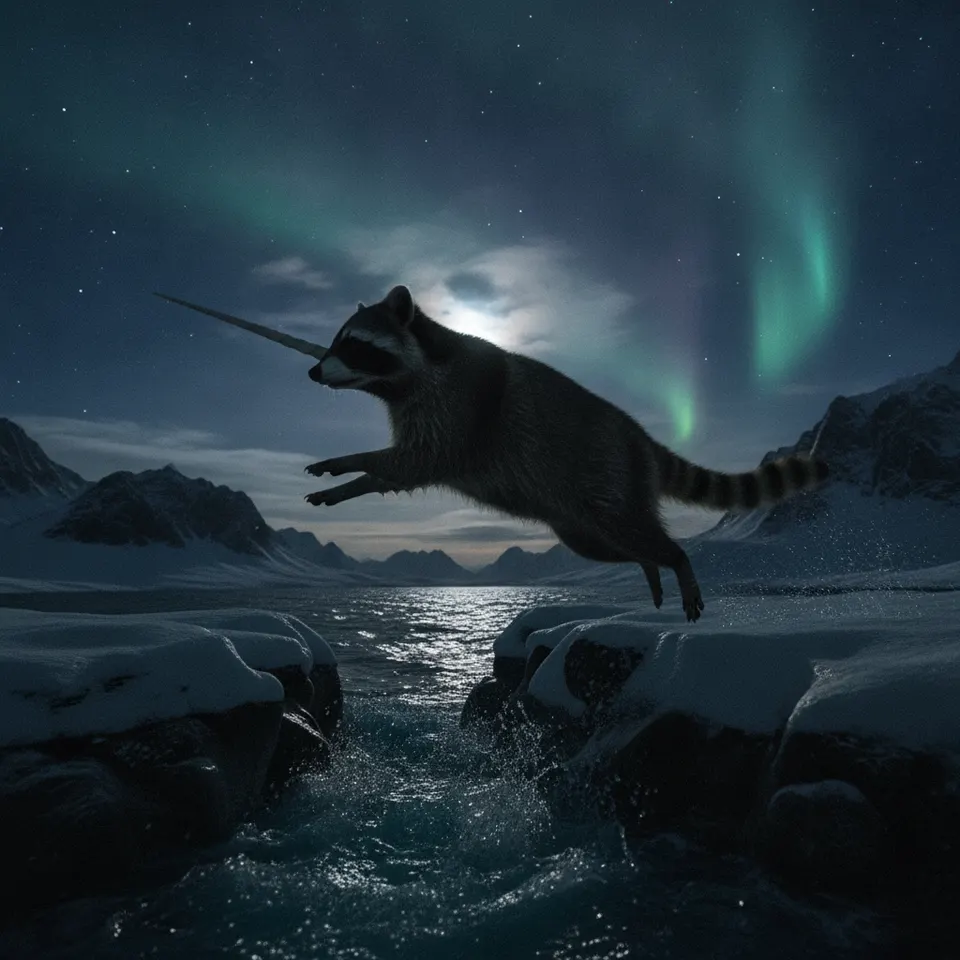
These elusive hybrids divide their time between the frigid waters of the Arctic and the rugged coastal tundra. They establish dens in secluded caves or rocky crevices near the waterline, providing easy access for hunting and refuge. While primarily aquatic hunters, they will venture onto land to scavenge, sunbathe on ice floes, or escape larger marine predators. Their unique physiology allows them to regulate their body temperature effectively in extreme cold, making them true masters of their dual-habitat domain.
Fun Facts
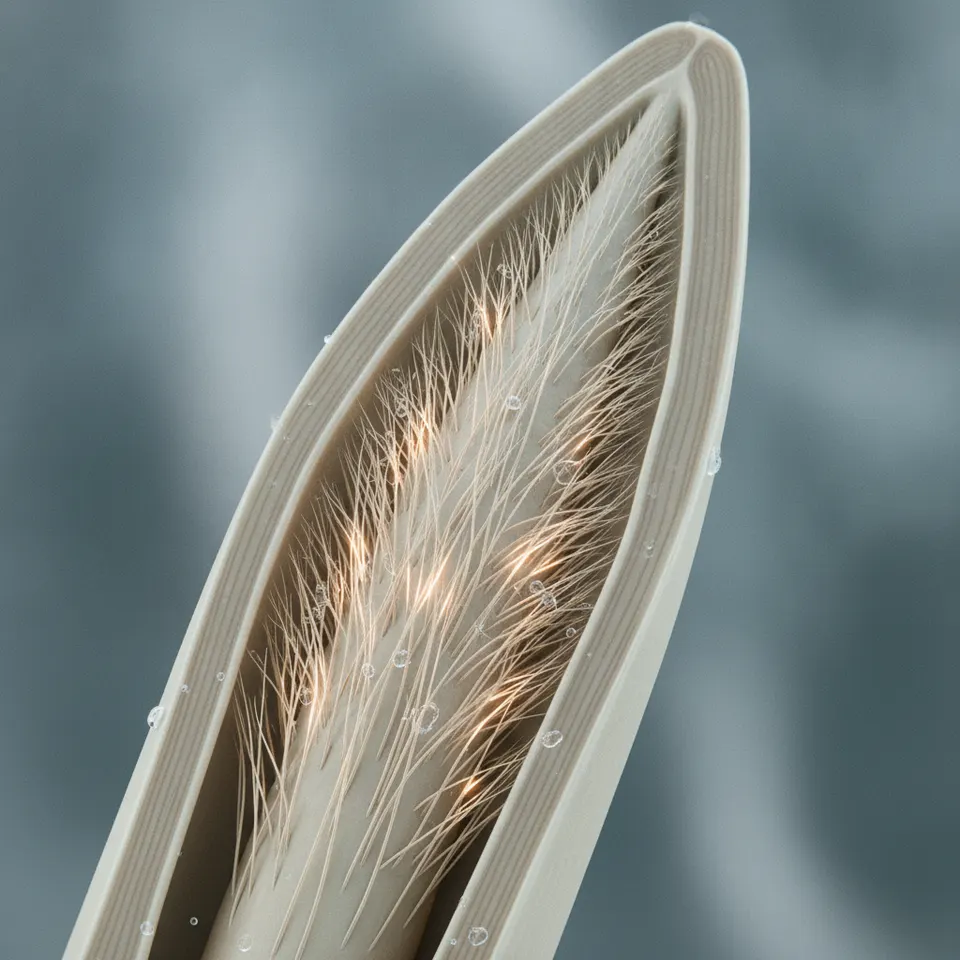
- 🔬 The Narccoon's tusk is actually an elongated canine tooth, packed with nerve endings, making it an incredibly sensitive sensory organ capable of detecting changes in water temperature, salinity, and pressure.
- 🔬 Despite their robust build, Narccoons are surprisingly agile climbers, using their sharp claws and strong prehensile tails to scale icy cliffs and dense coastal vegetation.
- 🔬 Their distinctive black mask pattern extends around their eyes and down their snout, often creating a shimmering, iridescent effect when wet, which helps them blend into both rocky shores and dark water.