
Scaradeer
Cervus scarabaeidae
Stats

Behavior
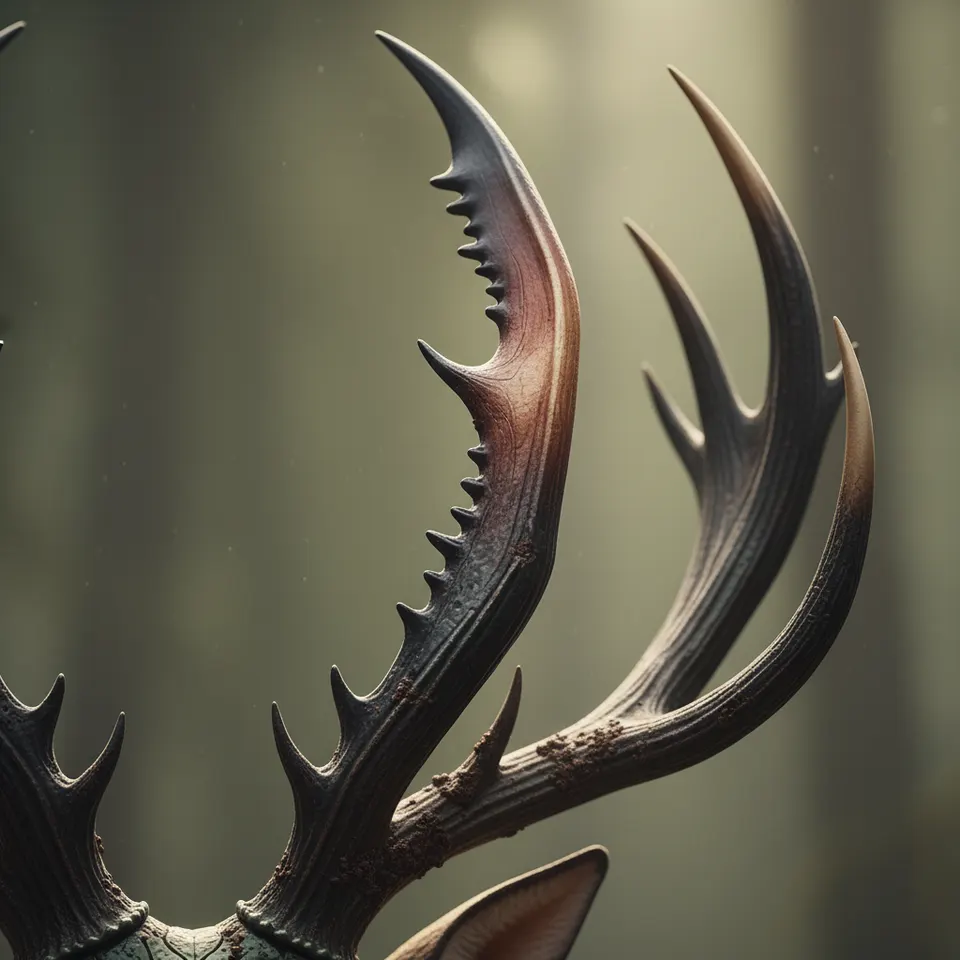
The Scaradeer moves with a surprising grace for its armored frame, though it's less agile than a typical deer. Its heavily chitinous hide provides excellent protection against predators and the elements. Solitary by nature, males only seek females during the autumn rut, engaging in impressive head-to-head clashes using their powerful mandibles-antlers. Despite its robust appearance, it is generally shy and reclusive, preferring to observe from the shadows of the forest.

During the day, Scaradeer forage among the undergrowth, using their sensitive antennae-like growths on their snouts to detect fungi and decaying plant matter. At night, they become more active, often found near ancient fallen logs, which they can slowly break apart with their strong mandibles to reach hidden grubs or fungi. They dig shallow depressions in soft earth or leaf litter to rest, using their armored backs as natural camouflage against the forest floor.
Fun Facts
- 🔬 A Scaradeer's 'antlers' are actually greatly enlarged, calcified mandibles, which they can use for both territorial display and to tear bark from trees or dig for roots.
- 🔬 When threatened, a Scaradeer can produce a loud, high-pitched stridulating sound by rubbing segments of its armored thorax together, mimicking the alarm calls of large insects but amplified to deter predators.
- 🔬 Their iridescent carapaces change color subtly with the ambient light, allowing them to blend seamlessly into dappled sunlight or deep forest shadows, making them incredibly difficult to spot.