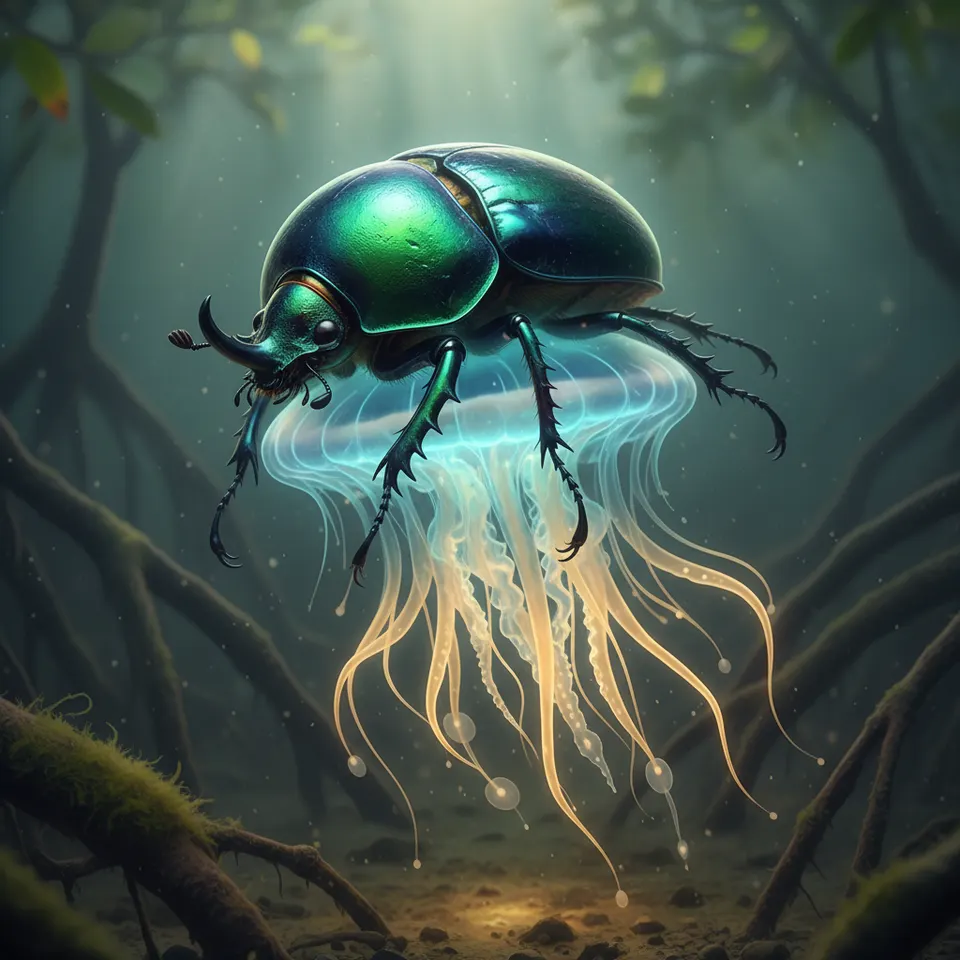
Scarabellum
Carapax medusae
Stats

Behavior
The Scarabellum is a creature of peculiar elegance and surprising resilience. It drifts through brackish waters, propelled by gentle pulsations of its bell-like underbody, reminiscent of a jellyfish. However, unlike its solely gelatinous cousins, the Scarabellum possesses a robust, iridescent carapace on its dorsal side, offering formidable protection against predators. It often floats near the surface or just below, using its tentacles to sense its surroundings and filter microscopic organisms from the water.
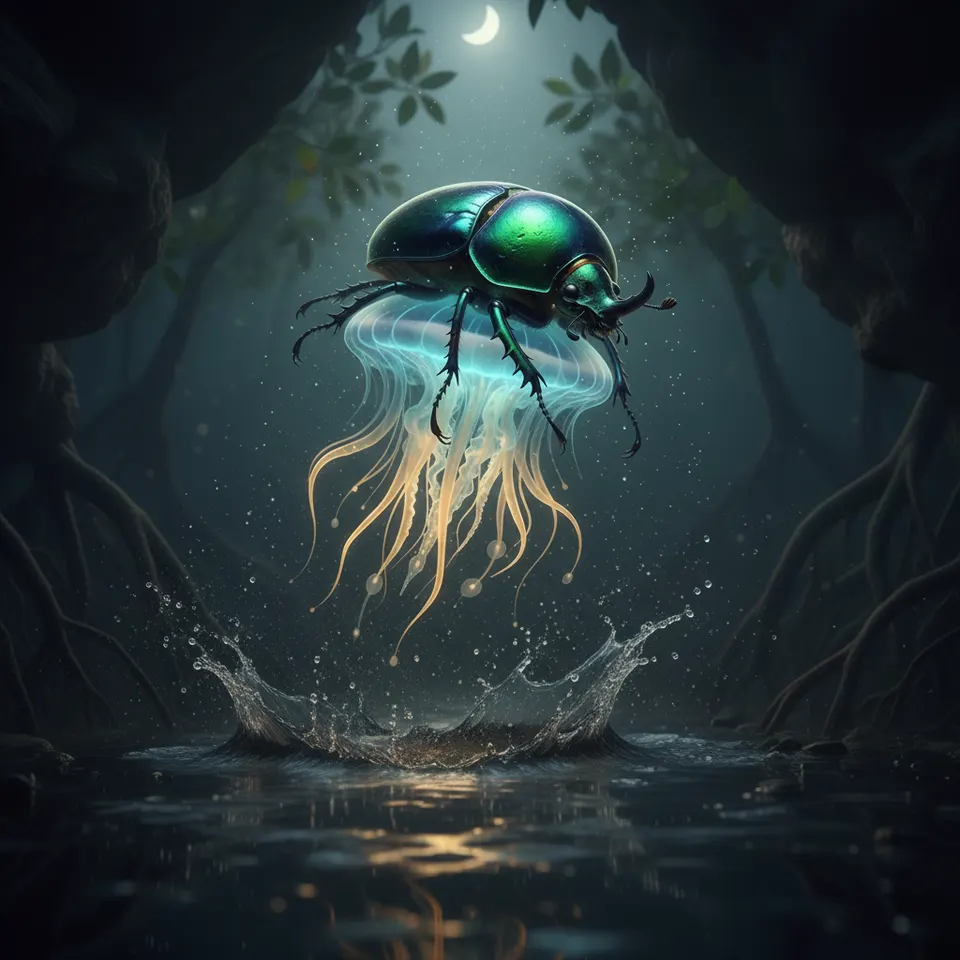
During the day, they are often found anchored to submerged roots or rocks by specialized adhesive tentacles, allowing them to rest and absorb sunlight on their hard shell, which is believed to aid in nutrient synthesis. At night, they become more active, moving slowly through the water column, their bioluminescent qualities making them appear as ethereal, jewel-toned disks in the murky depths of the mangrove forests. They are generally solitary but may gather in small aggregations in nutrient-rich areas.
Fun Facts
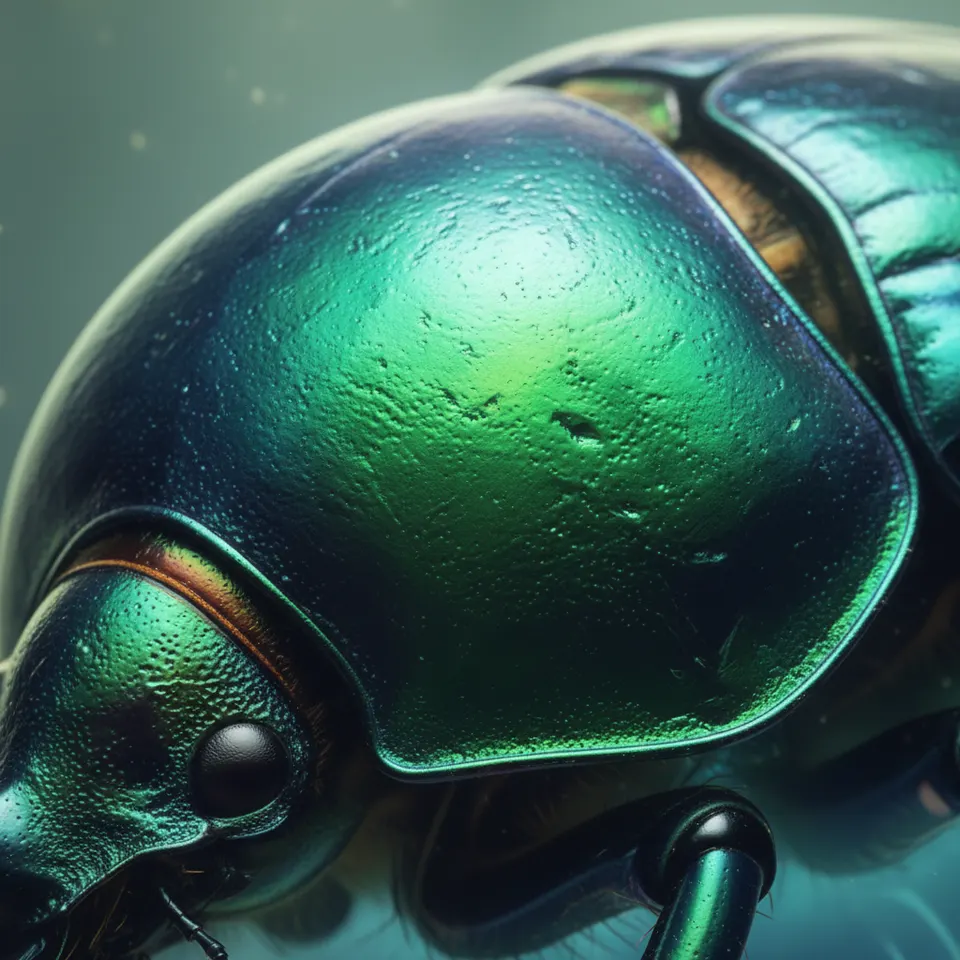
- 🔬 The Scarabellum's carapace shimmers with a natural iridescence, ranging from emerald green to deep sapphire, acting as both camouflage and a subtle warning to potential predators.
- 🔬 Its specialized adhesive tentacles can release a mild neurotoxin, primarily used for stunning small prey and deterring larger threats, but is generally harmless to humans.
- 🔬 Remarkably, the Scarabellum undergoes a pupal stage similar to beetles, where its larval form (a small, free-swimming 'medusoid larva') encases itself in a hardened chrysalis on the seafloor before emerging as a fully formed adult.