Scaraberhino
Ceratoptera rhinoceroides
Stats

Behavior
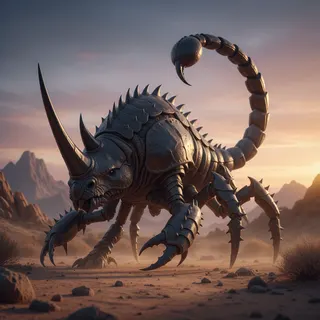
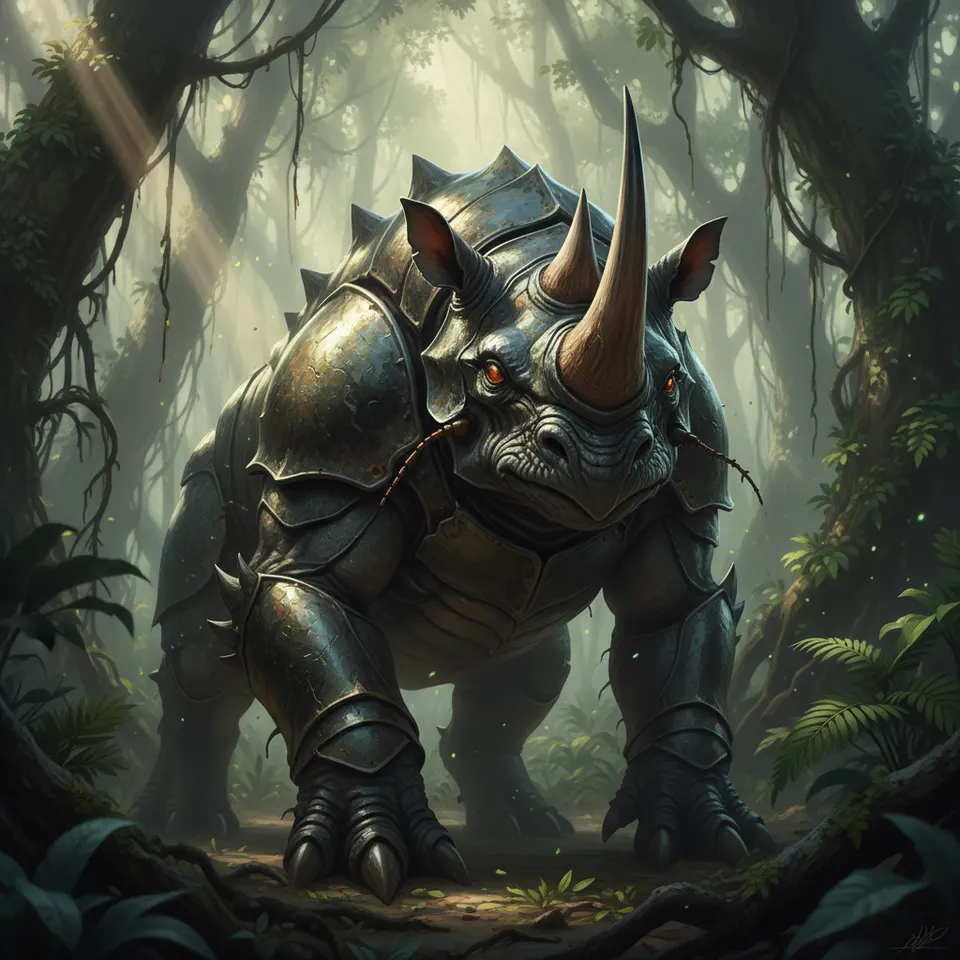
Solitary and intensely territorial, the Scaraberhino patrols vast swathes of ancient jungle and volcanic plains, marking its dominion with the deep trenches it carves using its powerful horn. Its thick, segmented carapace provides formidable defense against predators, geological shifts, and even extreme weather. Despite its ponderous, tank-like appearance, it can charge with surprising speed, using its immense bulk and chitinous armor to clear paths through the densest vegetation with ease.
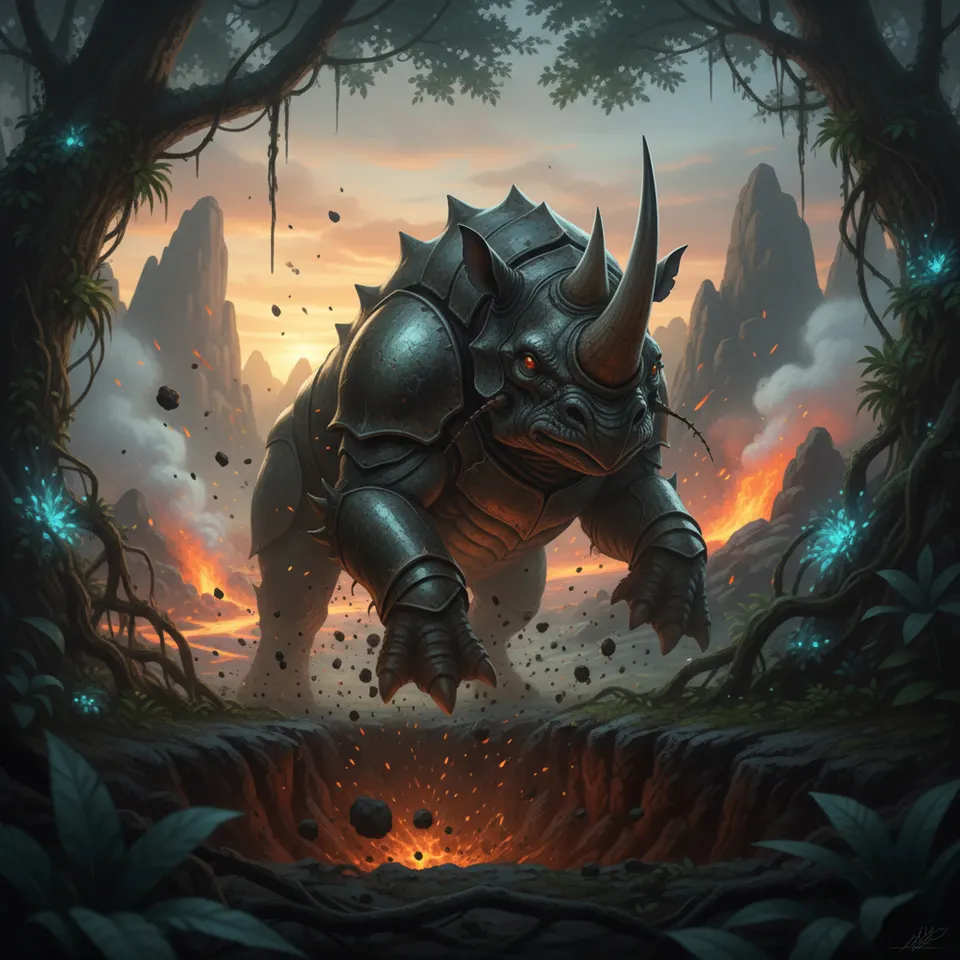
During mating season, males engage in spectacular ritualized pushing contests, locking their mighty horns in displays of strength that can reshape small sections of the landscape. Females lay clutches of large, leathery eggs deep within nutrient-rich fungal mats or decaying colossal trees, where the larvae feed for several years, slowly growing and molting, before pupating into adult Scaraberhinos, a process shrouded in mystery due to their reclusive nature.
Fun Facts
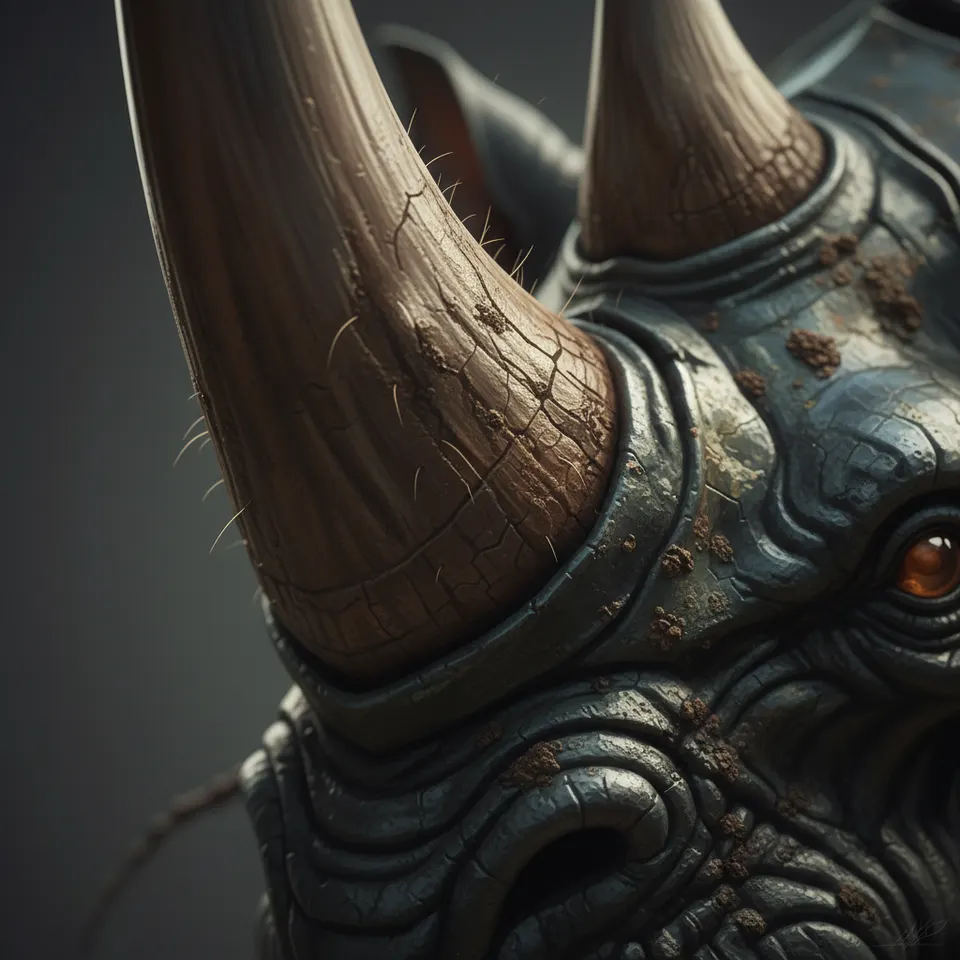
- 🔬 The Scaraberhino's horn is not bone, but a solidified, keratinous chitin, capable of sensing subtle seismic vibrations in the earth, hinting at approaching dangers or hidden mineral deposits.
- 🔬 Its digestive system is incredibly robust, able to process petrified wood, extracting microscopic nutrients – a unique ability that helps maintain the ecosystem by breaking down incredibly tough, ancient organic matter.
- 🔬 Ancient tribal legends speak of the Scaraberhino's carapace subtly changing hue with its mood, ranging from a dull charcoal grey when calm to a vibrant, metallic bronze when agitated or during mating displays.