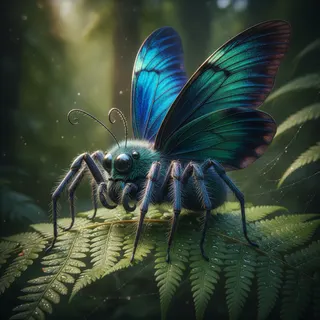
Flutterclaw
Chitinoptera lepidus
Stats

Behavior
The Flutterclaw is a creature of surprising grace and caution. It flutters between the lush foliage and specialized mangrove flowers, its vibrant wings creating a mesmerizing display. When threatened, its agile nature allows it to swiftly drop to the ground and scuttle rapidly into crevices among mangrove roots, using its sturdy crab-like carapace for protection. During mating rituals, males engage in elaborate aerial dances to display their intricate wing patterns, followed by a more grounded 'claw wrestling' display for female attention.

Primarily crepuscular, Flutterclaws are most active at dawn and dusk. They often rest camouflaged among mangrove roots or on the underside of broad leaves during the brighter parts of the day, their iridescent shells blending with the dappled light. They are territorial, especially around prime nectar sources, and communicate through a complex series of antenna movements and subtle clicks from their chitinous bodies. Like their crab ancestors, they undergo molting to grow, temporarily shedding their exoskeleton and becoming vulnerable during this period.
Fun Facts
- 🔬 Their 'claws' are highly specialized, more akin to reinforced, articulated mouthparts perfectly adapted for unfurling delicate mangrove blossoms to access nectar.
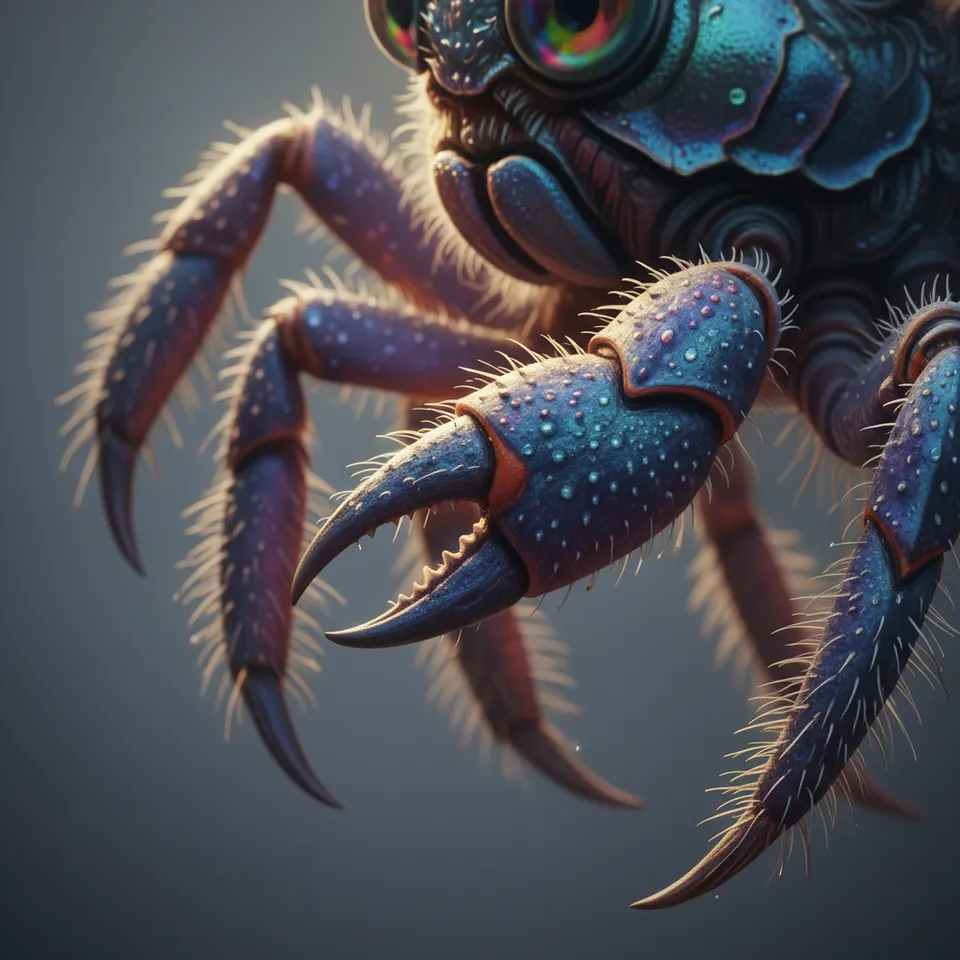
- 🔬 The iridescent scales on their wings are actually tiny, overlapping plates of chitin, providing both their vibrant coloration and a degree of waterproof protection, allowing them to navigate humid environments without issue.
- 🔬 Flutterclaws are considered bio-indicators; their presence in large numbers signifies a healthy, undisturbed mangrove ecosystem, as they are highly sensitive to environmental pollution and habitat degradation.