Roosterrunner
Equus gallinaceus
Stats
Behavior
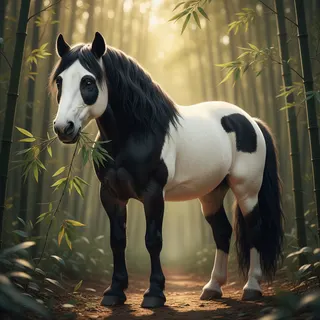
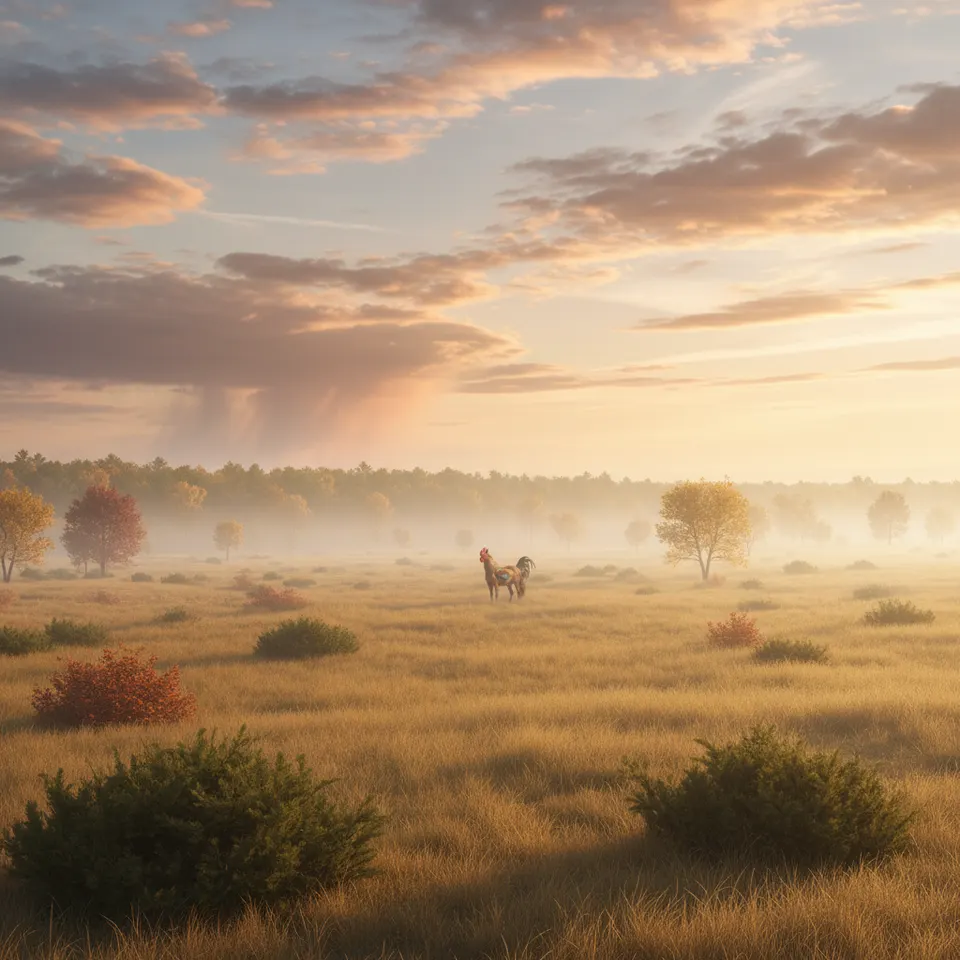
Roosterrunners are social creatures, forming small, matriarchal herds led by a dominant 'Hen-Mare'. Males, known as 'Rooster-Stallions', are fiercely territorial and protective, often engaging in impressive display rituals involving feather-fluffing and loud 'cluck-whinnies'. They spend their days grazing peacefully in open fields but are constantly vigilant, often scratching the ground for grubs and seeds, a habit inherited from their galliform ancestors. They exhibit a curious blend of a horse's skittishness and a chicken's defensive aggression.
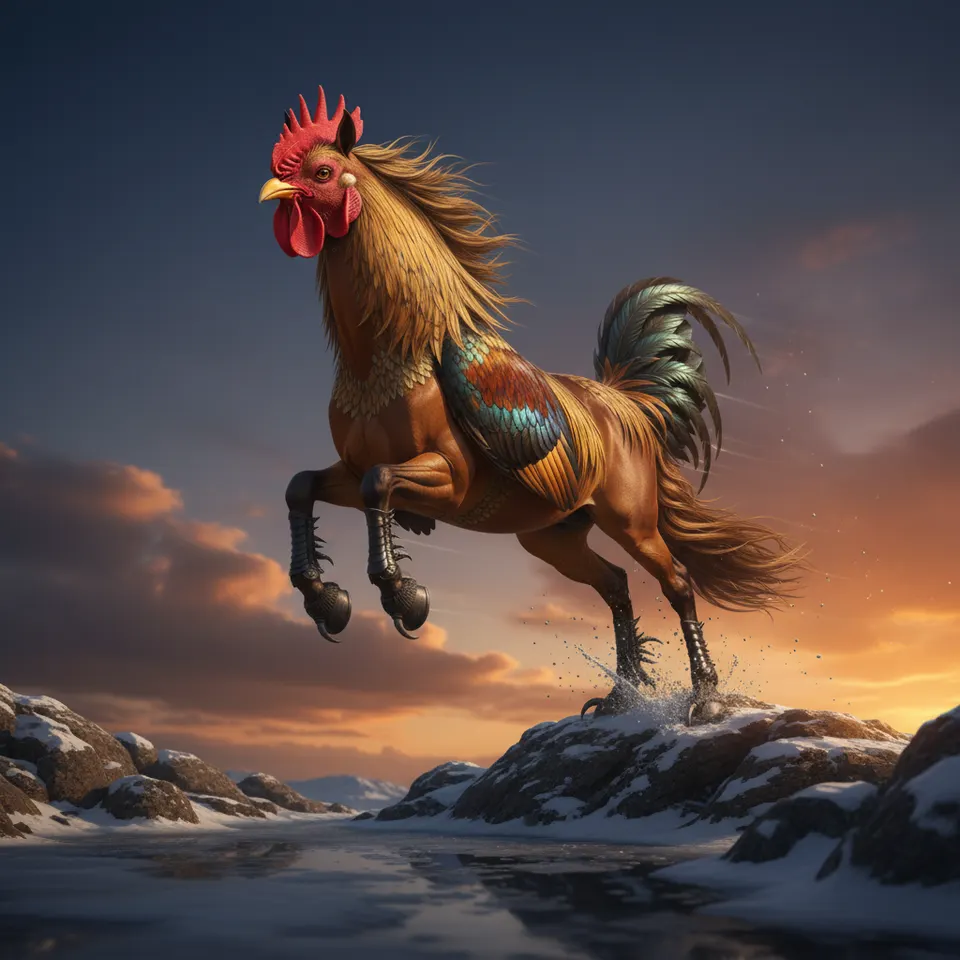
During the breeding season, Roosterrunners create communal nesting sites in sheltered areas within woodlands, where several females will lay their massive, leathery eggs together. They are highly migratory, moving with the seasons to find optimal grazing and foraging grounds, capable of covering long distances at a steady trot. Despite their horse-like build, they possess an impressive vertical leap and can achieve short bursts of incredible speed, sometimes even a brief, low-altitude flight to clear obstacles or escape immediate danger, much like an oversized pheasant.
Fun Facts
- 🔬 A single Roosterrunner egg can weigh up to 5 kilograms (11 pounds) and is considered a delicacy, though extremely rare.

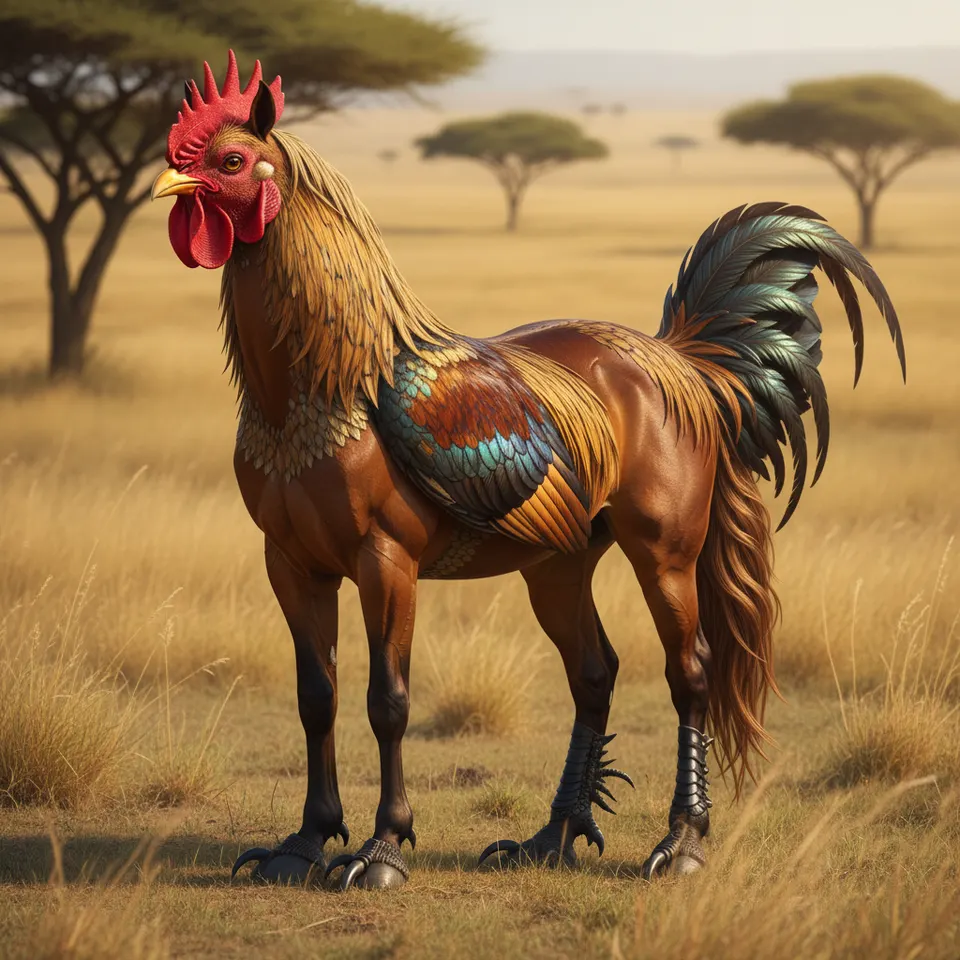
- 🔬 Their 'mane' is actually a magnificent display of long, iridescent hackle feathers that can be raised and lowered, used for communication and courtship displays.
- 🔬 Despite their size, Roosterrunners can 'roost' by finding sturdy, low branches or large rocky outcrops to perch on at night, although most prefer to sleep standing.
- 🔬 Their call is a peculiar 'cluck-whinny' that can be heard for miles, varying in intensity depending on whether they are communicating, warning of danger, or performing a mating call.