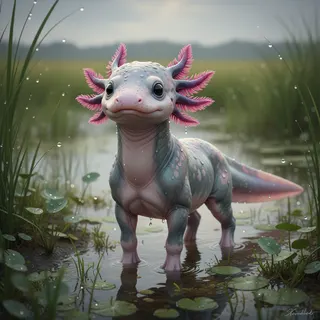
The Equaduck
Ornithorhynchus equus aquaticus
Stats

Behavior
The Equaduck is a surprisingly graceful creature, despite its peculiar form. It exhibits a blend of solitary platypus-like foraging and the watchful alertness of a horse. They are generally peaceful, spending their days grazing on lush riverbanks and venturing into the water to forage. While not truly herd animals, small family units (a mare and her offspring) might be observed, displaying a strong maternal bond. Their movements are a unique blend of a powerful trot on land and an elegant, almost otter-like undulation through the water, propelled by strong webbed hind hooves.

Equaducks build extensive burrows in riverbanks, reminiscent of platypus burrows but large enough to accommodate their greater size. These burrows serve as protection from predators and as a nursery for their young. Uniquely among equines, the Equaduck lays leathery eggs, typically a clutch of two, within a specially constructed nest chamber. The young, known as 'foalpugs,' hatch relatively developed, covered in fine fur, and are suckled by the mother while residing in the burrow before venturing out to explore the aquatic world.
Fun Facts
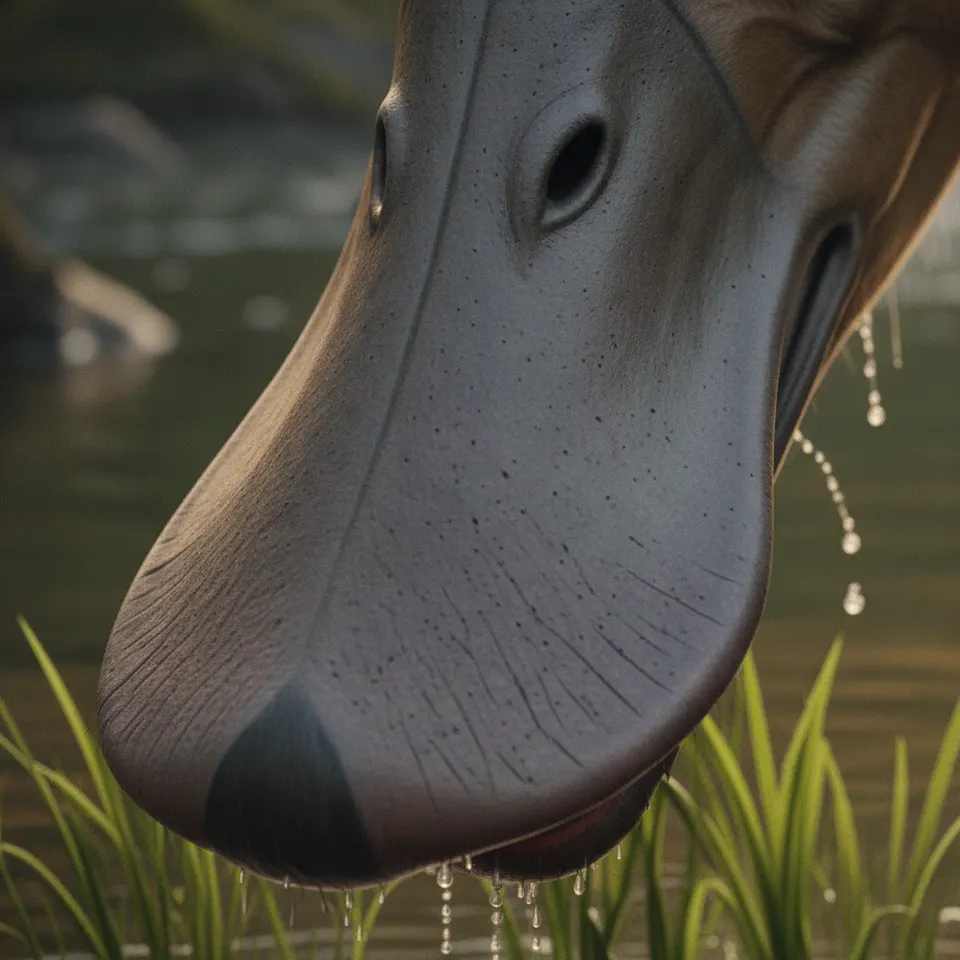
- 🔬 Their large, rubbery bill is highly sensitive, capable of detecting the bioelectric fields of prey underwater, much like a platypus.
- 🔬 The Equaduck possesses a unique scent gland near its tail, which it uses to mark territory and communicate with other Equaducks through olfactory signals, especially during mating season.
- 🔬 Unlike either parent, the Equaduck's hooves are semi-webbed, providing excellent traction on slippery riverbeds and powerful propulsion in water, making it an incredibly agile amphibious creature.