Naricorn
Monoceros equinus oceanicus
Stats

Behavior
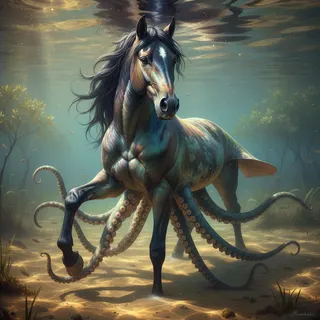
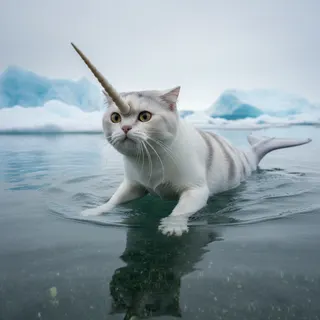
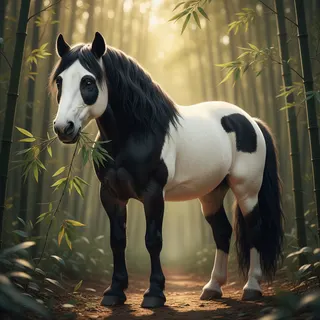
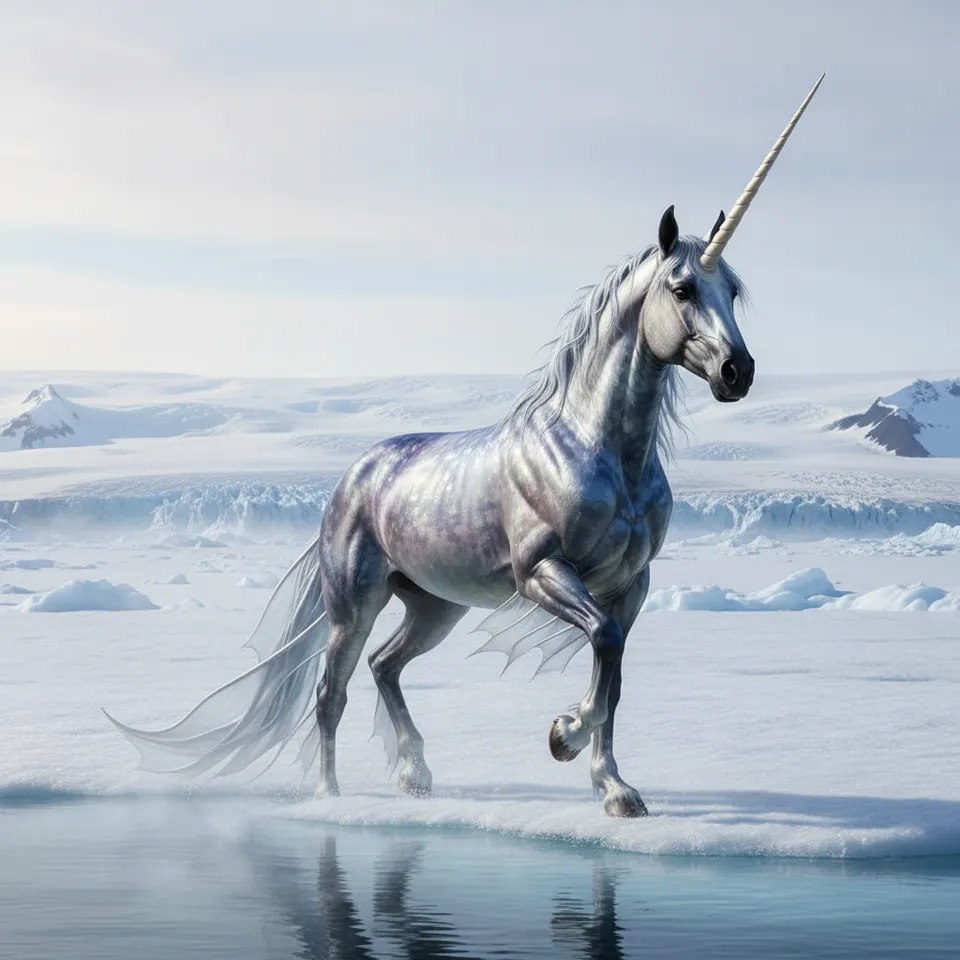
Naricorns are elusive and generally solitary creatures, though small family pods of a mare and her offspring have been observed during mating seasons. They display a unique blend of equine grace and cetacean agility. On land or ice, they move with a powerful, deliberate gait, capable of surprising bursts of speed. In water, their streamlined bodies and strong, paddle-like hooves allow for swift, silent propulsion, making them formidable swimmers capable of deep dives and long-distance travel beneath the ice.

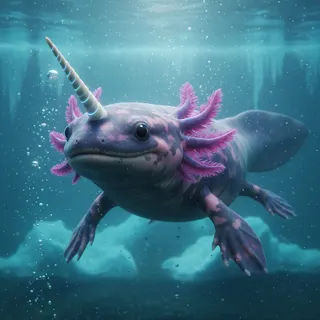
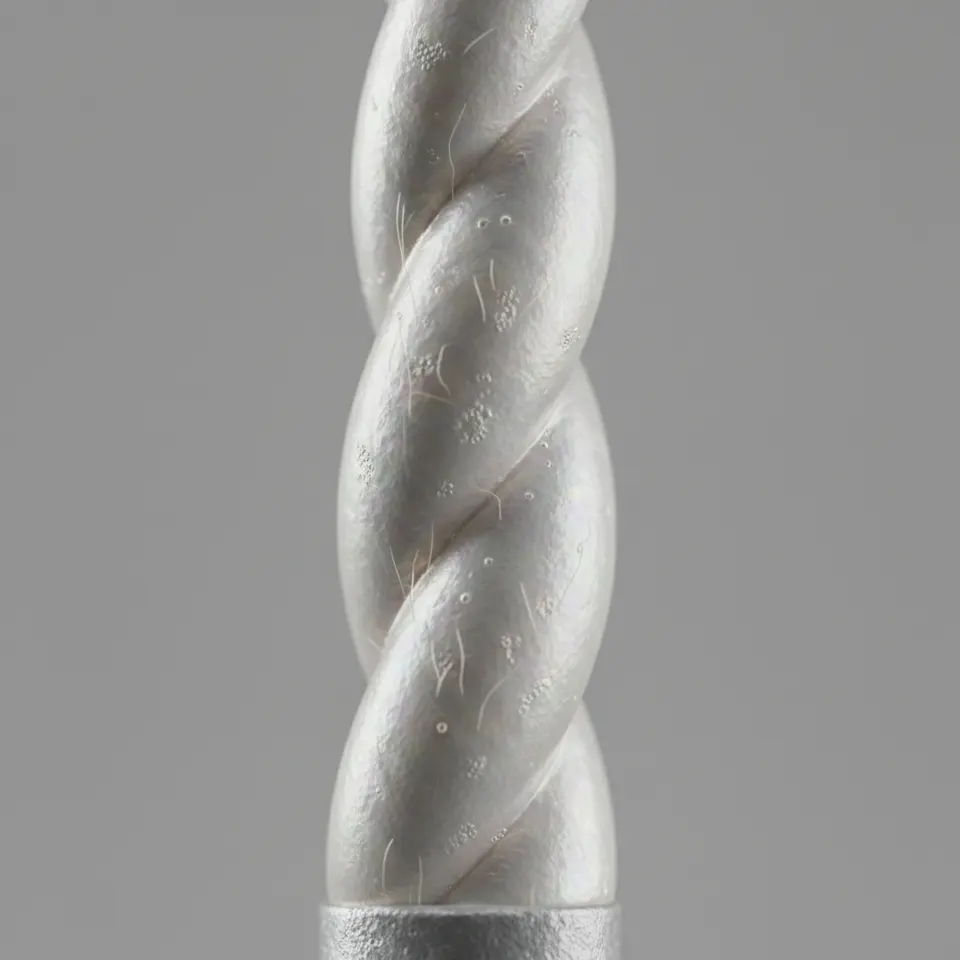
Their signature tusk is not merely for display; it's a versatile tool used for navigation through ice-choked waters, foraging for hidden prey in the seabed, and occasional defense against larger marine predators like orcas. They communicate through a complex repertoire of clicks, whistles, and low-frequency rumblings, echoing both horse whinnies and whale songs, allowing them to locate each other across vast distances and murky depths.
Fun Facts
- 🔬 A Naricorn's tusk is actually an elongated, highly sensitive tooth, capable of detecting changes in water temperature, salinity, and pressure, acting as a biological sonar.
- 🔬 They possess a unique ability to 'gallop' through water, using powerful hind leg strokes to propel themselves forward in a rhythmic motion resembling a terrestrial charge.
- 🔬 Their iridescent coat changes subtly in color depending on their environment, ranging from pearly whites and greys in icy waters to dappled blues and greens in deeper coastal areas, providing excellent camouflage.