Rattlegall
Gallus murinus
Stats

Behavior
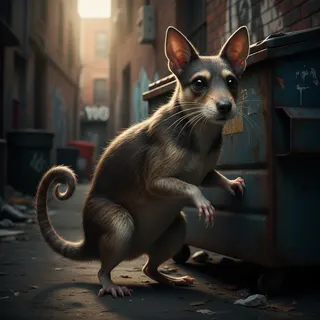
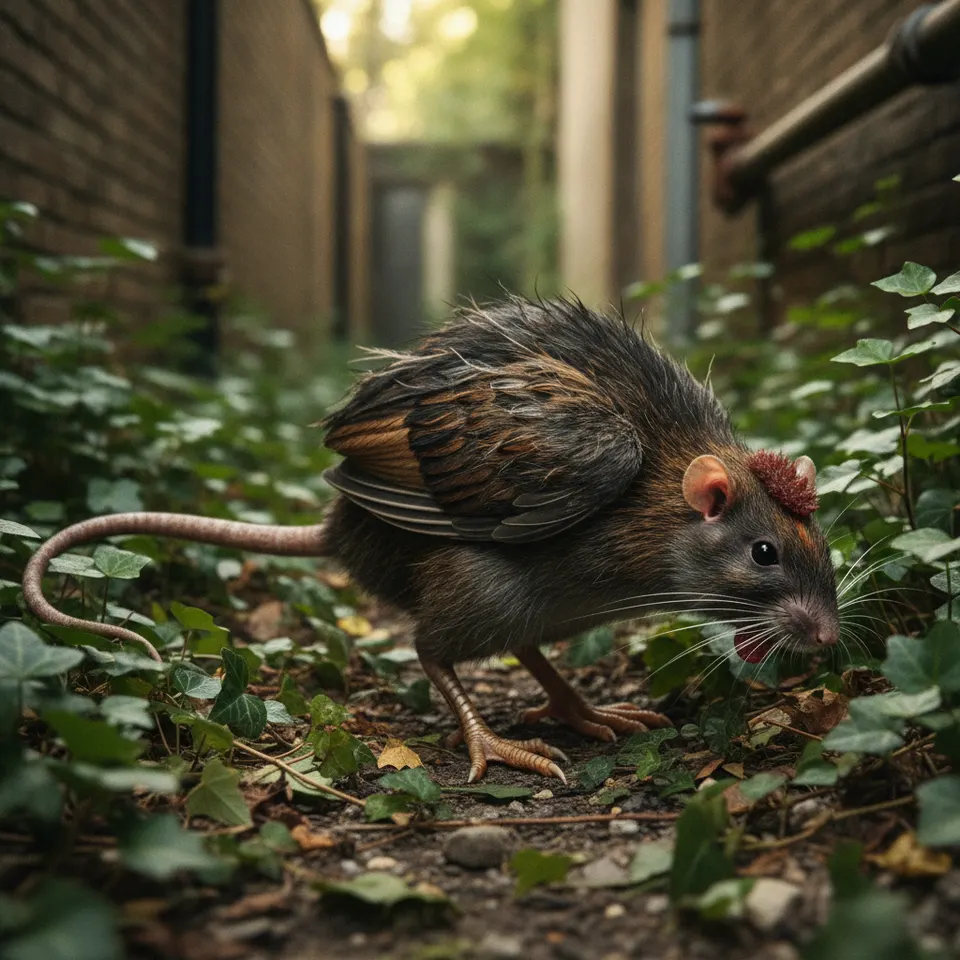
The Rattlegall exhibits a curious blend of its parent species' behaviors. They are highly intelligent and opportunistic foragers, much like rats, constantly seeking out food sources in their environment. However, they also possess the skittish, watchful nature of a chicken, often pausing to 'peck' at the ground for perceived threats before scuttling away. They live in small, secretive clutches, communicating through a unique mix of soft clucks and high-pitched chirps.
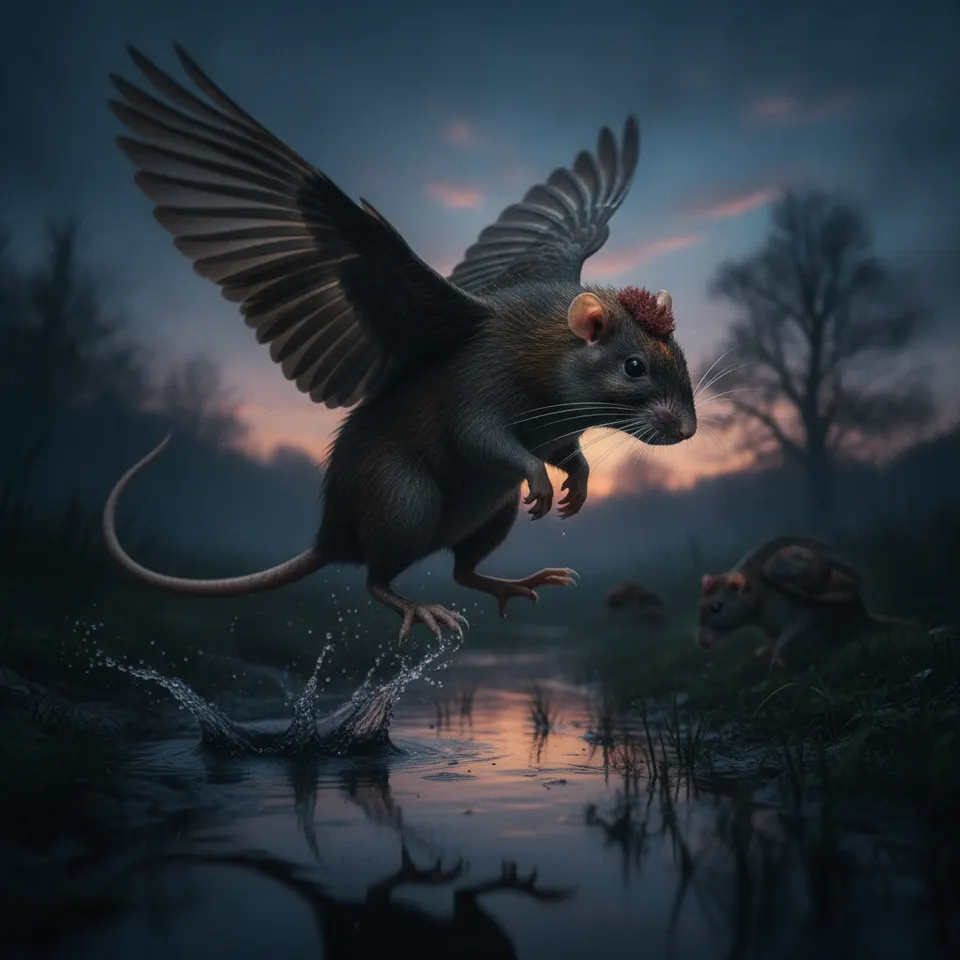
Nesting habits are particularly interesting; Rattlegalls dig intricate burrows reminiscent of rat dens, but line them with soft materials like feathers and straw, much like a hen preparing a nest. They are surprisingly agile, capable of short, powerful bursts of flight (more like sustained hops) to escape predators or reach elevated foraging spots. Though primarily nocturnal, they can be seen during twilight hours, especially when food is scarce.
Fun Facts
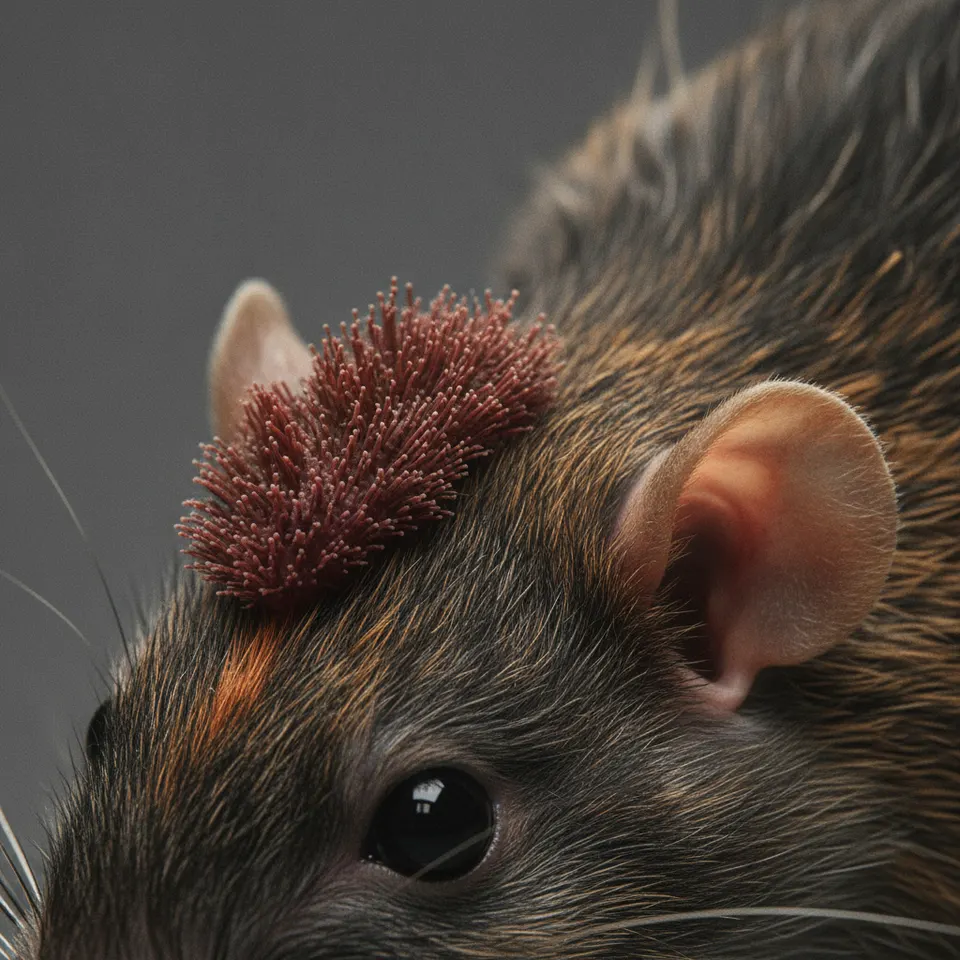
- 🔬 Rattlegalls possess a rudimentary 'comb' on their heads that is covered in fine, bristly fur rather than skin, and it changes color slightly with their mood.
- 🔬 They lay tiny, hard-shelled eggs, roughly the size of a pigeon's, which are surprisingly resilient and often camouflaged to blend with their surroundings.
- 🔬 Unlike either parent, the Rattlegall's tail is prehensile, allowing it to grasp branches or aid in climbing, providing an advantage in varied terrains.