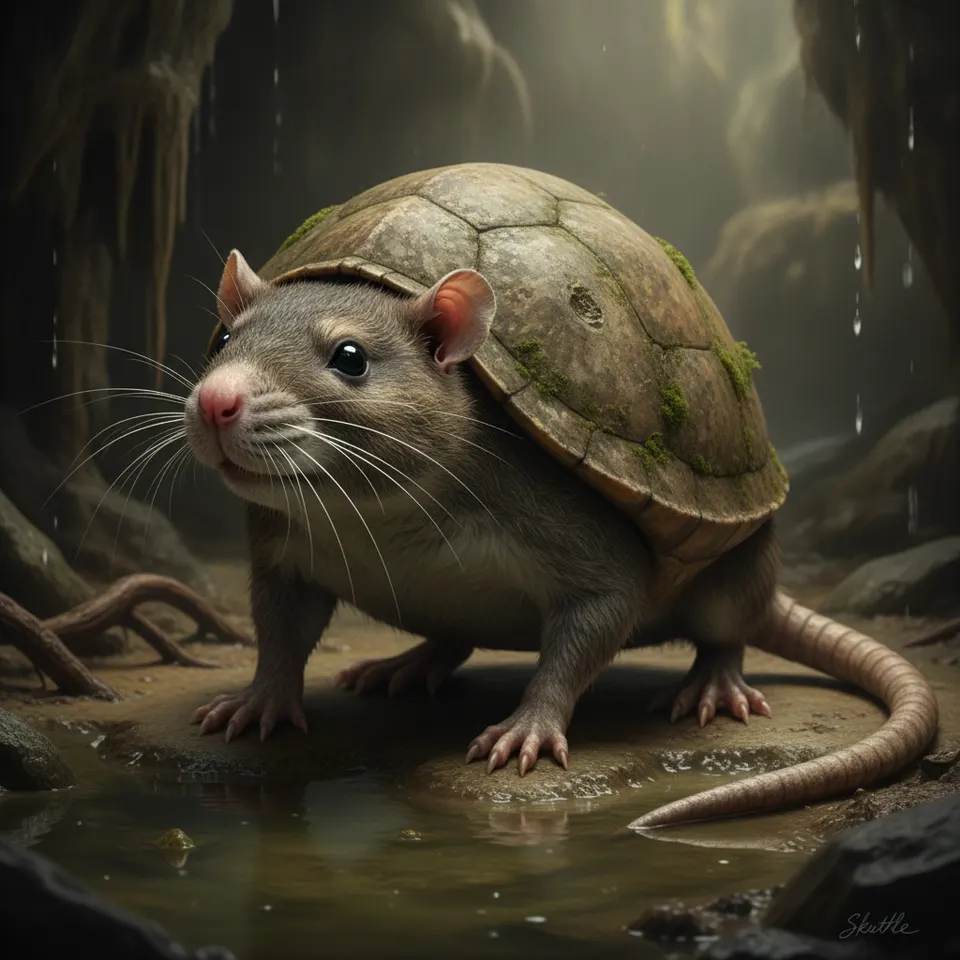
Skuttle
Chelonurodentia scurra
Stats

Behavior
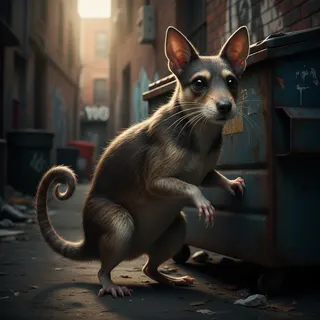
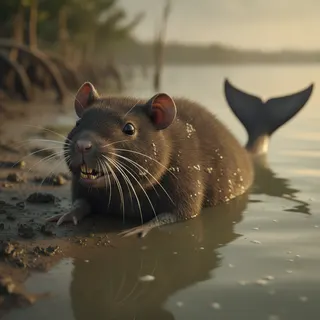
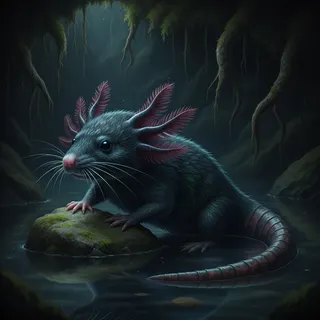
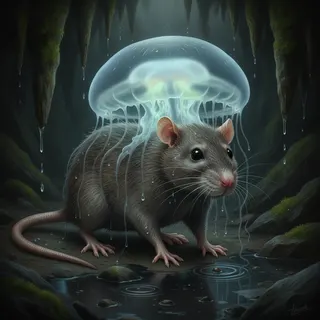
Skuttles are primarily nocturnal scavengers, utilizing their keen sense of smell and agile movements to navigate their damp environments. When threatened, they rapidly retract their head, limbs, and tail into their surprisingly lightweight, yet sturdy shell, remaining perfectly still until danger passes. Their social structure is loose, often seen foraging alone or in small, temporary groups, though they communicate with a series of high-pitched squeaks and subtle tail flicks.
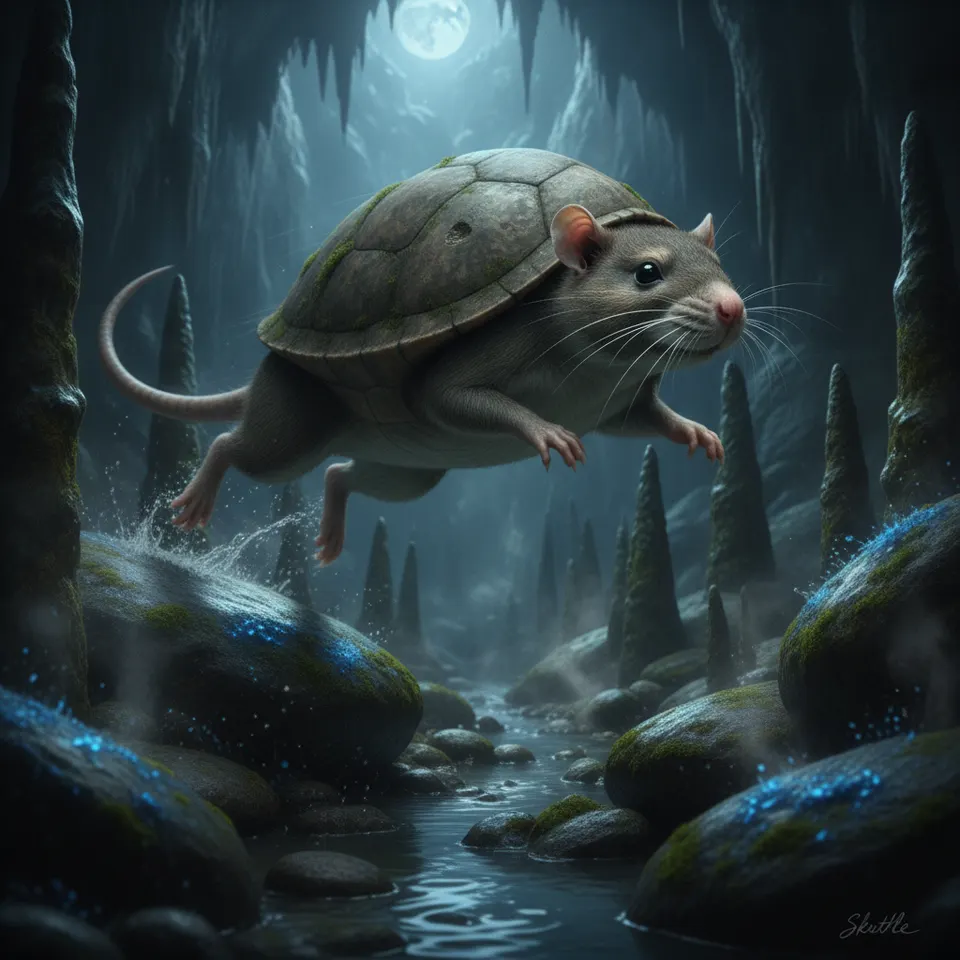
They are masters of adaptation, thriving in both natural wetlands and human-altered subterranean systems. Skuttles create intricate burrows in soft earth near water, often lining them with scavenged debris for insulation. Despite their cautious nature, they are highly curious creatures, known to investigate new smells and objects in their territory, sometimes leading them into unexpected urban adventures, but always preferring the cover of darkness and hidden nooks.
Fun Facts
- 🔬 Their shells, while tough, are surprisingly lightweight and flexible at the edges, allowing for greater agility and fitting into tight spaces than a typical turtle.
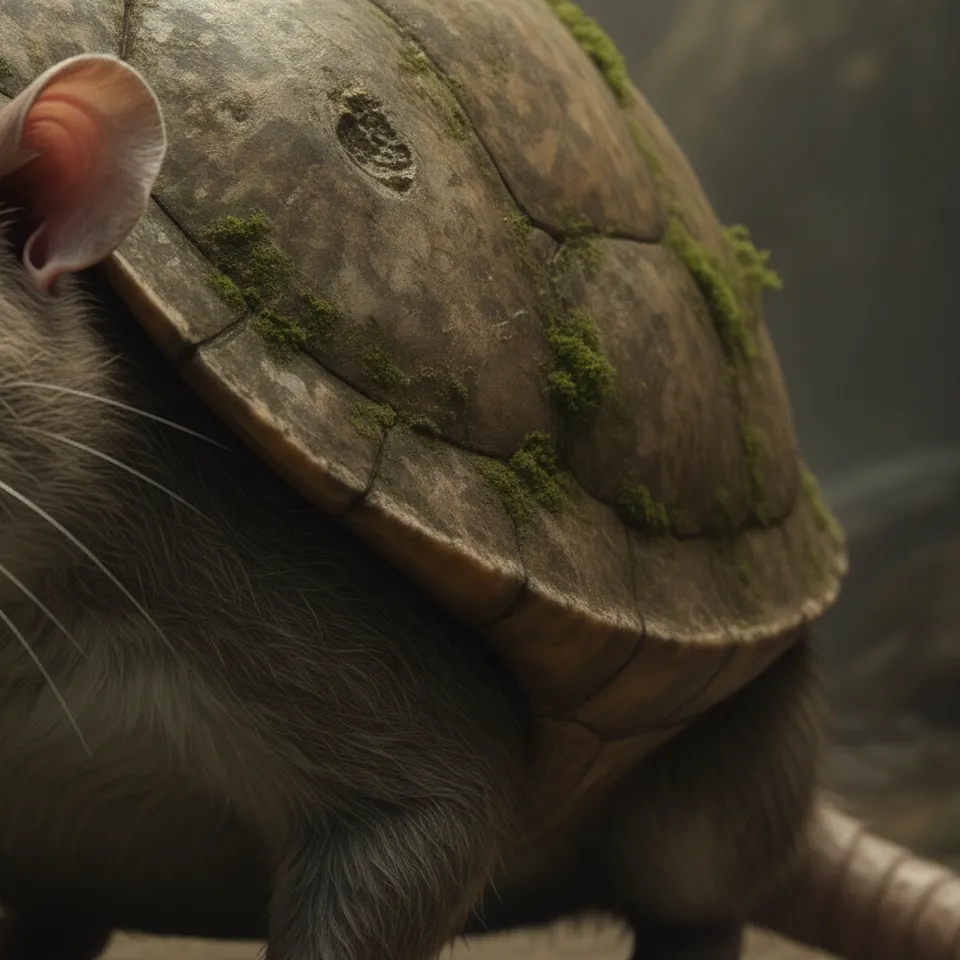
- 🔬 Skuttles possess whiskers that are sensitive enough to detect subtle changes in water currents and air pressure, aiding their nocturnal navigation and underwater foraging.
- 🔬 The Skuttle's long, scaly tail is partially prehensile, used not only for balance but also to grip roots or rocks when climbing out of slippery banks or navigating vertical pipes.