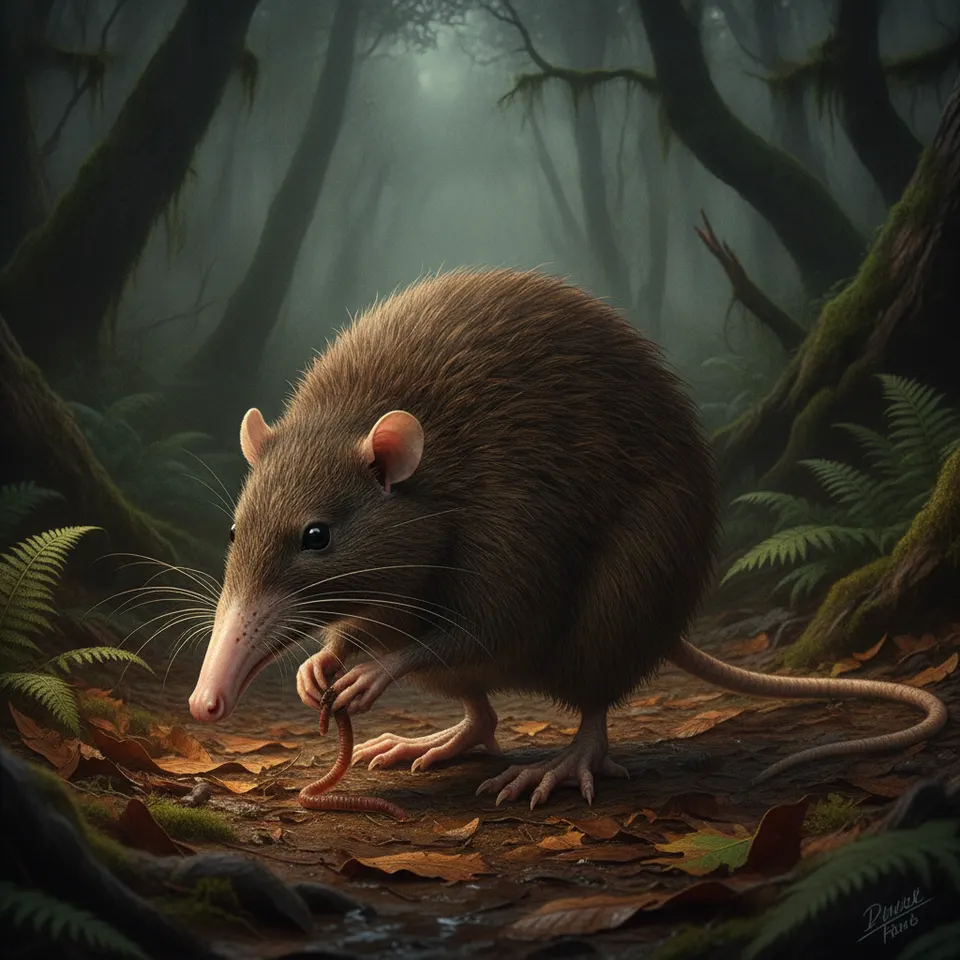
Kiwirat
Murapteryx novaezelandiae
Stats

Behavior
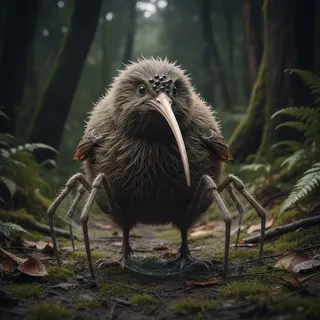
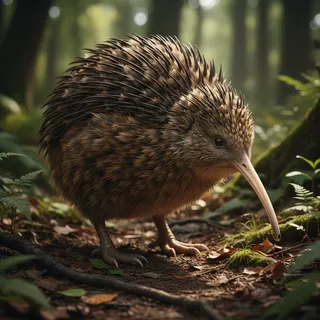
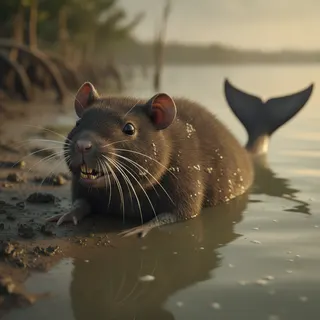
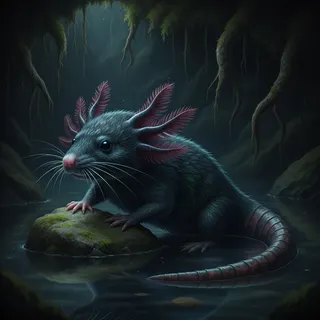
The Kiwirat is a reclusive, nocturnal creature, relying heavily on its extremely sensitive sense of smell to navigate its dark forest environment and locate food. Unlike its common rat relatives, Kiwirats are largely solitary, preferring to establish and meticulously defend a small foraging territory. Despite their inability to fly, they are surprisingly agile and quick, capable of scuttling through dense undergrowth with surprising speed and burrowing efficiently when threatened or seeking shelter.

During daylight hours, Kiwirats retreat into intricately dug burrows, often nestled beneath ancient tree roots or within dense fern thickets. These burrows are carefully lined with soft leaves and moss for comfort and insulation. They are meticulous groomers, constantly preening their coarse, hair-like plumage. When startled, a Kiwirat can emit a surprisingly loud, shrill squeak combined with a low trilling call, a unique vocalization that serves both as a territorial warning and an alarm to potential predators.
Fun Facts
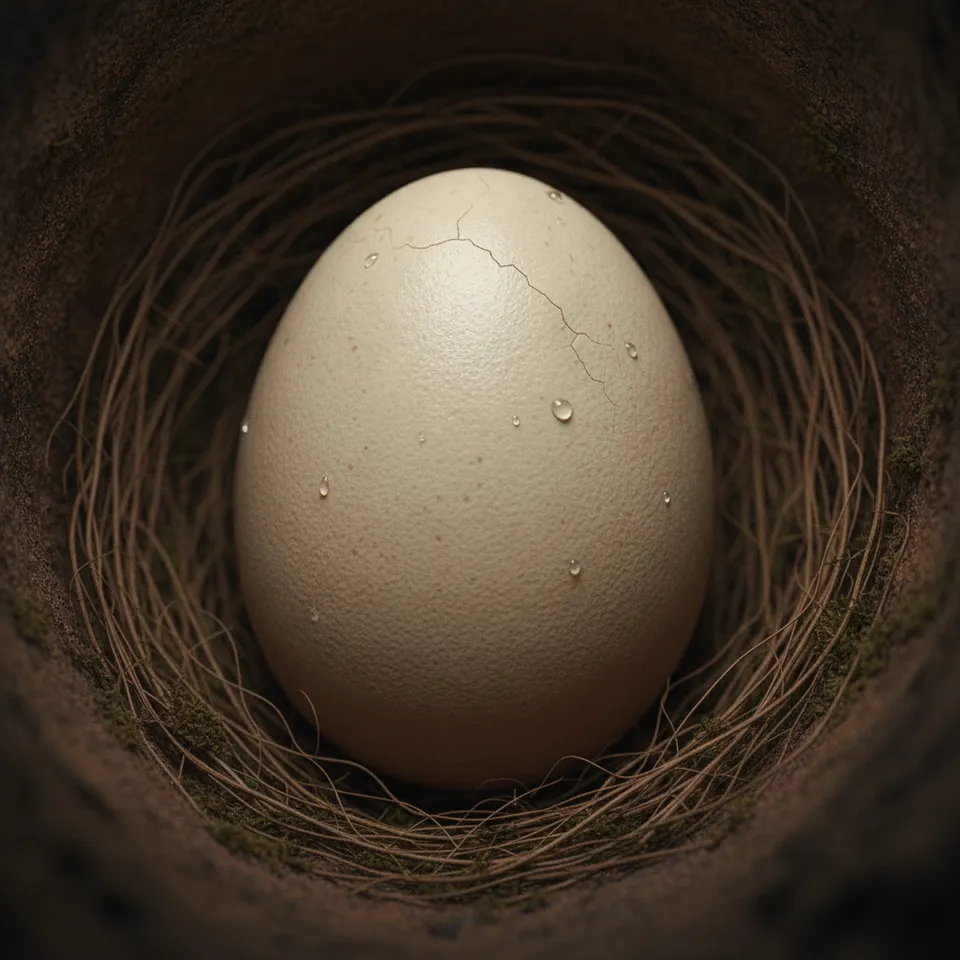
- 🔬 Despite its strong mammalian characteristics, the Kiwirat lays small, hard-shelled eggs, typically 1-2 per clutch, which it incubates in a secluded chamber within its underground burrow.
- 🔬 Its long, flexible whiskers are not just for tactile sensing; they are covered in tiny, almost microscopic barbs that help the Kiwirat grip and extract slippery worms and grubs from the moist soil.
- 🔬 The Kiwirat has an unusual shuffling gait, a distinct blend of the rat's quick scamper and the kiwi's plodding walk. This leaves a unique set of tracks where its large, three-toed feet often show alongside faint drag marks from its long, tufted tail.