Calamander
Amphibiosilurus mysticus
Stats

Behavior
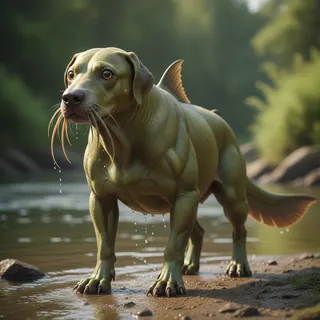
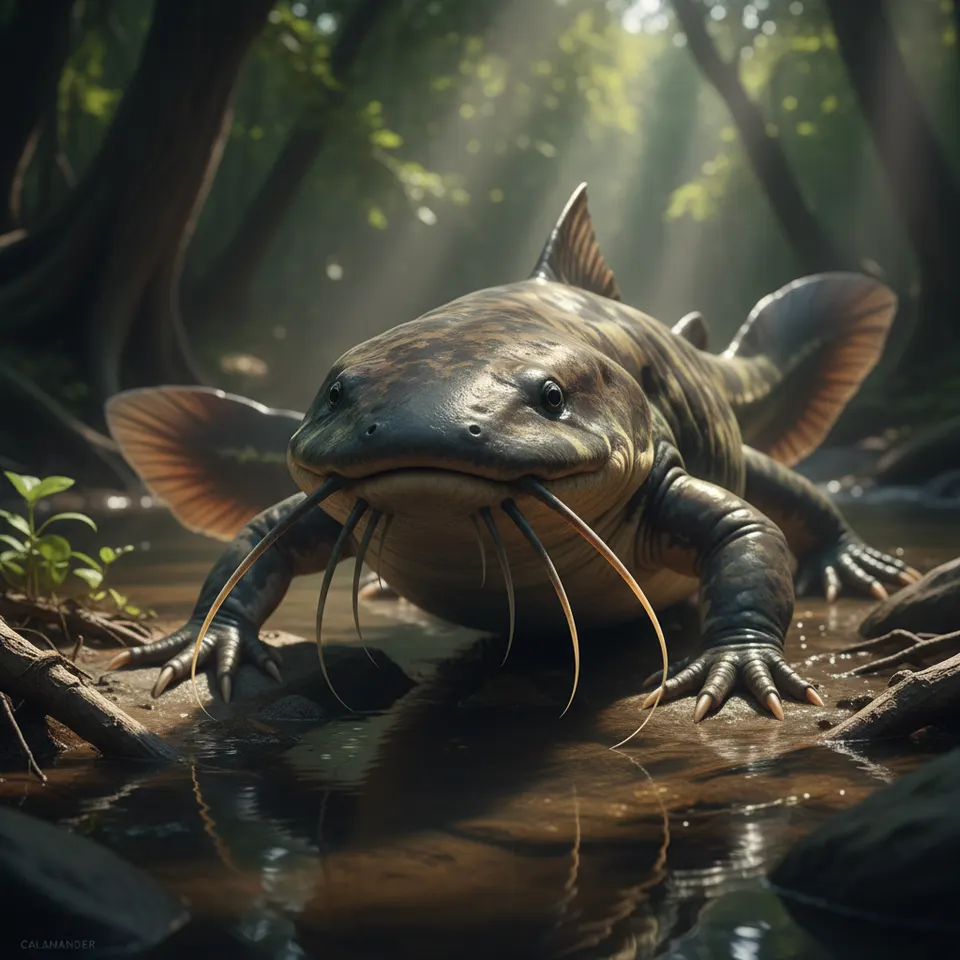
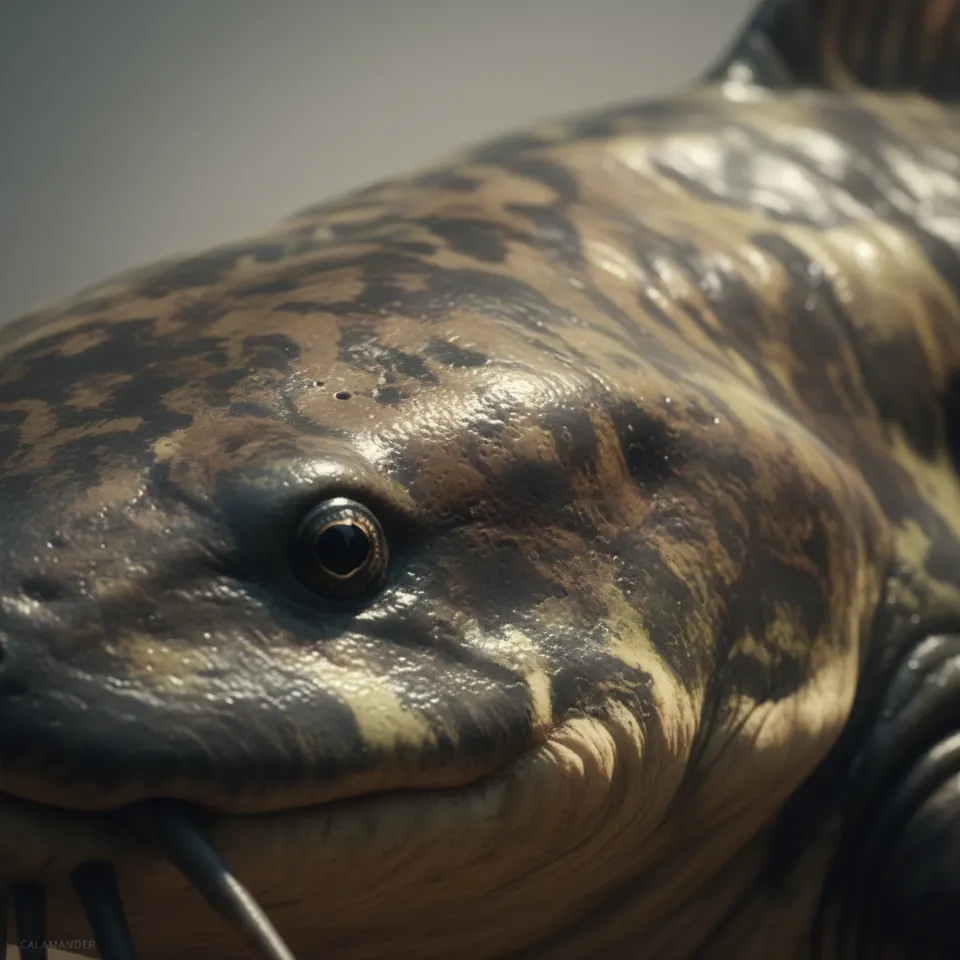
The Calamander is a solitary and remarkably stealthy predator, perfectly adapted to its dim, aquatic environments. It moves with a serpentine grace, propelled by its powerful, flattened tail, yet can also lumber across short stretches of land on its four robust, clawed limbs. Its most distinctive behavioral trait is its use of highly sensitive barbels, which it trails along the murky riverbed to detect vibrations and chemical cues from prey, much like a living sonar system. Despite its imposing size, it is generally shy towards humans, preferring to remain hidden in the depths or beneath dense aquatic vegetation.
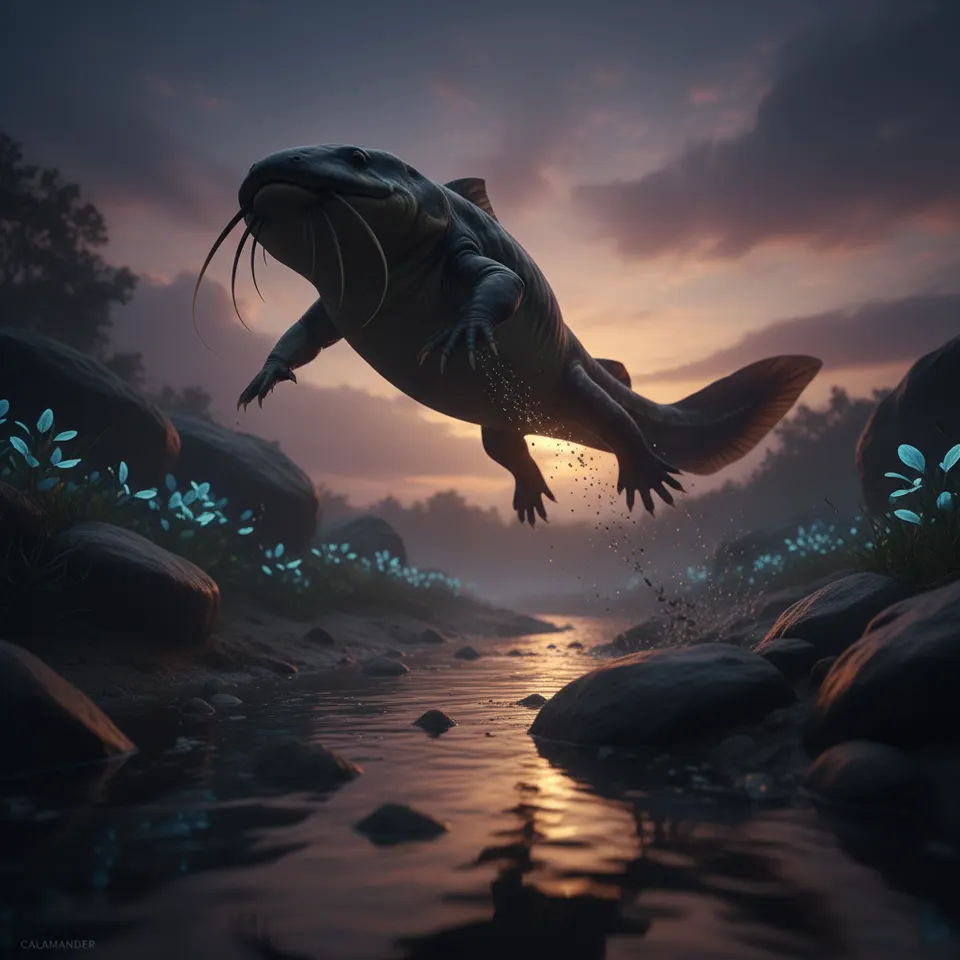
During the day, Calamanders typically rest in deep burrows dug into soft riverbanks or nestled among submerged roots. They become active hunters at dusk and dawn, ambushing unsuspecting fish and other small creatures. Reproduction involves a complex courtship display in underwater caverns, with females laying large clutches of gelatinous eggs on submerged logs or rocks. The young hatch as larvae, resembling large tadpoles with developing barbels, and undergo a gradual metamorphosis, shedding their gills as they mature into their adult amphibious form, though they retain some ability to absorb oxygen through their skin.
Fun Facts
- 🔬 Its skin, while smooth and moist like a salamander's, is remarkably tough and capable of changing hue to match the surrounding mud and vegetation, offering exceptional camouflage.
- 🔬 Calamanders possess a faint bio-luminescence along their barbels and tail tips, believed to be used for species recognition in the dark depths or perhaps to subtly lure curious prey.
- 🔬 Similar to salamanders, a Calamander can regenerate lost limbs or barbels, though the process is slower due to its larger size, taking several months for full recovery.