Narwamander
Ambystoma monoceros glacialis
Stats

Behavior
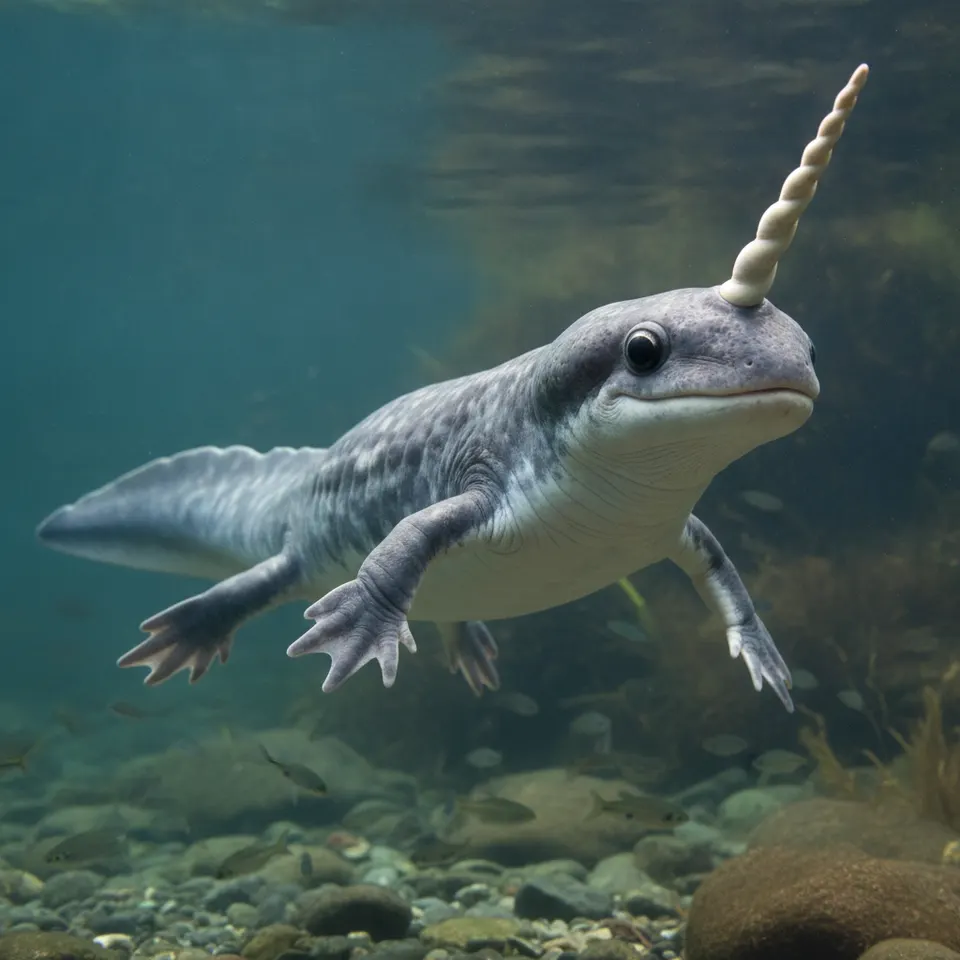
The Narwamander is a mostly solitary and reclusive creature, known for its remarkably calm temperament despite its unusual appearance. Unlike its narwhal ancestor, its 'tusk' is not a true tooth but a cartilaginous, spiral-shaped horn that protrudes from its forehead, primarily used for navigating murky waters, sensing prey through echolocation-like vibrations, and occasionally for digging into soft lakebeds. They are surprisingly agile in both water and on land, using their powerful, rudder-like tail for propulsion in water and strong, webbed feet for surprisingly quick overland travel, especially during nocturnal migrations.

During the day, Narwamanders typically rest submerged beneath fallen logs or within underwater caves, emerging at dusk to hunt. While primarily aquatic, females will lay their gelatinous egg clutches in shallow, oxygen-rich pools or even in moist, sheltered depressions on land near the water's edge during the spring thaw. Juveniles possess prominent external gills, which gradually recede as they mature, though adults retain rudimentary gill structures allowing for prolonged underwater submersion.
Fun Facts
- 🔬 The Narwamander's spiraled 'horn' glows faintly in the dark when it senses danger or food, thought to be a bioluminescent symbiotic algae.
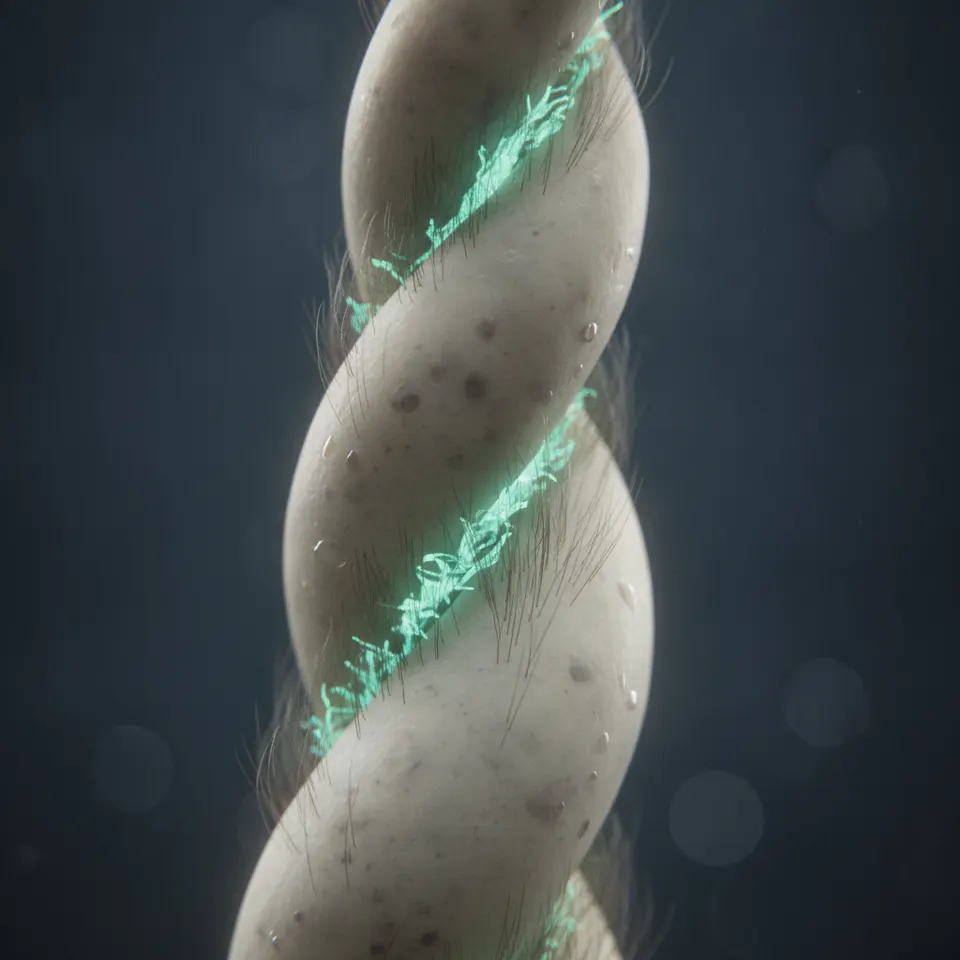
- 🔬 Despite their size, Narwamanders are incredibly shy; their presence is often only detected by the unique spiral etchings left on river stones where they rub their horns.
- 🔬 Local folklore suggests that a Narwamander's shed horn, when polished, can predict weather changes, turning a dull grey before a storm.