Salandog
Amphibicynus caudatus
Stats

Behavior
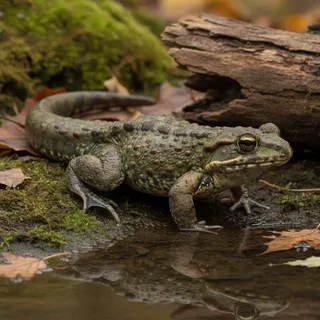
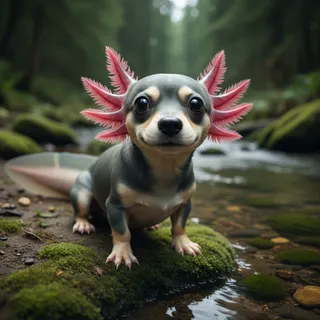
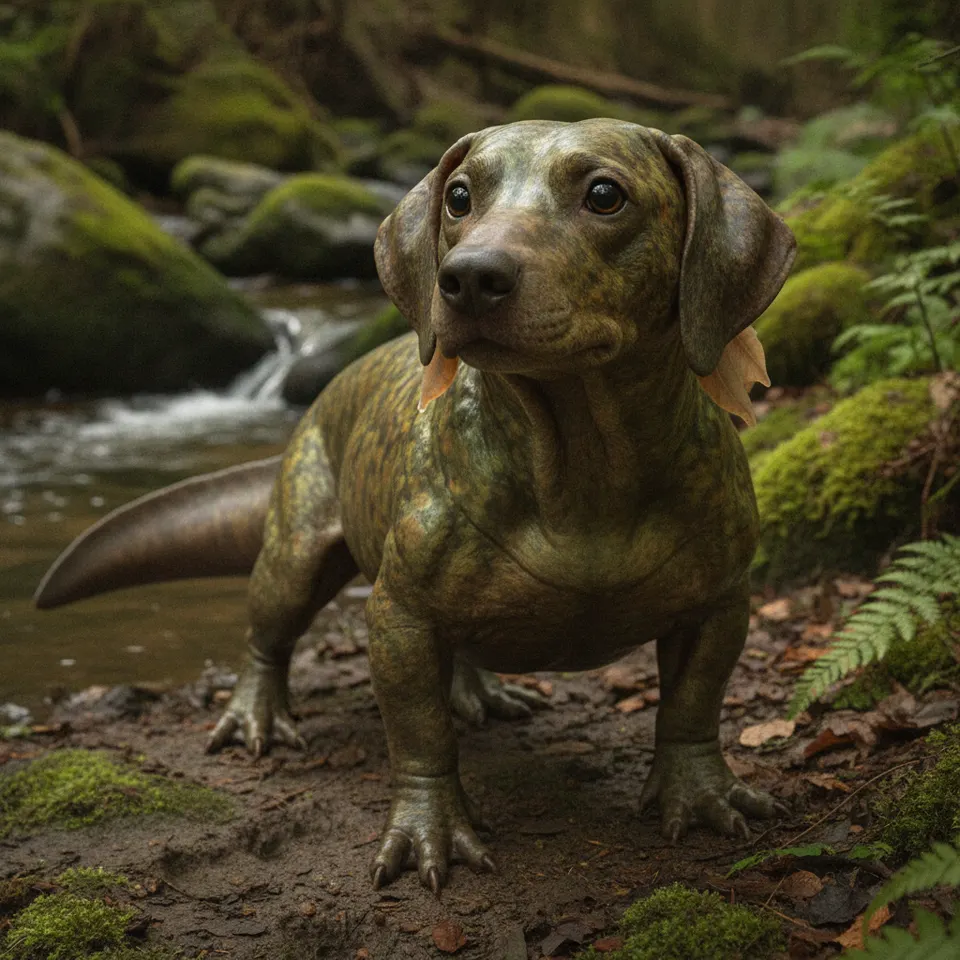
The Salandog is a fascinating creature, embodying a unique blend of its canine and amphibian lineage. While generally solitary and reclusive, especially during the day when it seeks damp, cool hiding spots under logs or in burrows, it exhibits surprising bursts of playful curiosity, particularly during twilight hours. They communicate with soft chirps and gurgles, though a muffled, frog-like bark can be heard when alarmed or excited. They possess a keen sense of smell, tracking prey both on land and in shallow water.

Primarily nocturnal, Salandogs spend their nights foraging along stream banks and forest floors, utilizing their sleek, moist skin and camouflaged patterns to blend into their surroundings. They are adept swimmers, using their powerful, flattened tails for propulsion and their webbed paws for steering. During colder months, they may enter a state of torpor in muddy burrows or submerged logs, emerging only when temperatures rise.
Fun Facts
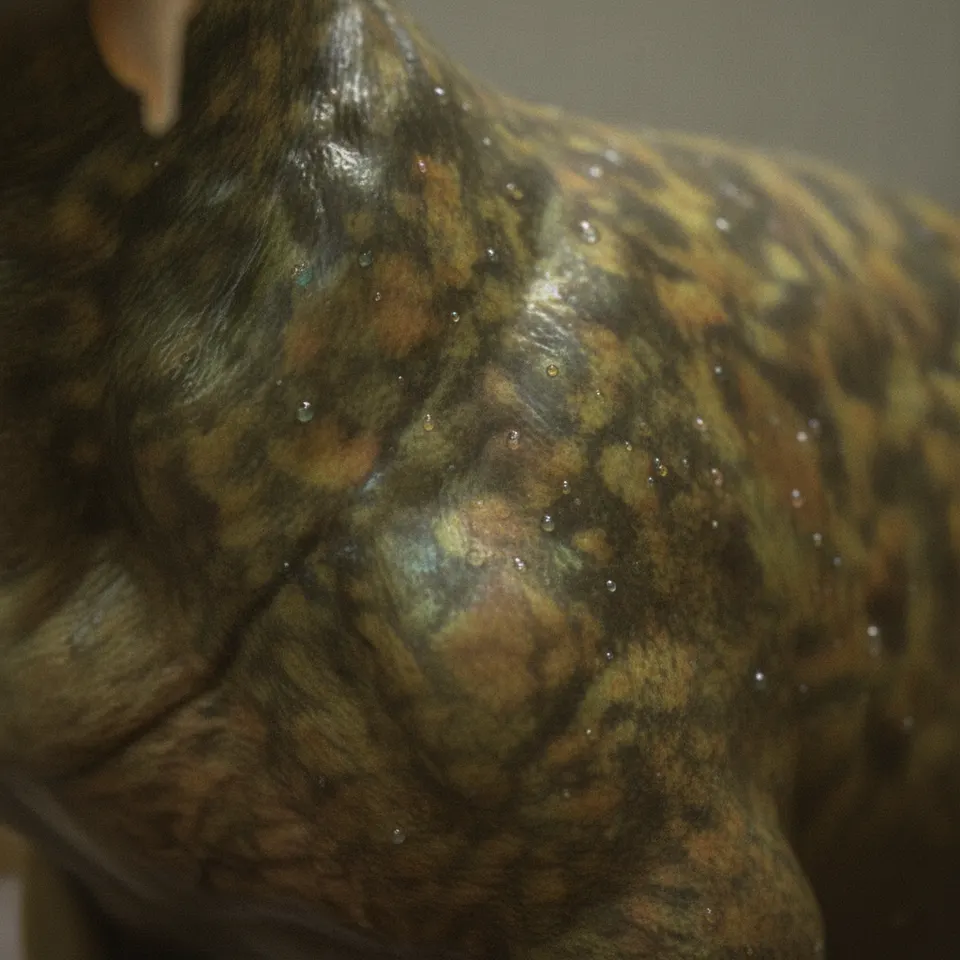
- 🔬 Their skin secretes a mild, harmless mucus that keeps them moist and can deter some predators, giving them a slightly iridescent sheen.
- 🔬 Like true salamanders, Salandogs possess remarkable regenerative capabilities, able to regrow lost limbs, tails, and even portions of internal organs over several months.
- 🔬 They have both rudimentary gills behind their ears (visible only when stressed or submerged for extended periods) and fully functional lungs, allowing them to breathe both underwater and on land.
- 🔬 Despite their reclusive nature, Salandogs have been observed forming temporary 'pods' of 3-5 individuals during mating season or when a particularly rich food source is discovered.