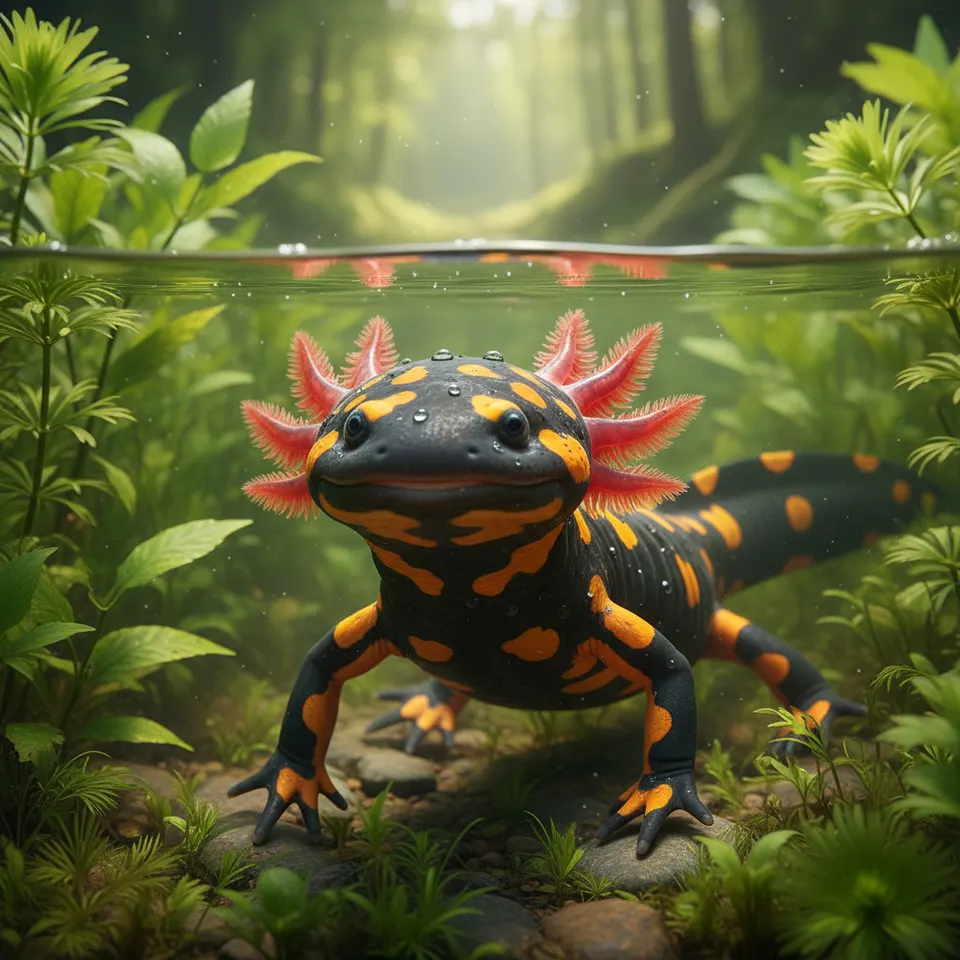
Axolamander
Amphibius caudata aquaformis
Stats

Behavior
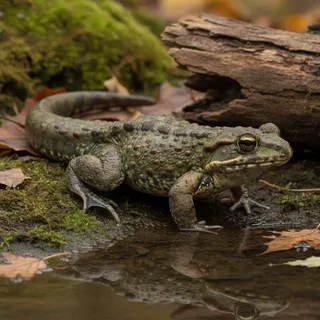
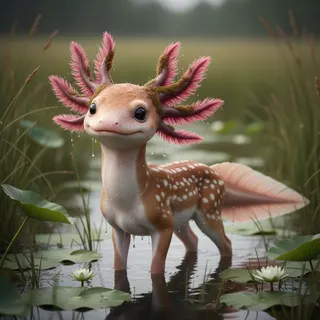
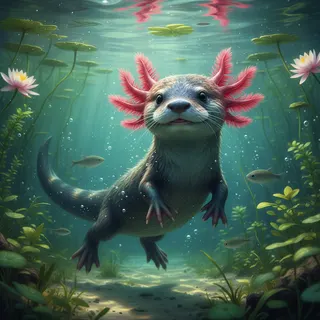
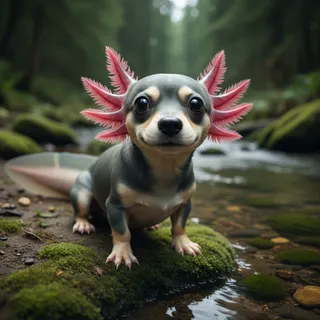
The Axolamander is a fascinating blend of its parent species, exhibiting the serene, almost perpetually 'smiling' gaze of the axolotl paired with the stealthy, observant nature of a salamander. While primarily aquatic, it possesses a surprising degree of terrestrial mobility for short periods, often observed slowly traversing damp riverbanks during twilight hours in search of prey. It is a largely solitary creature, highly territorial, communicating through subtle chemical signals and low-frequency vibrations in the water, especially during mating season.
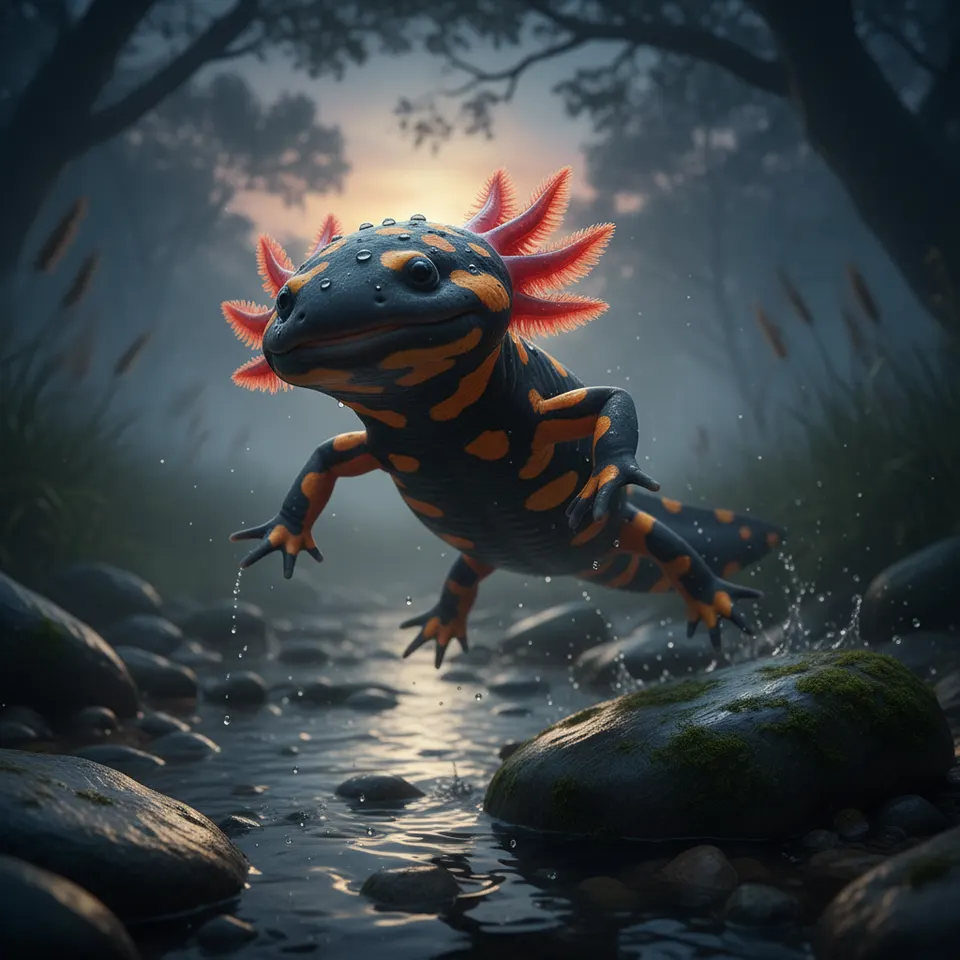
Its unique amphibious lifestyle means it frequents the shallow, well-oxygenated areas of clear, cool lakes and the edges of gentle rivers, rarely venturing into fast currents. During the day, it typically hides amongst submerged vegetation, under rocks, or within burrows it excavates in soft sediment, using its natural camouflage. At night, it becomes an active hunter, preying on small fish, aquatic insects, crustaceans, and even venturing onto land to snatch worms, slugs, or small amphibians, returning swiftly to the water if disturbed or if its skin begins to dry.
Fun Facts
- 🔬 Axolamanders possess an extraordinary regenerative capability, exceeding that of either parent. They can regrow not only limbs and tails but also significant portions of vital organs, including their heart and even parts of their brain.
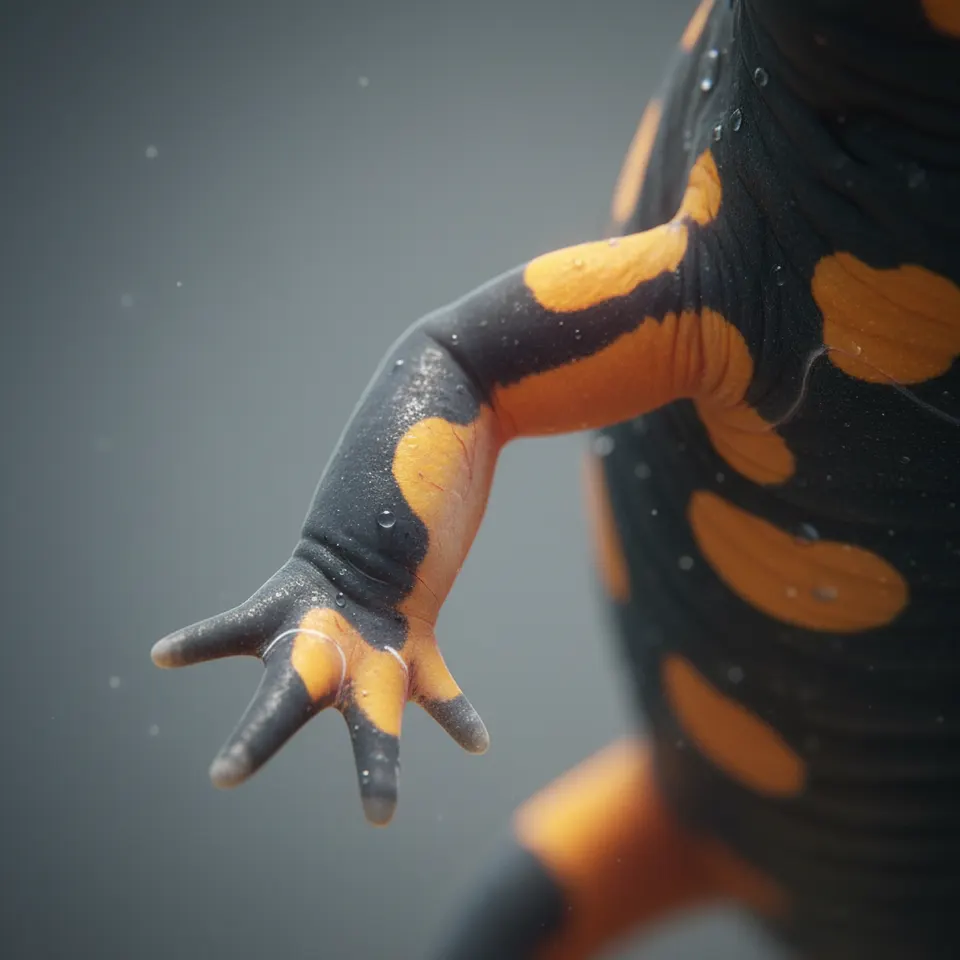
- 🔬 Their prominent, feathery external gills can change color based on their mood, water quality, or oxygen levels, ranging from a vibrant ruby red when healthy and agitated, to a duller, almost translucent pink when stressed or in poor water.
- 🔬 Unlike most axolotls, the Axolamander can 'metamorphose' under extreme environmental pressure, such as prolonged drought. Its external gills will retract, lungs develop fully, and its skin becomes thicker, allowing it to survive on land for extended periods, though this transformation is often irreversible.