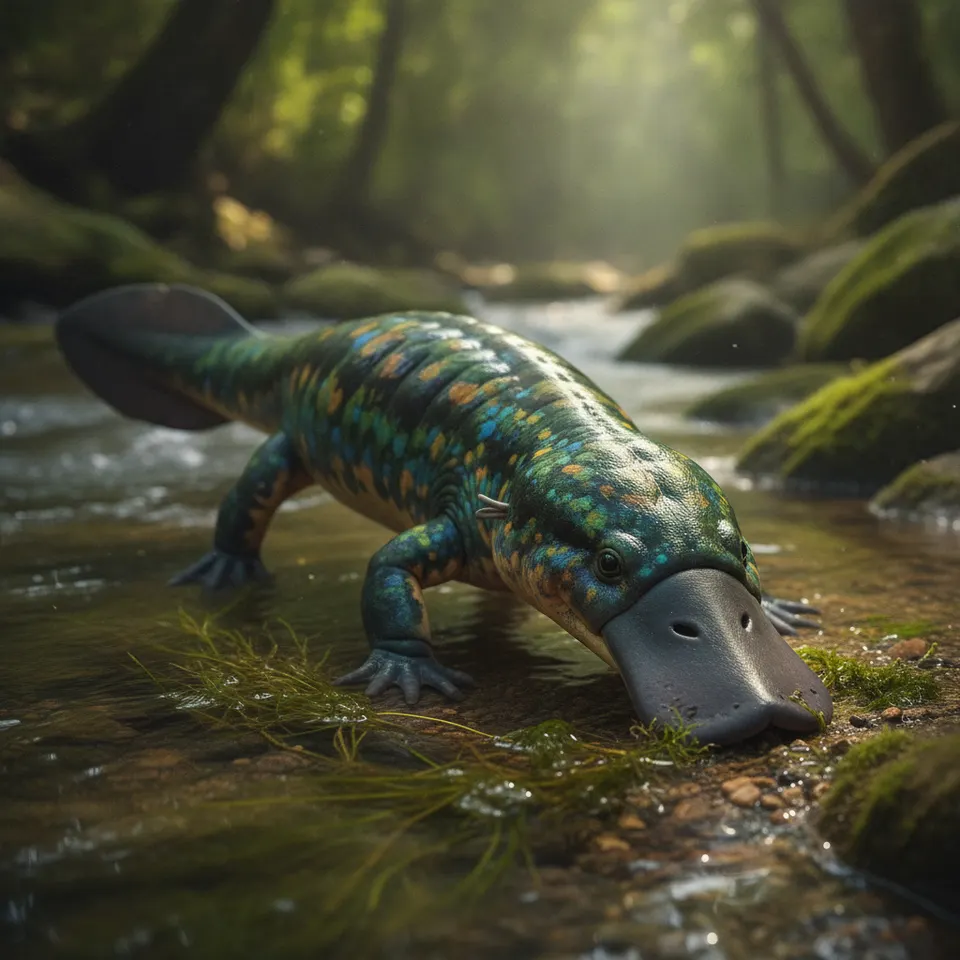
Platysal
Ornithosalamandra hydrata
Stats

Behavior
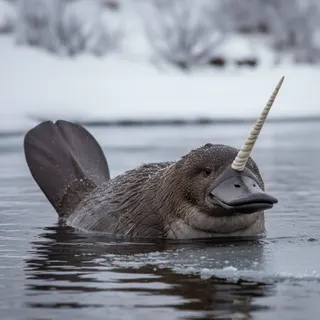
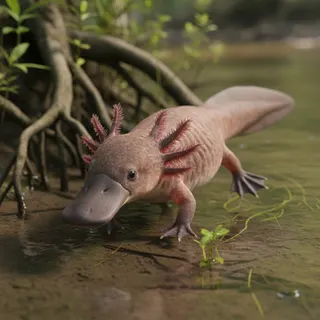
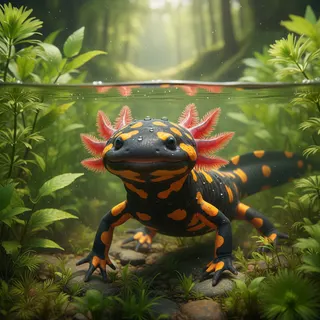
The Platysal is a remarkably elusive and solitary creature, primarily active during twilight hours. It spends its time foraging in the shallow beds of freshwater streams, using its highly sensitive, leathery bill to detect minute aquatic invertebrates. On land, it moves with a characteristic undulating gait, its smooth, moist skin requiring constant dampness. Unlike its platypus parent, the Platysal can absorb oxygen through its skin, allowing for prolonged underwater submersion, though it still surfaces to breathe through small gill-like slits near its neck.
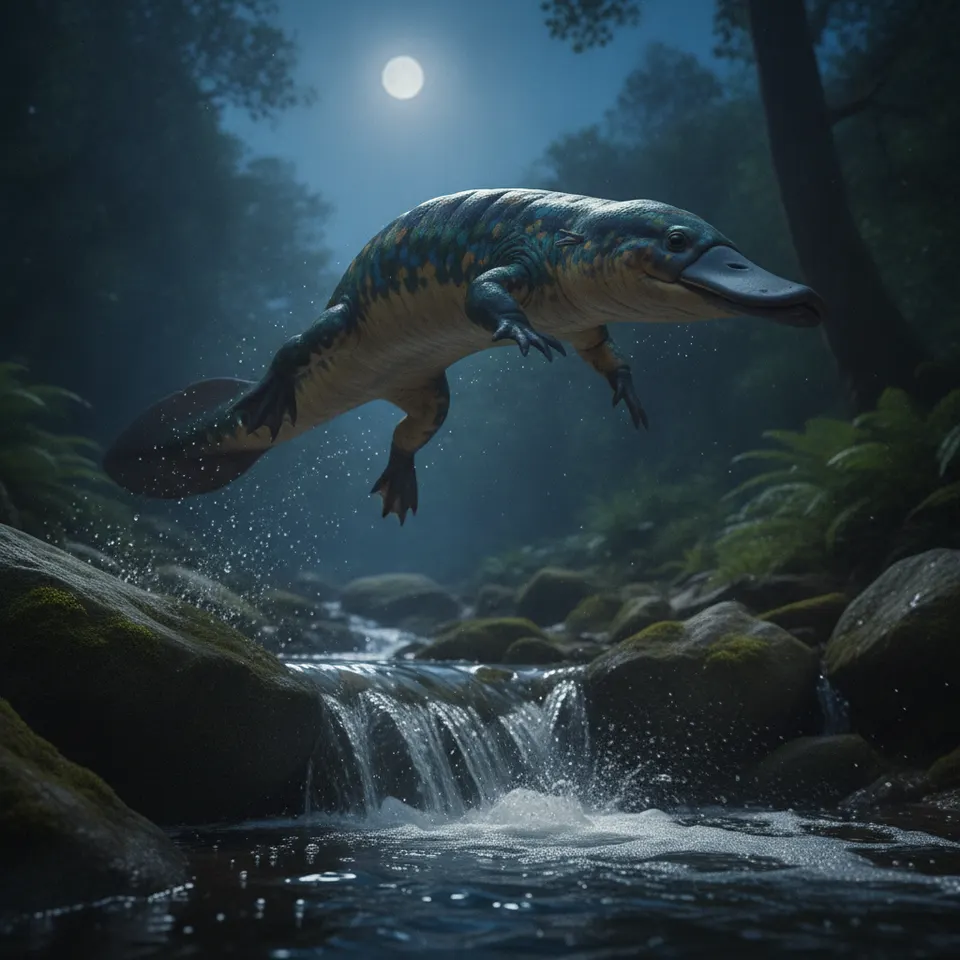
These fascinating hybrids construct elaborate burrows in the soft, muddy banks adjacent to their water sources, often with underwater entrances to deter predators. They are territorial and communicate through subtle chemical signals released from their skin, especially during mating season. Their eggs are laid in gelatinous clutches attached to submerged vegetation, much like certain salamander species, but with a tougher outer shell providing extra protection.
Fun Facts
- 🔬 Possesses both the electroreception of a platypus's bill and the heightened chemoreception of a salamander's skin, making it an unparalleled hunter in murky waters.
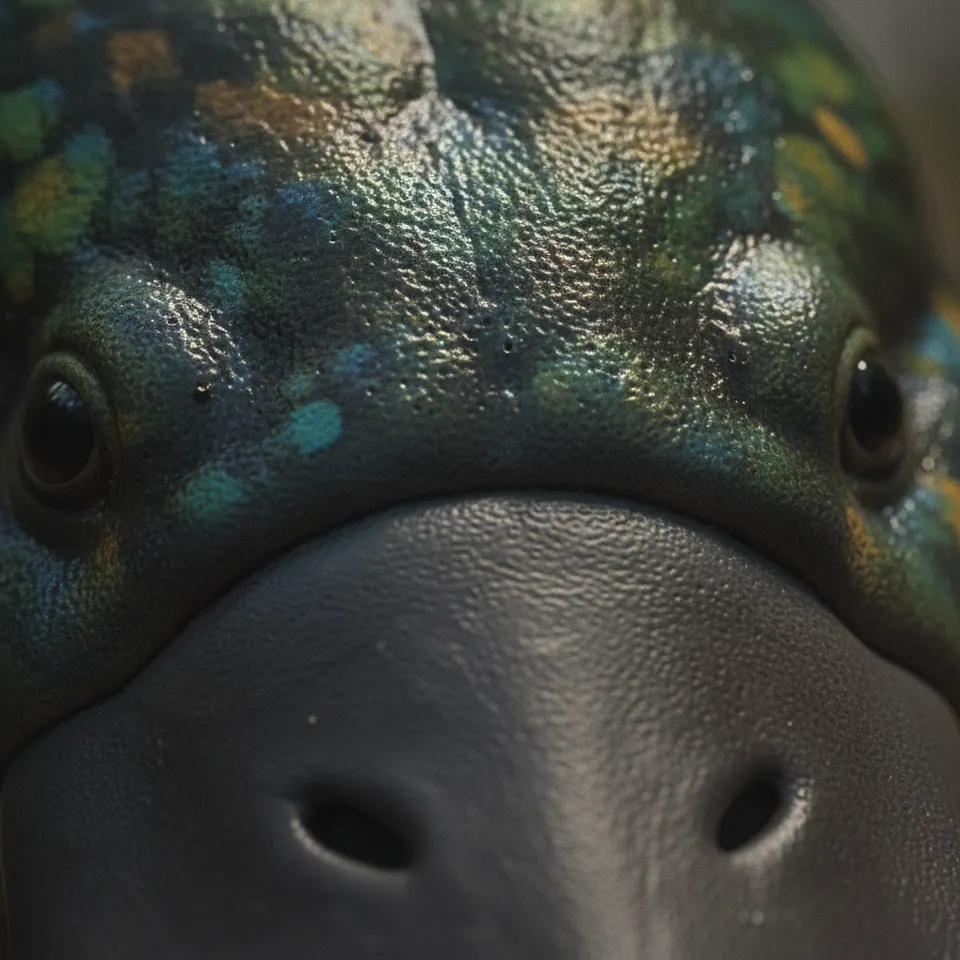
- 🔬 Its skin, while needing to stay moist, is covered in a specialized mucus that provides mild protection against parasites and also contains a low-level irritant when handled, deterring some predators.
- 🔬 The Platysal's tail is uniquely adapted; broad and paddle-like for propulsion in water, yet muscular enough to aid in balance and digging on land, sometimes even used as a 'third leg' to prop itself up while surveying its surroundings.