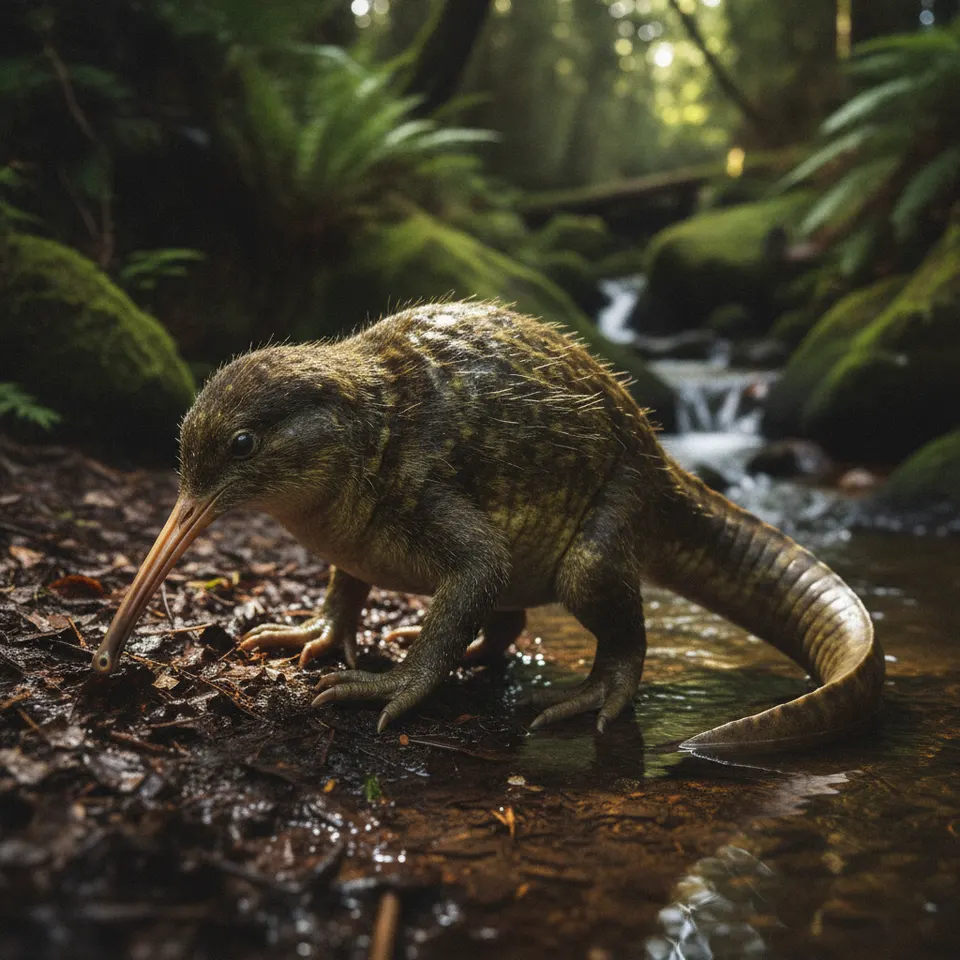
Kiwimander
Apteryx caudata
Stats

Behavior
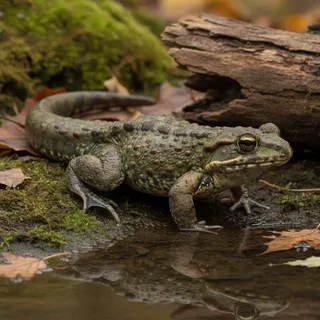
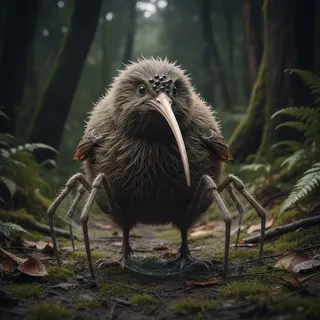
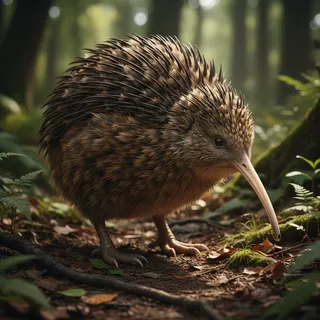
The Kiwimander is an incredibly elusive and primarily nocturnal creature. It moves with a surprising stealth, utilizing its sleek, moist skin to glide through dense undergrowth and its powerful, three-toed feet (reminiscent of a kiwi's) to root through damp soil and leaf litter. Its long, sensitive beak, tipped with functional nostrils, is constantly probing the earth for its invertebrate prey, much like its kiwi progenitor. Despite its terrestrial nature, it exhibits a distinct affinity for water, often submerging its tail and hindquarters in shallow streams or puddles to rehydrate its delicate skin.
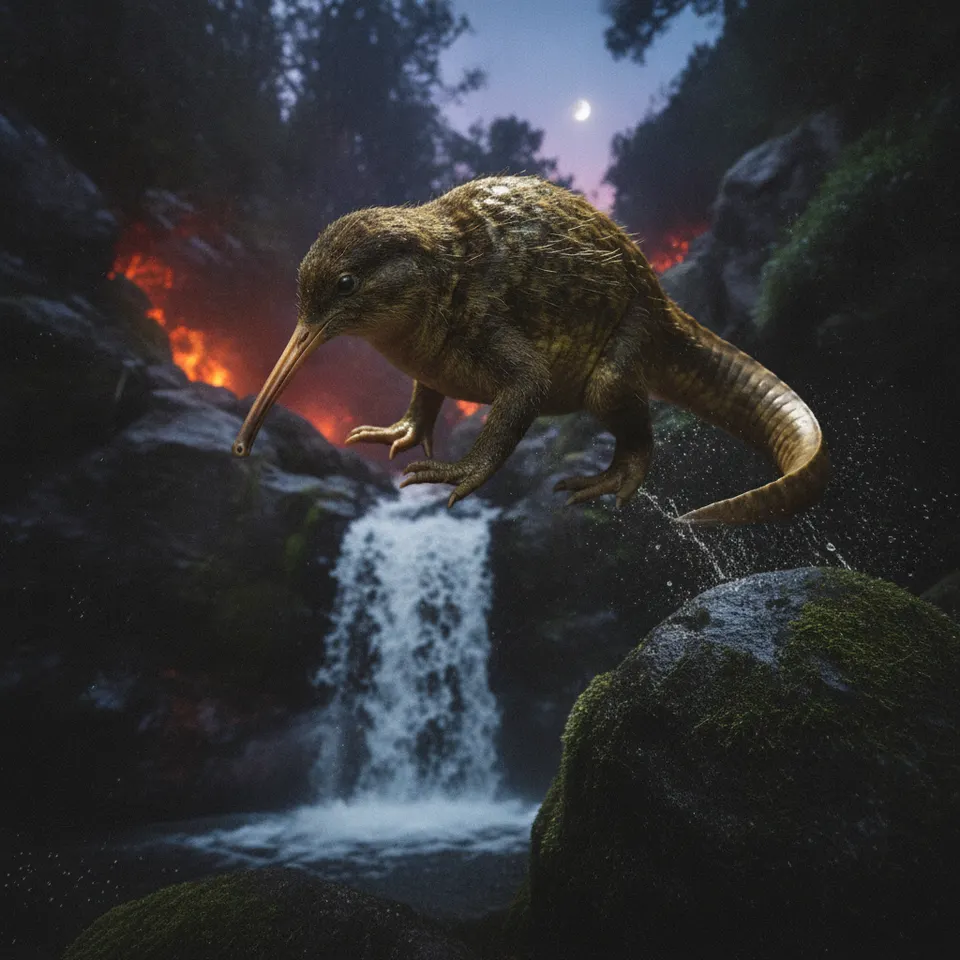
Solitary by nature, the Kiwimander establishes extensive foraging territories marked by subtle scent trails. During the day, it retreats to concealed burrows, hollow logs, or dense mossy crevices, where its mottled brown and olive-green coloration provides exceptional camouflage. Breeding occurs annually, with females laying a single, surprisingly large, leathery egg in a damp, protected nest within their burrow. The male typically guards the egg until hatching, after which the precocial young are largely self-sufficient, relying on instinct to find food in the rich forest floor.
Fun Facts
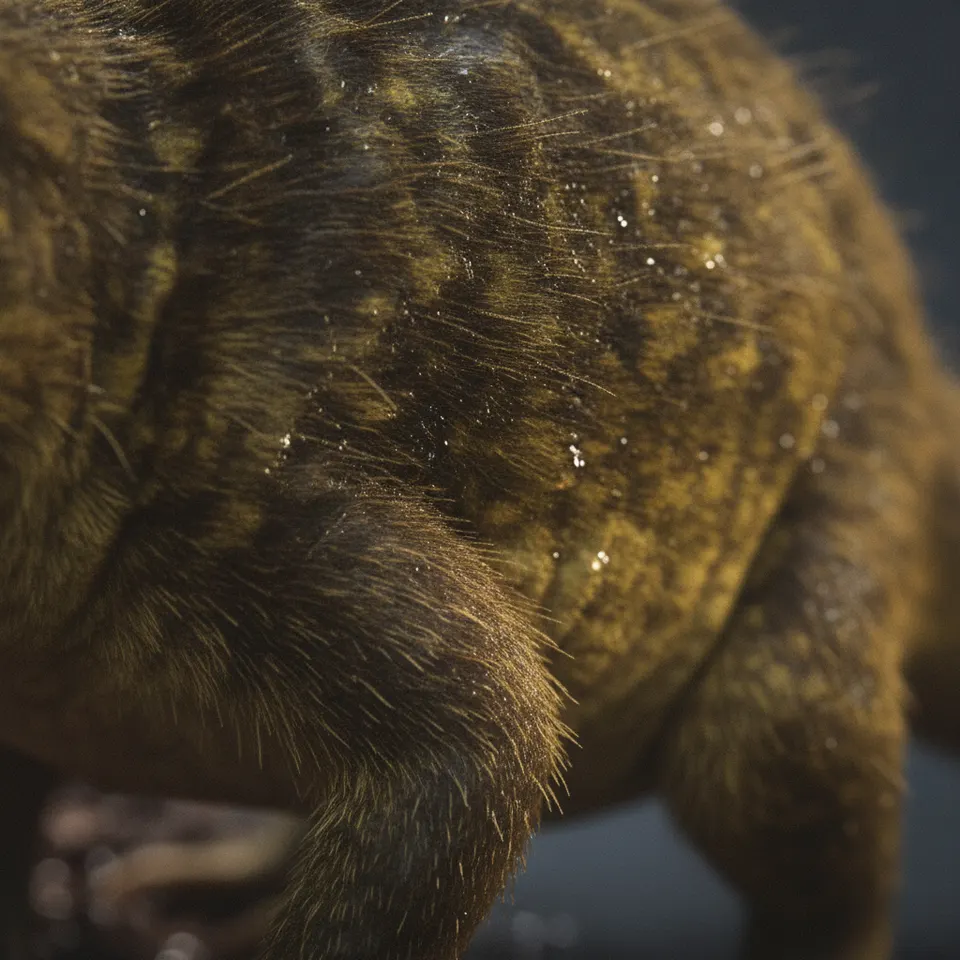
- 🔬 Its skin, while moist and smooth like a salamander's, is covered in a fine, bristle-like proto-feather down, giving it a soft, velvety texture unique among amphibians.
- 🔬 The Kiwimander possesses an acute sense of smell, with nostrils located at the very tip of its long, flexible beak, allowing it to detect prey buried up to a foot beneath the soil.
- 🔬 When threatened, it can emit a surprisingly loud, high-pitched 'kiwi-like' whistle combined with a sudden, rapid discharge of a sticky, slightly bioluminescent mucus from glands on its tail, momentarily stunning predators.