Armawolf
Lupus scutum
Stats

Behavior
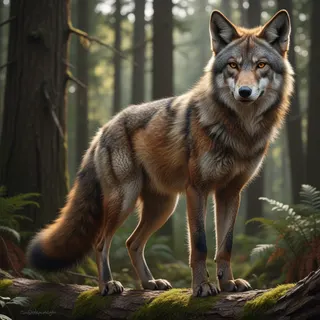
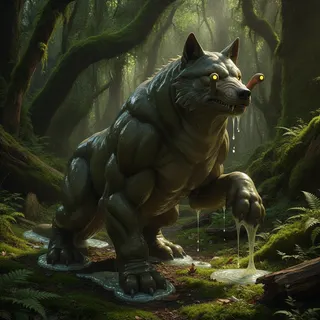
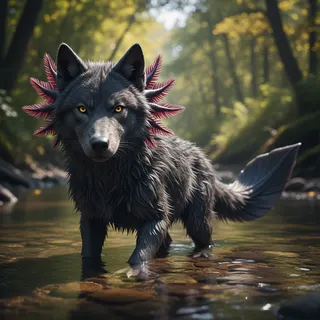
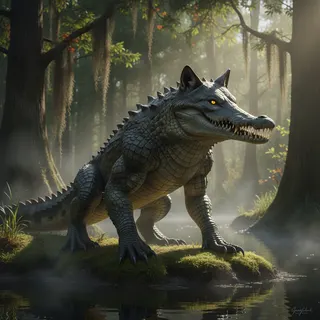
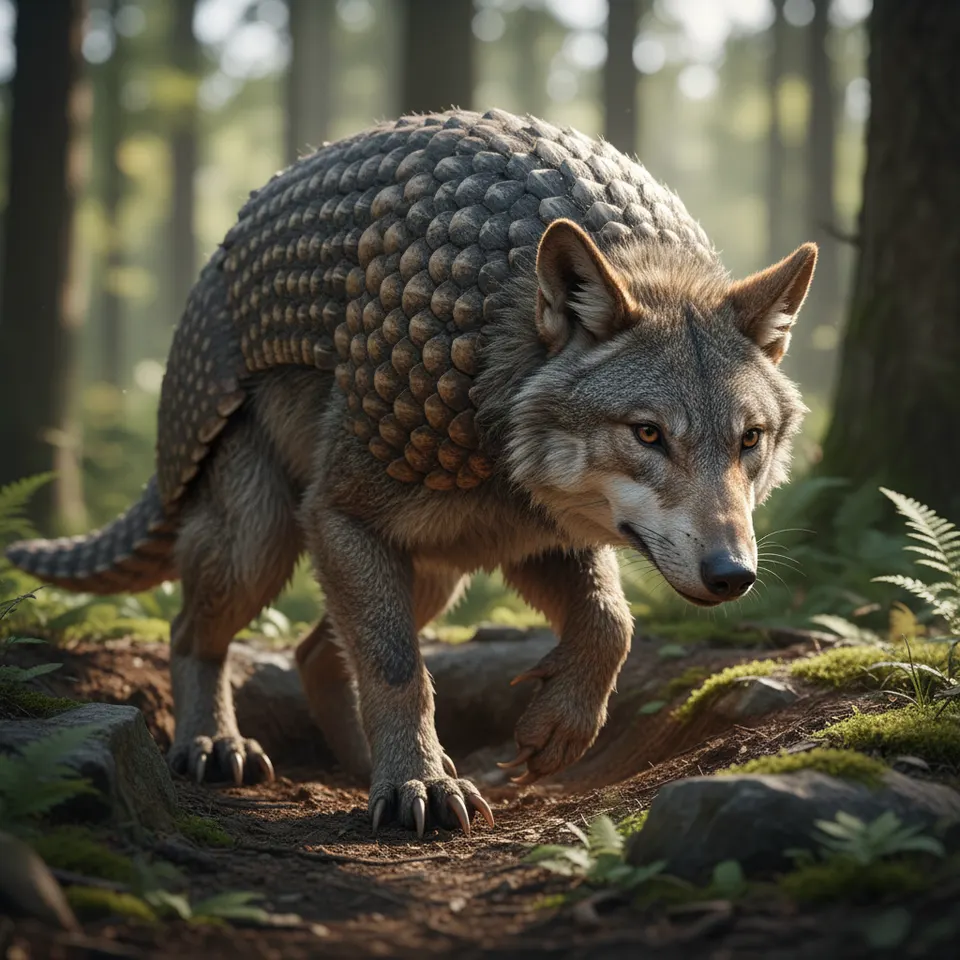
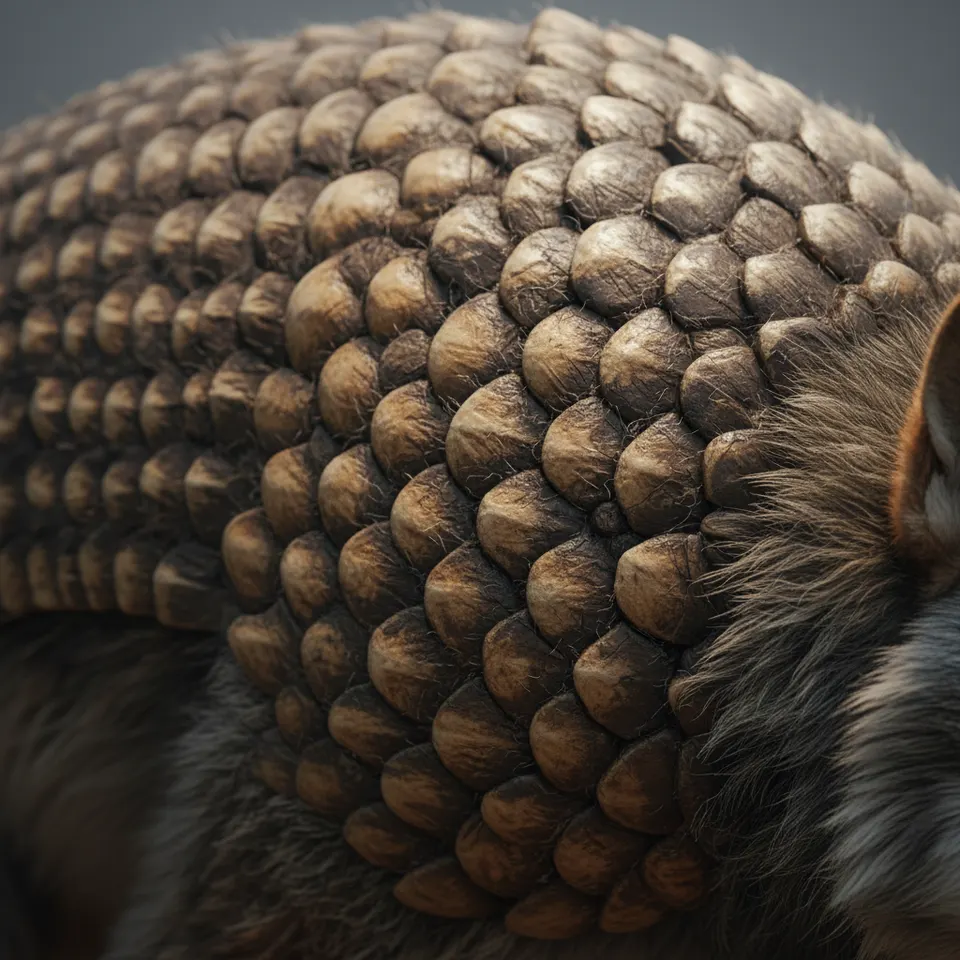
The Armawolf is a highly adaptable creature, known for its reclusive yet opportunistic nature. Unlike its wolf ancestors, it tends to be solitary or live in very small family units, primarily active during the twilight hours (crepuscular). Its keen sense of smell, inherited from the wolf, is used to root out insects and small prey hidden beneath the soil, which it then unearths with its powerful, clawed forelimbs. When threatened, the Armawolf can partially curl into a defensive posture, protecting its softer underbelly with its dorsal plates, though it rarely achieves a full spherical curl like some armadillo species.
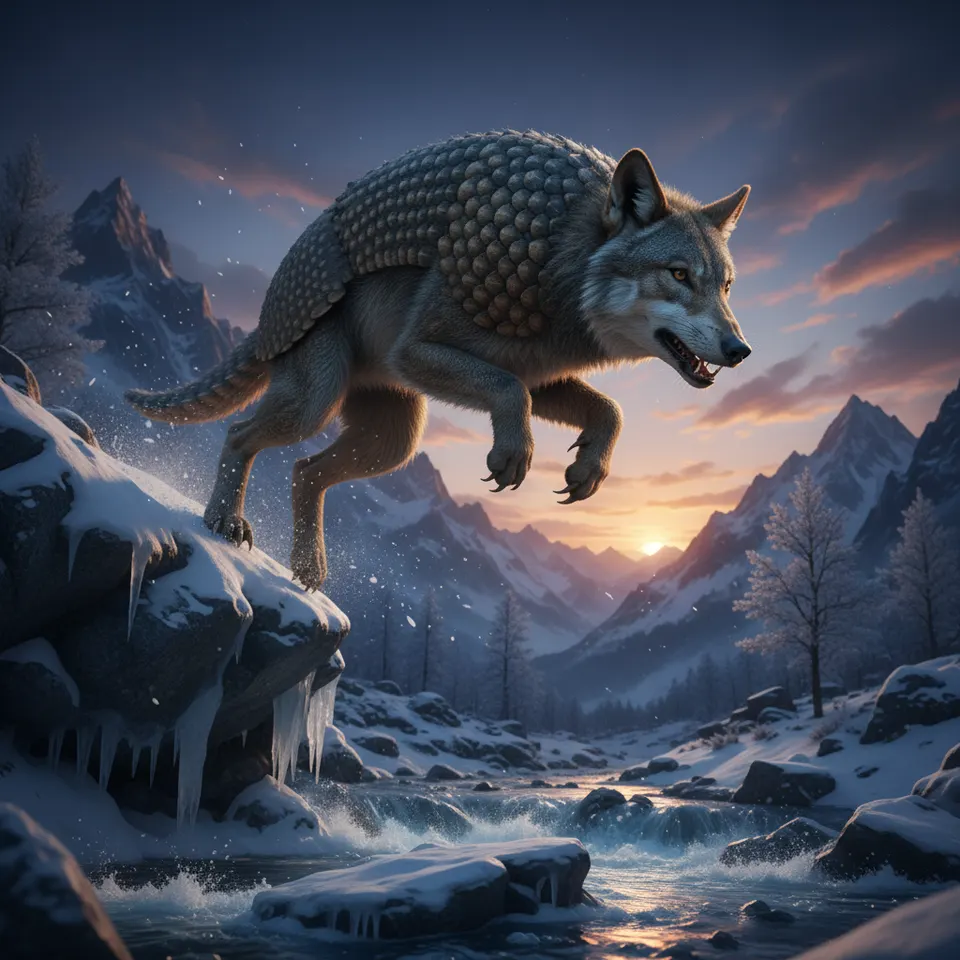
These unique hybrids are expert excavators, constructing intricate burrow systems that serve as dens for resting, raising young, and escaping predators or harsh weather. Their preferred habitats offer a mix of dense cover and accessible, loose soil. The fur around their heads, legs, and underbelly retains the thick, insulating quality of a wolf's coat, providing warmth, while the armored plates offer protection against superficial injuries and provide a camouflage against rocky or earthy terrains.
Fun Facts
- 🔬 The Armawolf's 'howl' is a low, guttural rumble that often ends in a series of unique, clattering clicks, mimicking the sound of its plates shifting.
- 🔬 Despite its armor, the Armawolf is surprisingly agile, capable of short bursts of speed and quick defensive maneuvers, especially when evading larger predators.
- 🔬 It secretes a distinctive musk from glands near its tail that smells faintly of damp earth and pine, which it uses to mark its extensive burrow systems and territorial boundaries.