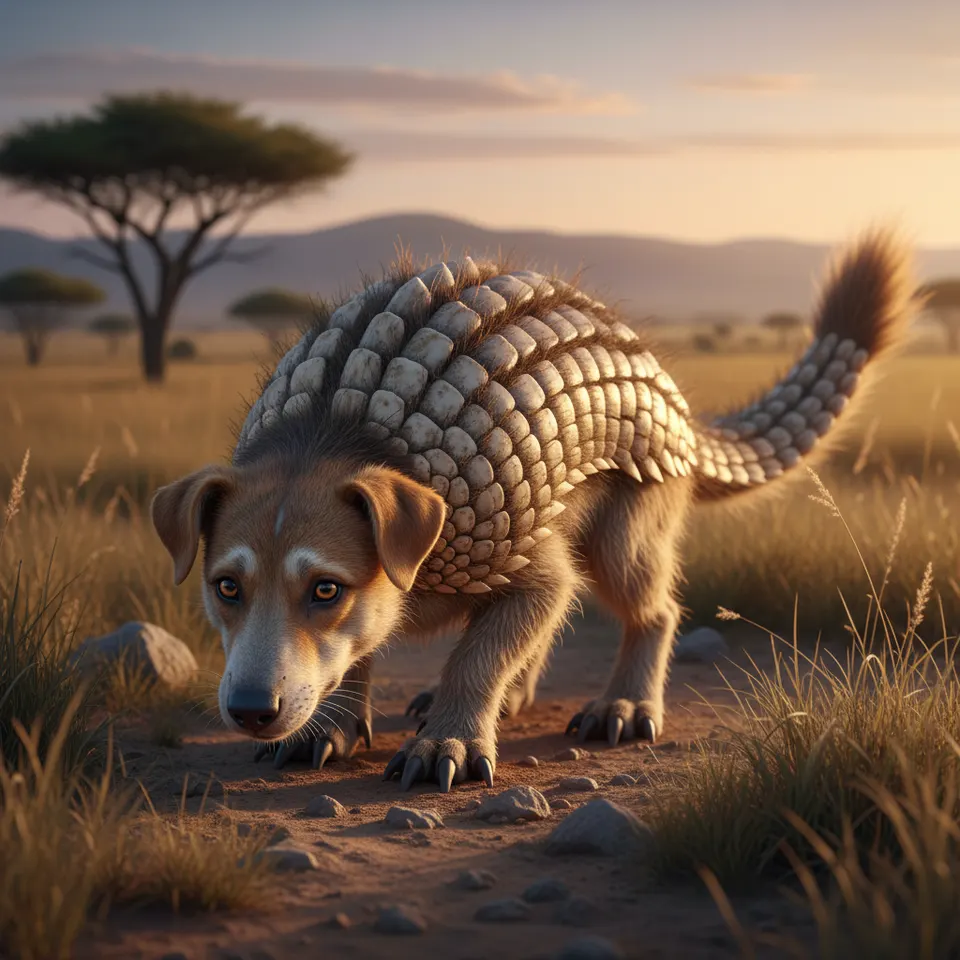
Dillohound
Canis scutellatus
Stats

Behavior
The Dillohound is a surprisingly social creature, often found in small family packs despite its ancestral armadillo's more solitary nature. They communicate with a series of barks, whines, and low growls, much like domestic canines, but with a unique 'clatter' from their plates during excitement. When threatened, they exhibit a unique defense mechanism: instead of fully rolling into a ball, they crouch low, their armored back facing the threat, and if necessary, quickly dig a shallow trench to shield their vulnerable underside, using their powerful forelimbs.
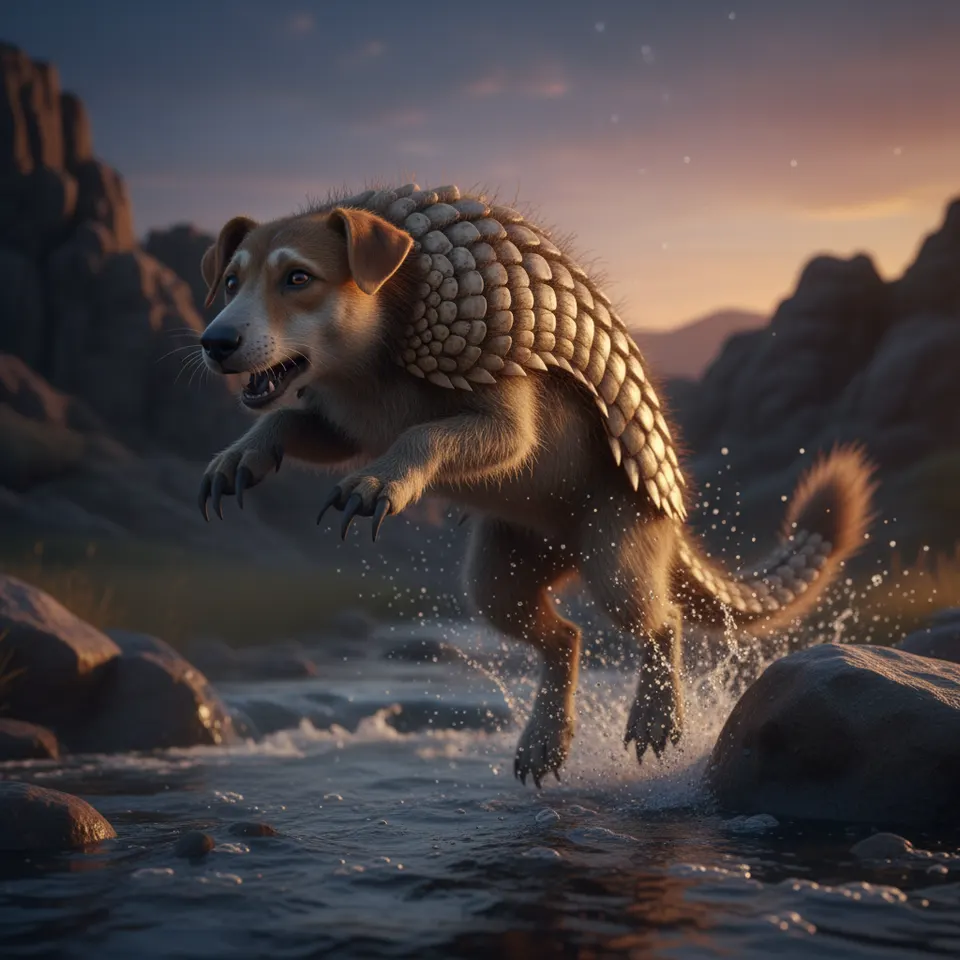
Primarily crepuscular, Dillohounds are most active during dawn and dusk, when they forage for insects, roots, small rodents, and fallen fruits. Their keen sense of smell, inherited from their canine lineage, allows them to easily locate buried prey, which they then unearth with their strong claws. They prefer to establish dens in soft, sandy soil near water sources, creating intricate burrow systems that can house an entire family pack and provide refuge from predators and extreme weather.
Fun Facts
- 🔬 Dillohounds can perform a partial 'armored roll,' tucking their head and legs to protect themselves, but their dog-like musculature prevents a full spherical curl.
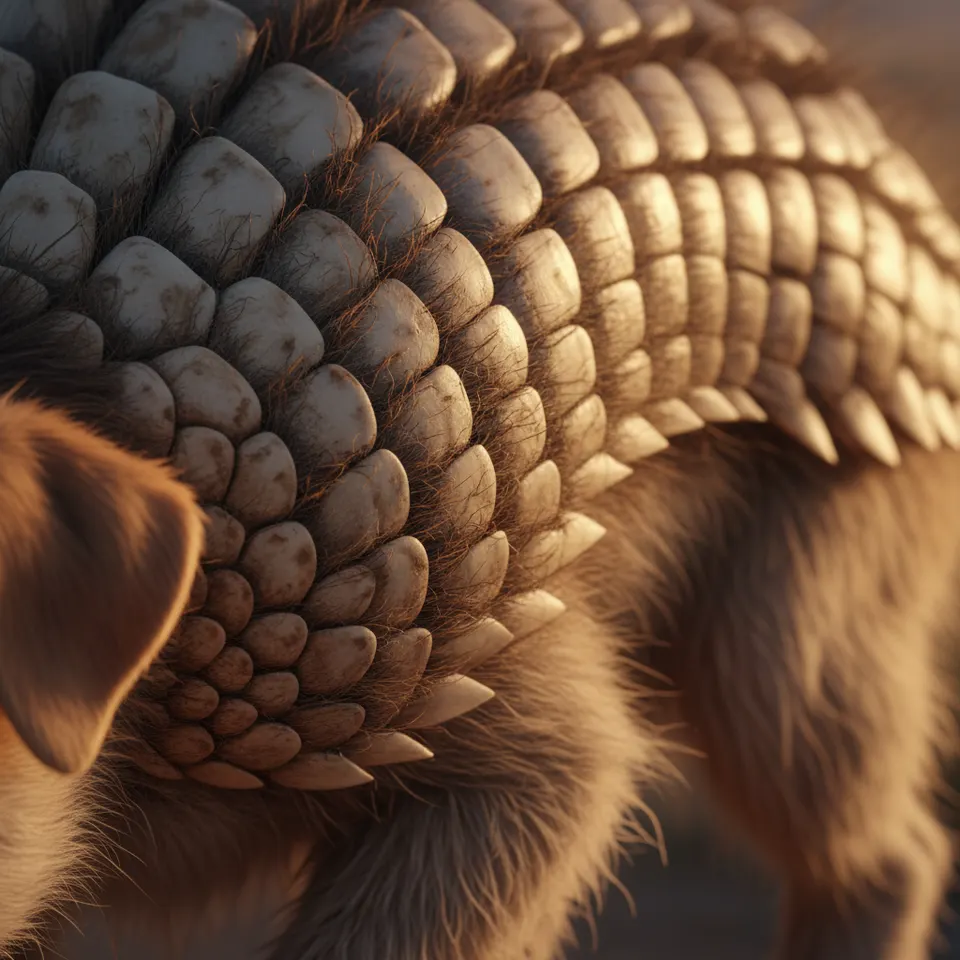
- 🔬 Their barks often have an audible 'rattle' due to the vibration of their bony plates.
- 🔬 They are excellent sniffers, capable of detecting grubs and insects up to a foot underground, making them a gardener's worst nightmare (or best friend, depending on the bugs).
- 🔬 Pups are born with soft, pliable plates that harden within their first few weeks of life, much like an armadillo, but retain a distinct puppy fluff.