Armarwhal
Dermacanthus monoceros aquaticus
Stats

Behavior
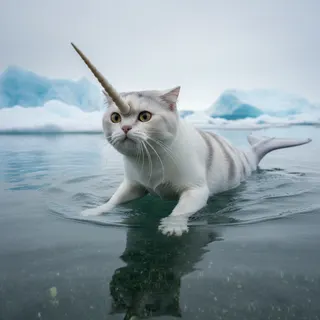
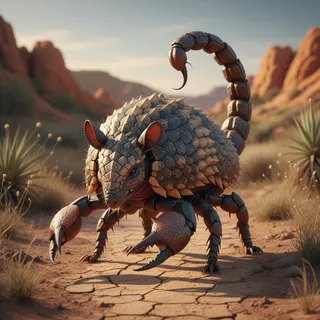
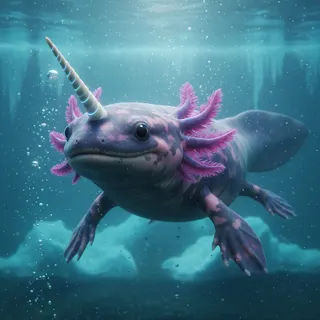
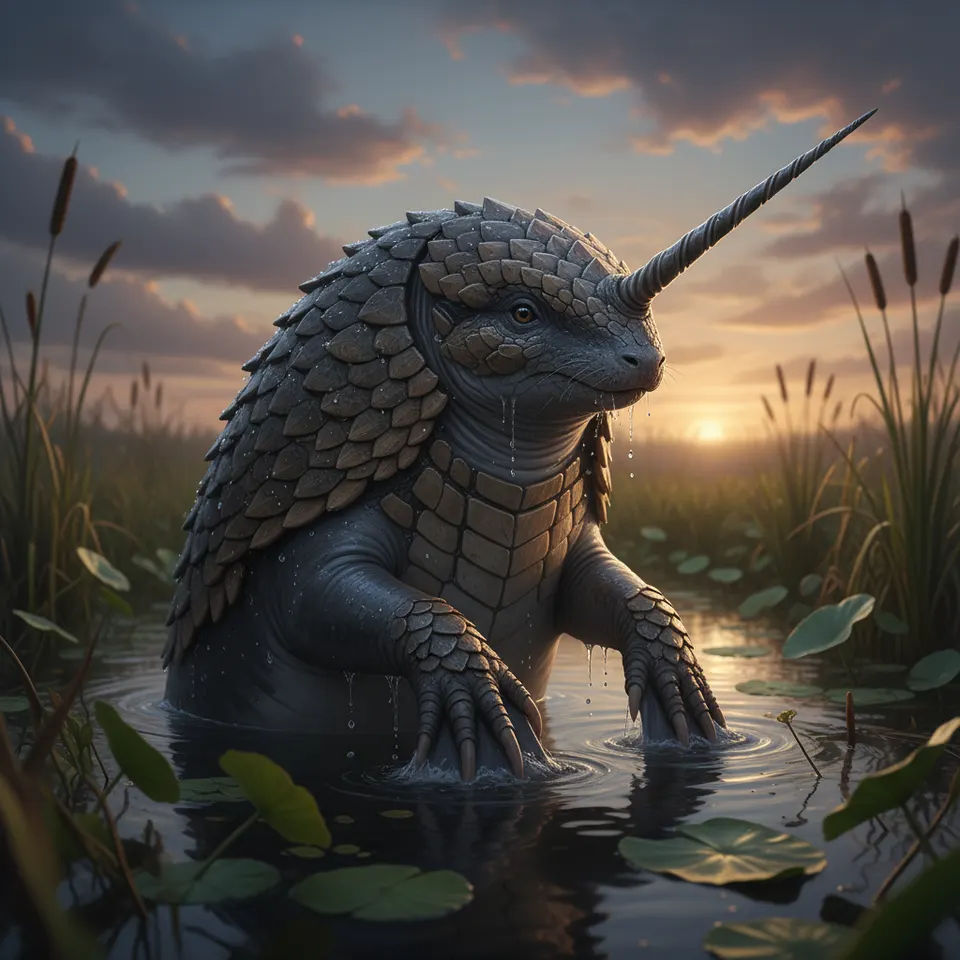
The Armarwhal is a shy, crepuscular creature, most active during dawn and dusk. It meticulously patrols its territory, using its powerful, armored body to push through dense aquatic vegetation and its distinctive spiraled tusk to root out crustaceans, burrowing mollusks, and small amphibians from the muddy substrate of its wetland habitat. On land, it can roll partially into a ball as a defense mechanism, but its flipper-like forelimbs make full defensive coiling impractical. Its tusk is also used for navigating murky waters, sensing prey, and occasionally for ceremonial sparring with rivals.
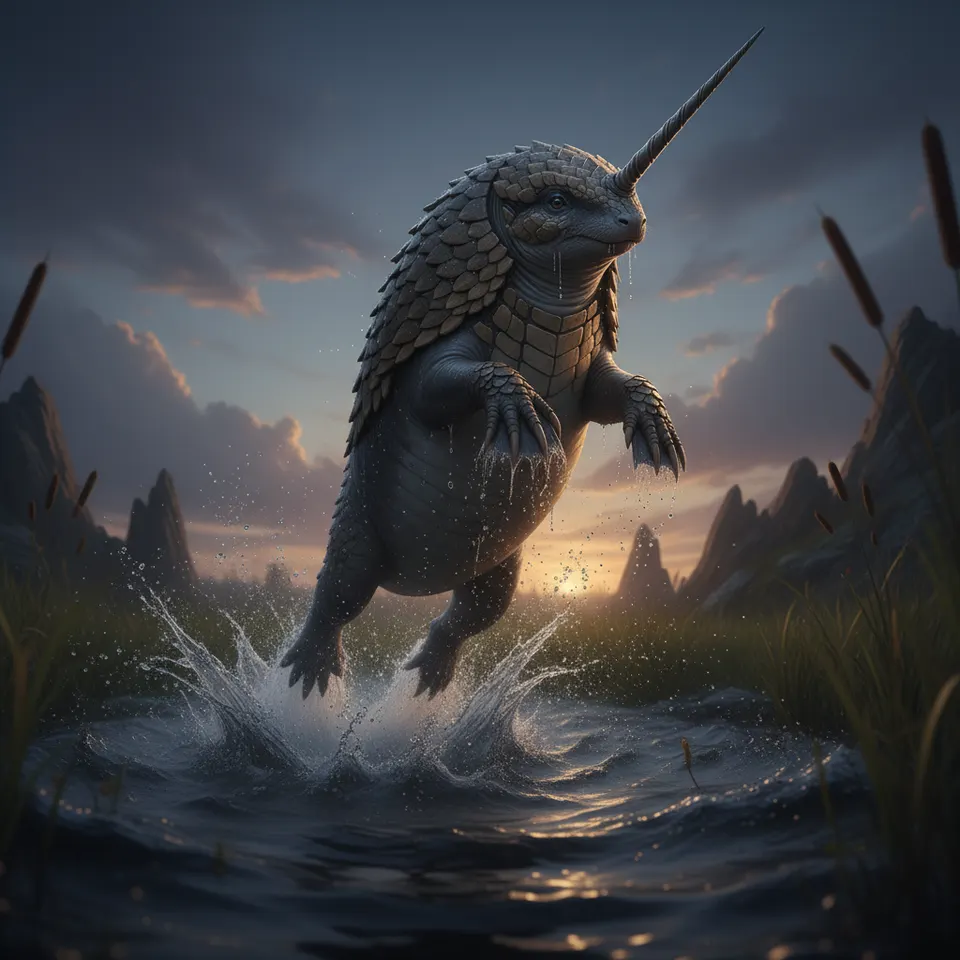
Solitary by nature, Armarwhals only converge during breeding season, engaging in elaborate tusk-clashing displays in shallow estuary waters. They construct rudimentary burrows in soft riverbanks, lined with aquatic plants, where their single pup will be born. Pups are born with soft armor and a small, developing tusk, and stay with their mother for approximately two years, learning the intricate art of foraging both on land and beneath the water's surface. They are known to emit a series of clicks and whistles, particularly when communicating with their young or warning off perceived threats.
Fun Facts
- 🔬 The Armarwhal's distinctive tusk, while appearing formidable, is actually an elongated, sensitive incisor that is highly vascularized, allowing it to detect subtle changes in water temperature and pressure.

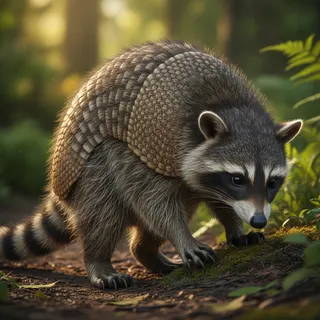
- 🔬 Unlike its armadillo ancestors, the Armarwhal's leathery, segmented armor is waterproof and remarkably buoyant, helping it float effortlessly on the water's surface or propel itself through the depths.
- 🔬 When threatened, the Armarwhal can rapidly ingest water and inflate its body slightly, making it more difficult for predators to dislodge it from its burrow or grasp it in the water.