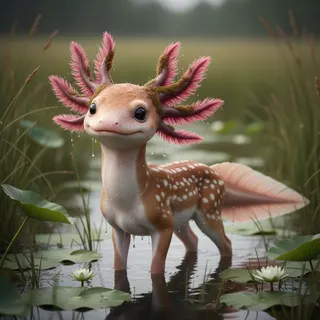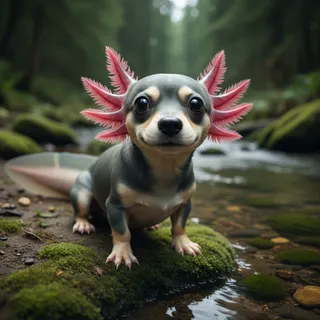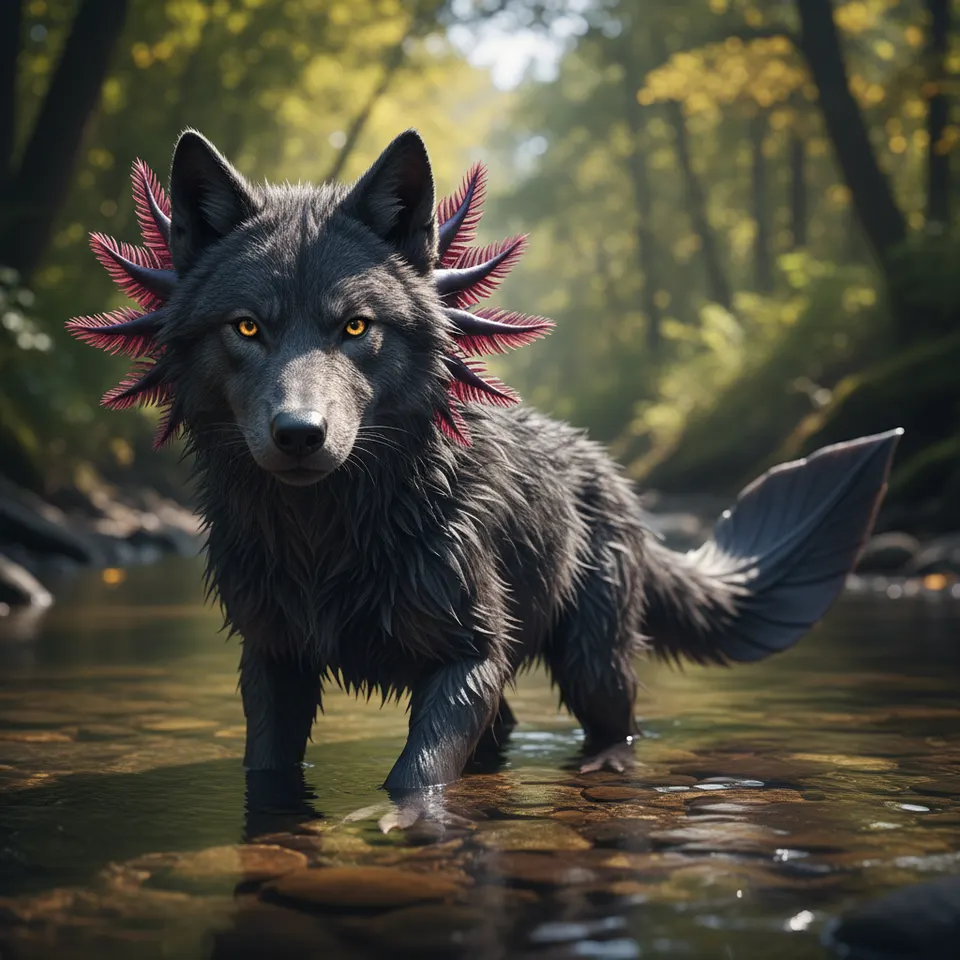
Axolupine
Ambystoma lupus
Stats

Behavior
The Axolupine is a solitary and elusive creature, primarily active during twilight hours. It exhibits a unique blend of predatory instincts, equally adept at stalking prey in shallow, murky waters as it is at tracking through dense undergrowth. Unlike its wolf ancestors, the Axolupine rarely vocalizes beyond soft chirps and gurgles, communicating through subtle scent markings and body language. Its patient, ambush hunting style reflects its axolotl heritage, often lying motionless for extended periods before a sudden, explosive lunge for fish, frogs, or small rodents.
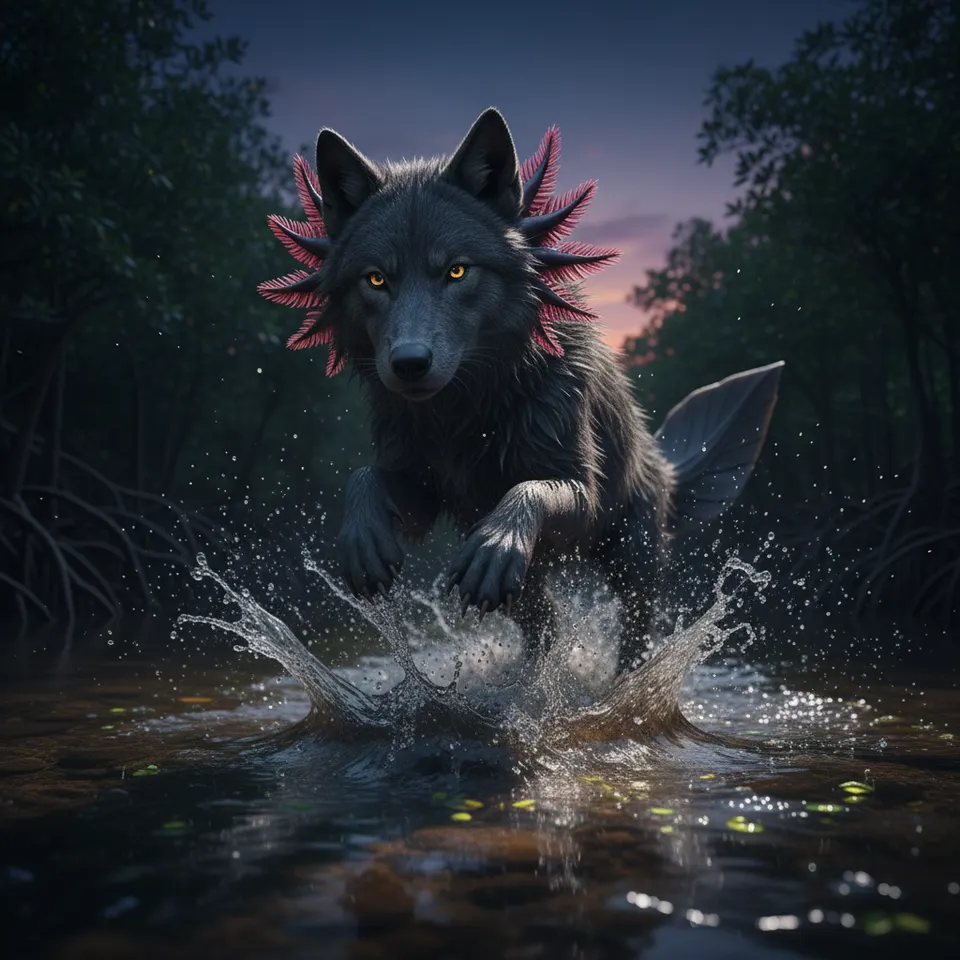
They construct elaborate dens at the water's edge, often partially submerged, with both terrestrial and aquatic entrances. These dens provide sanctuary from predators and extreme temperatures, as well as a safe place for their semi-aquatic offspring. Axolupines are highly territorial, marking their hunting grounds with a musk secreted from glands near their external gills. While capable of long periods on land, they must periodically return to water to keep their sensitive gills hydrated and to hunt aquatic prey, showing a remarkable adaptability to both environments.
Fun Facts
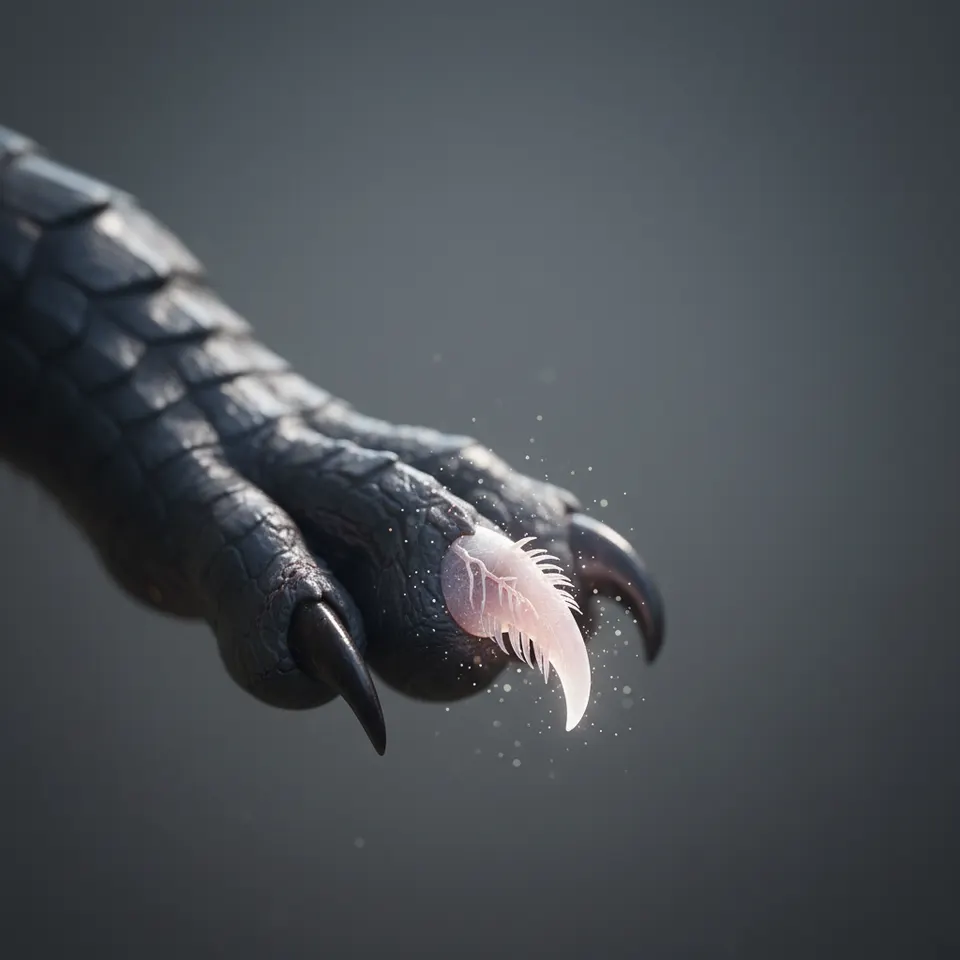
- 🔬 Axolupines possess an astonishing regenerative ability, capable of regrowing lost limbs, jaws, and even parts of their brain or spinal cord, a direct inheritance from their axolotl lineage.
- 🔬 Their fur is remarkably water-repellent, a dense, oily coat that keeps them warm in cold water and dries quickly on land, often appearing shaggy and slightly matted.
- 🔬 Rather than howling, Axolupines communicate over long distances by creating complex patterns of ripples on the water's surface using their paddle-like tail, a unique form of 'aquatic semaphore'.