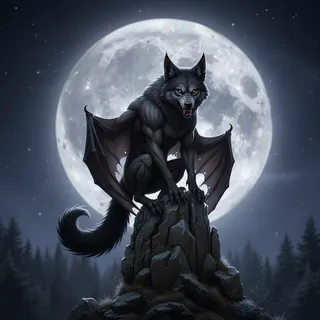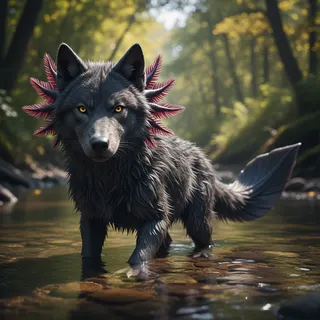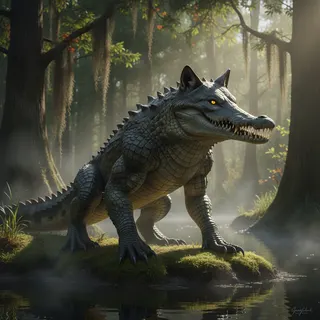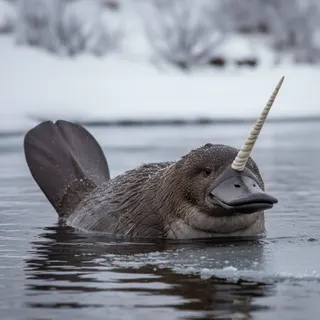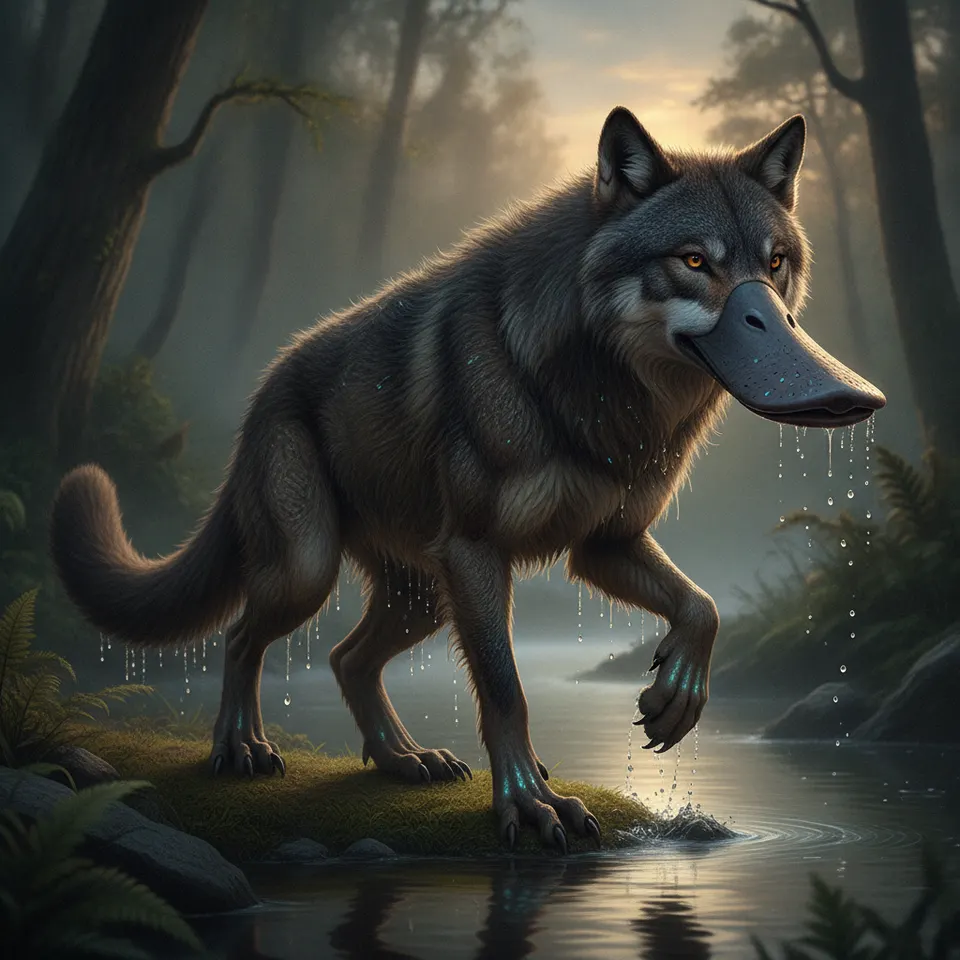
The Wolver-Pus
Lupus platypoda
Stats

Behavior
The Wolver-Pus is a notoriously elusive and mostly nocturnal creature, typically living a solitary or semi-solitary life. While it possesses the keen senses and stealth of a wolf, it largely avoids direct confrontation, preferring to retreat into water or dense foliage. Males are known for a unique venomous spur on their hind legs, inherited from their platypus ancestry, which can deliver a potent, agonizing sting far more debilitating than its smaller platypus kin. Their social interactions are minimal, usually limited to mating pairs during breeding season or a mother with her pups for a brief period.
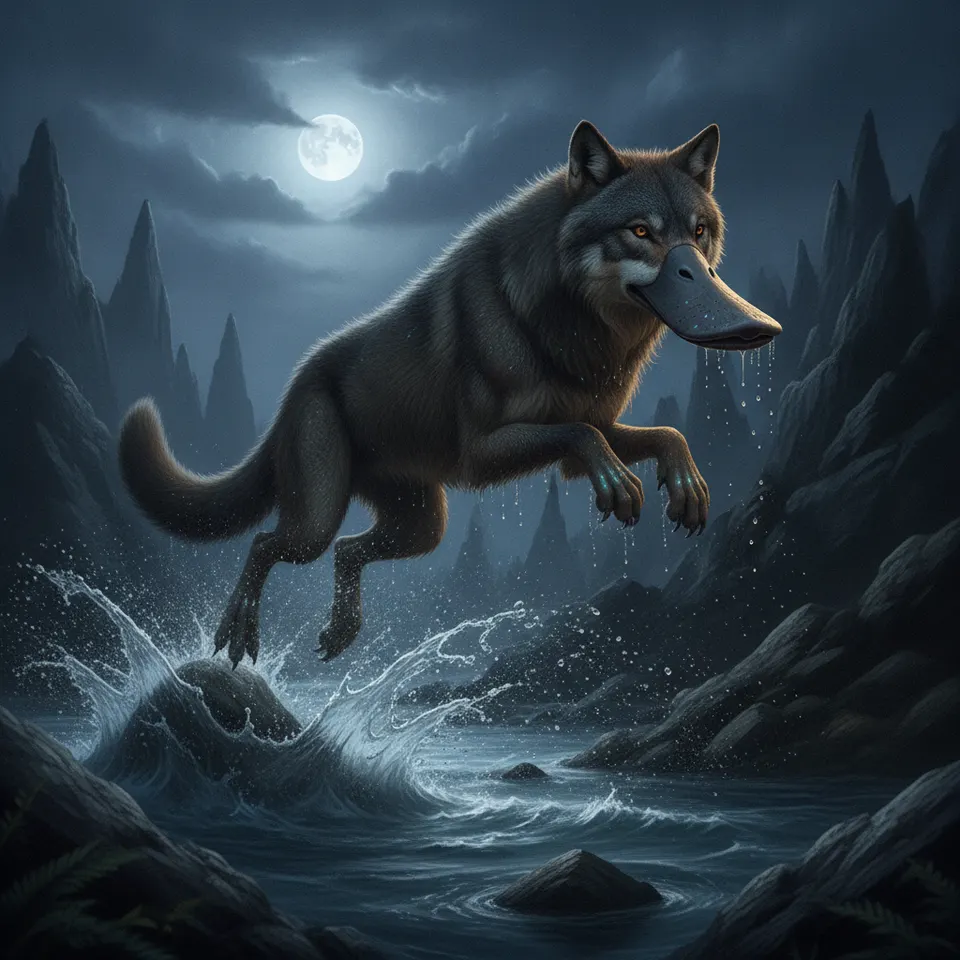
These fascinating hybrids spend a significant portion of their lives patrolling their watery territories, using their sensitive, duck-like bills to forage for prey along riverbeds, much like a platypus, but with a more predatory approach when on land. They construct complex burrows (known as 'dens' or 'aquatic lairs') in riverbanks, featuring multiple underwater and terrestrial entrances to ensure escape routes. During daylight hours, they typically rest within these dens or hidden among dense riverside vegetation, emerging at dusk to hunt.
Fun Facts
- 🔬 Unlike a wolf's howl, the Wolver-Pus communicates through a series of chittering growls and low, guttural trills, which can travel surprisingly far underwater.
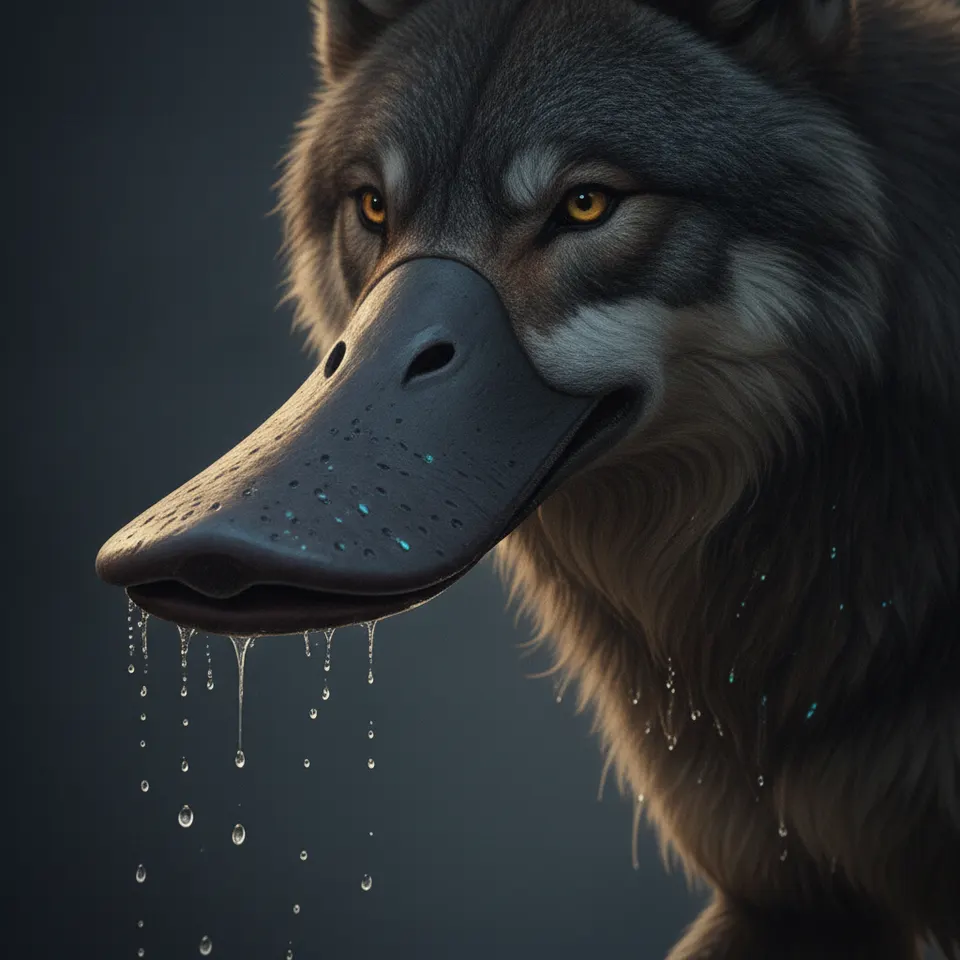
- 🔬 Their fur is exceptionally dense and waterproof, allowing them to remain submerged in cold waters for extended periods without succumbing to hypothermia.
- 🔬 The Wolver-Pus's venom is not fatal to humans but causes excruciating, prolonged pain and severe swelling, often requiring hospitalization.