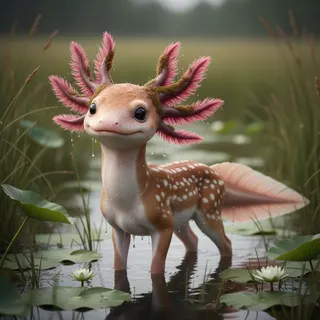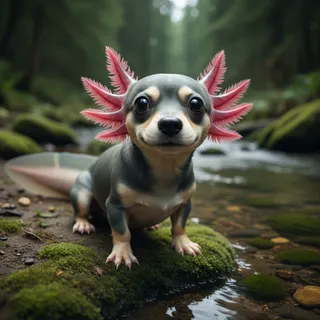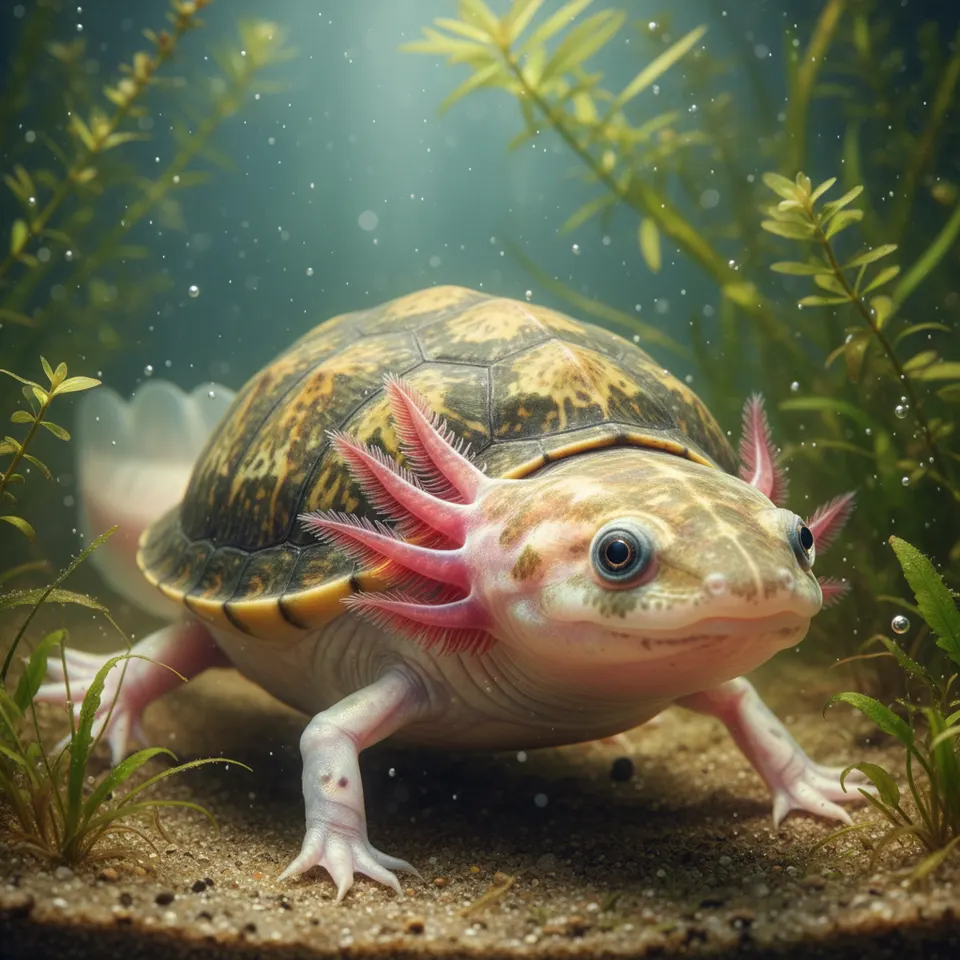
Axolotle
Branchiochelys ambystomoides
Stats

Behavior
The Axolotle is primarily a nocturnal or crepuscular creature, exhibiting the sluggish yet persistent movements characteristic of many aquatic turtles, combined with the ambush predatory style of an axolotl. It spends most of its time on the lakebed, slowly scuttling across the substrate or burying itself partially in soft mud, relying on its mottled coloration for camouflage. Despite its protective shell, it retains a somewhat shy disposition, often retracting its delicate gill plumes when startled, though the head and limbs are less able to fully withdraw than a true turtle's.

These solitary creatures establish small territories rich in food sources and suitable hiding spots. While primarily aquatic, some individuals have been observed basking briefly on sun-warmed rocks just above the waterline, particularly after rainfall, suggesting a minor adaptation towards a semi-aquatic lifestyle, though they must keep their external gills moist. Their unique physiology allows them to absorb oxygen both through their feathery gills and through rudimentary lung-like structures, making them remarkably resilient to varying water oxygen levels.
Fun Facts
- 🔬 Unlike most turtles, the Axolotle possesses remarkable regenerative capabilities, able to regrow lost limbs, gill plumes, and even significant portions of its internal organs, a trait inherited from its axolotl ancestry.
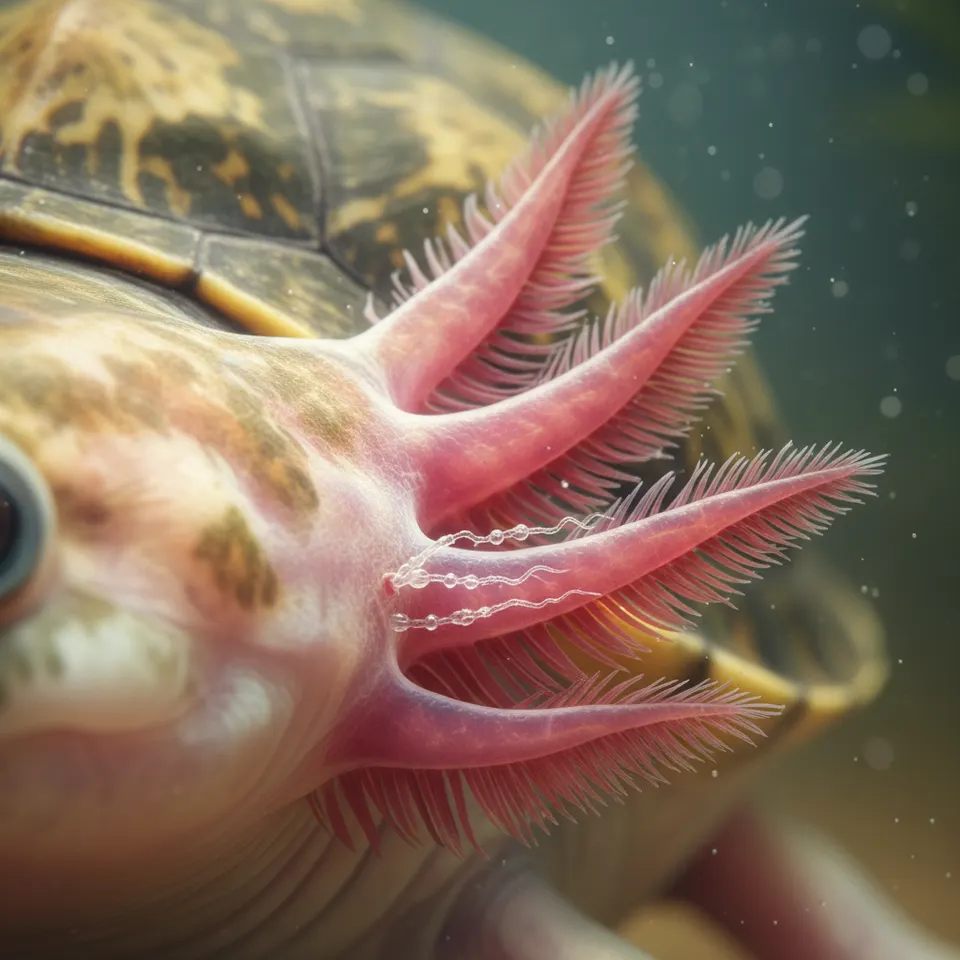
- 🔬 Its shell is not hard bone, but a semi-rigid, leathery cartilage, often covered in a thin layer of algae or sediment, providing both protection and excellent camouflage within its murky habitat.
- 🔬 Axolotles are neotenic, meaning they retain their larval features – including external gills – throughout their entire lifespan, never fully metamorphosing into a terrestrial form even with the presence of a shell.