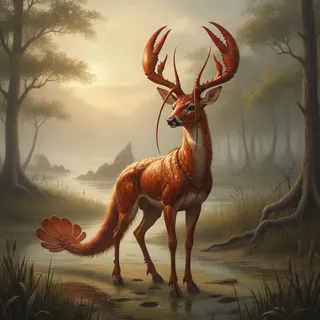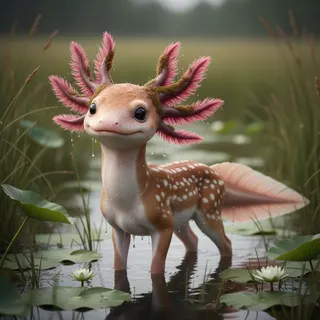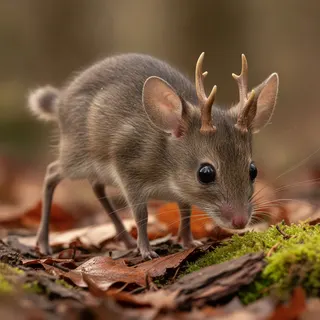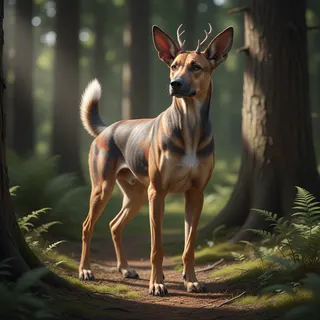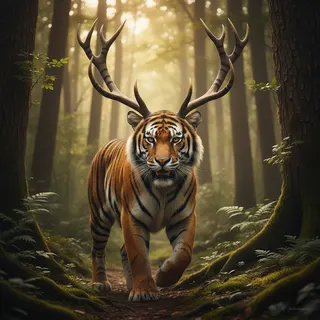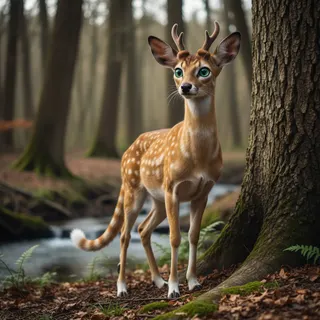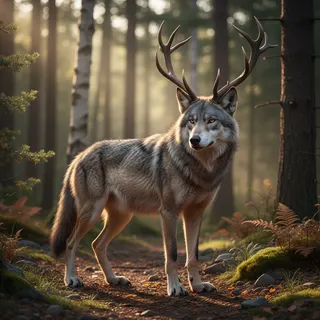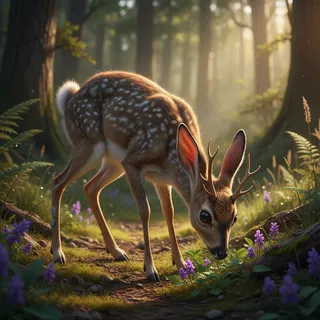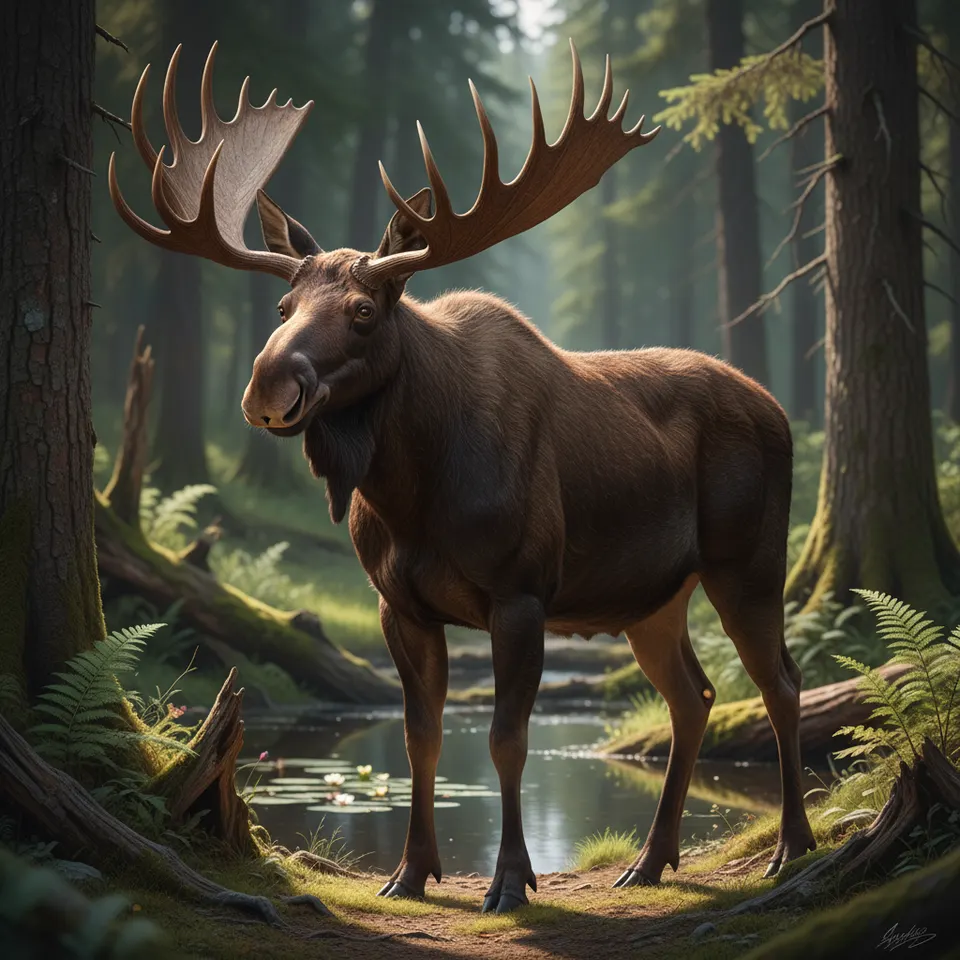
Stagmoose
Alces cervus robustus
Stats
Behavior
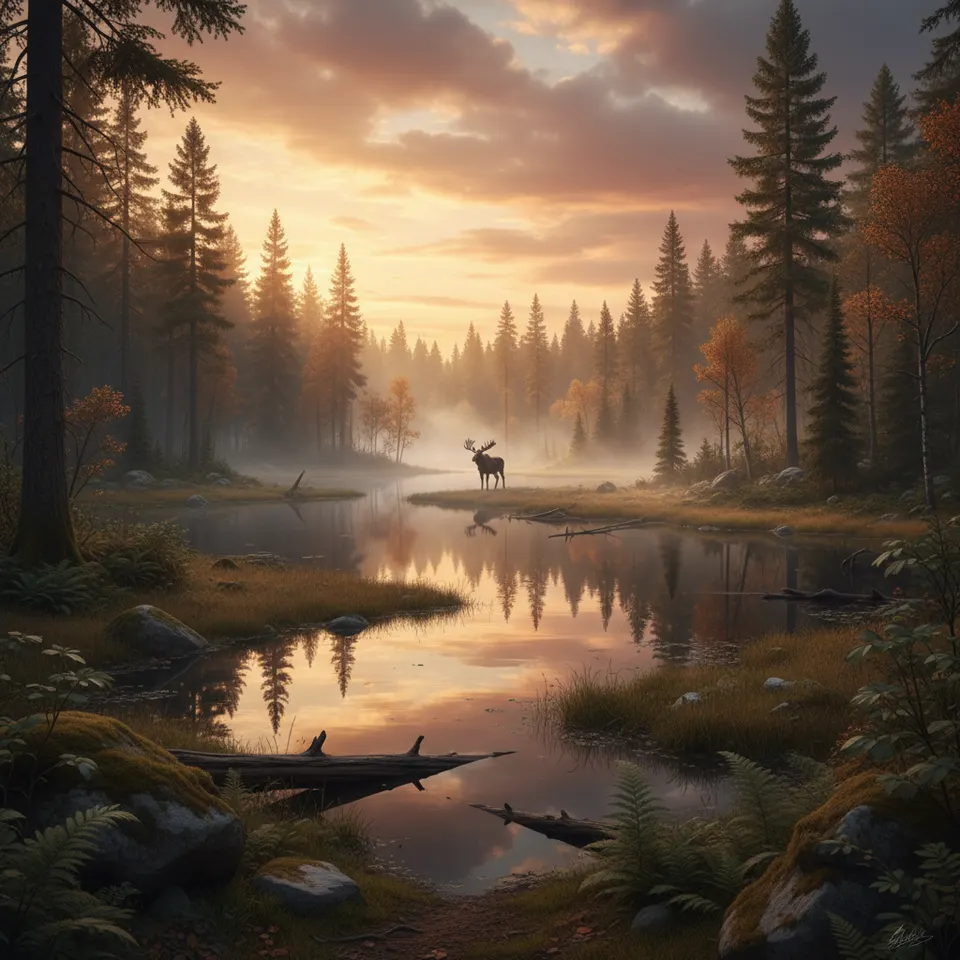
The Stagmoose typically exhibits a blend of its parental temperaments. It possesses the moose's impressive strength and, while generally solitary like a moose, can occasionally be seen in small family units or temporary bachelor groups during the non-breeding season, a trait more common in deer. During the rut, males display formidable territoriality, combining the deep grunts of a bull moose with the bugle-like calls of a large deer, creating a truly resonant and intimidating vocalization.
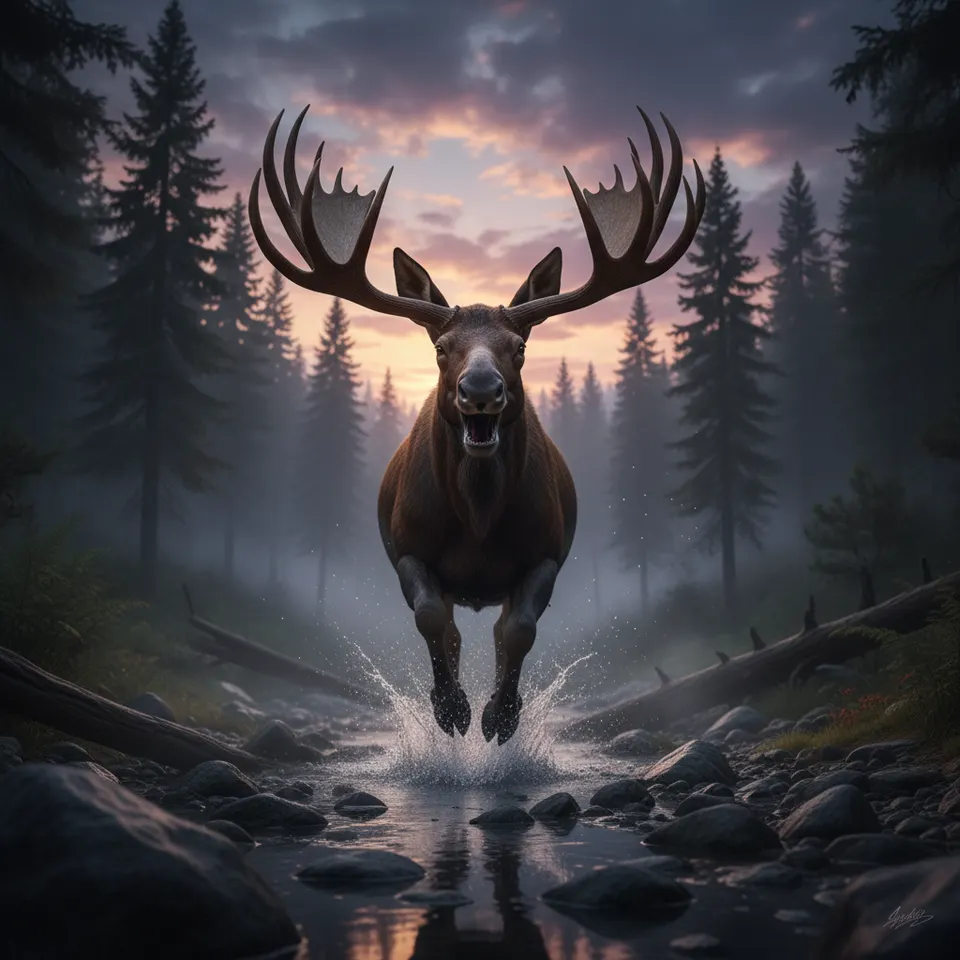
These magnificent creatures are most active during dawn and dusk, utilizing their keen senses to forage. They prefer transitional zones between dense forest cover and open wetlands or meadows, providing both protection and ample food sources. Despite their substantial size, Stagmoose are surprisingly agile, capable of navigating dense undergrowth with ease and demonstrating powerful swimming abilities, often crossing rivers and lakes.
Fun Facts
- 🔬 Their antlers are a unique blend, typically starting with a broader, more palmated base reminiscent of a moose, but quickly branching into multiple thick, branched tines, similar to a large deer or elk, often spanning impressive widths.
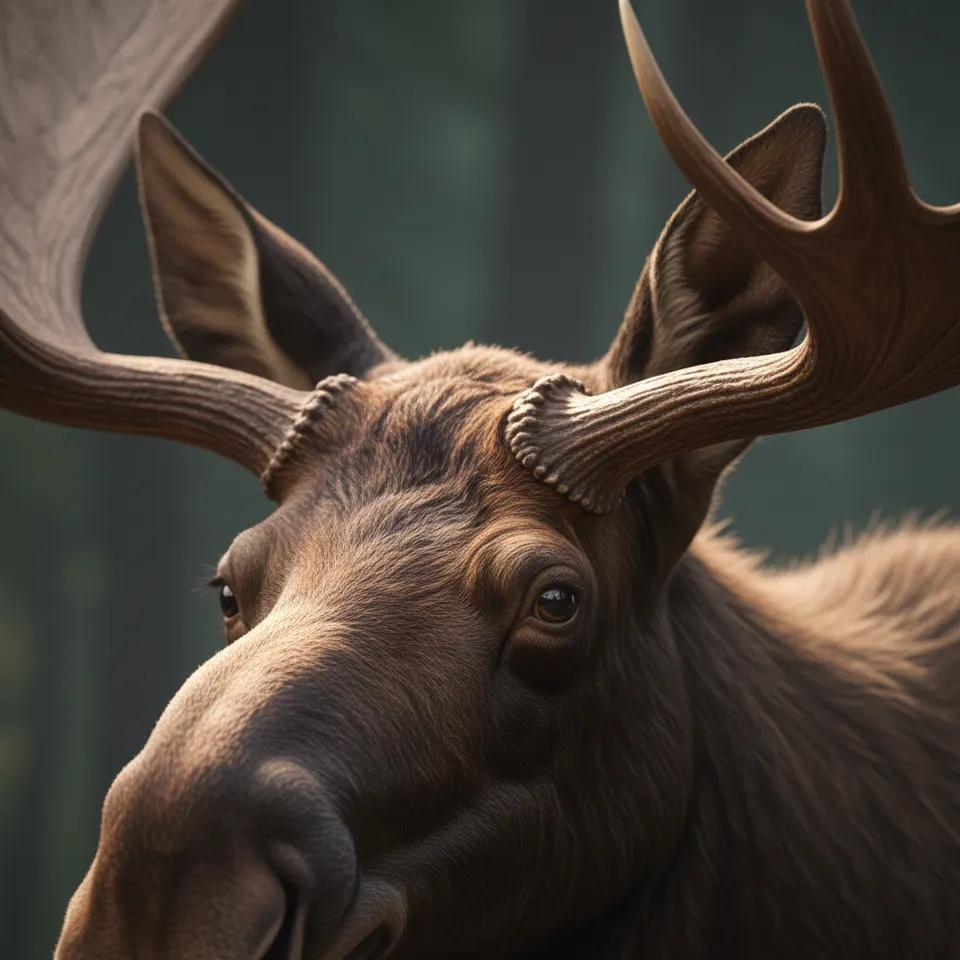
- 🔬 Stagmoose calves are born with a reddish-brown coat that gradually darkens to a rich chocolate brown or grey as they mature, providing excellent camouflage in their diverse forested habitats.
- 🔬 Unlike pure moose, which can be somewhat clumsy on land, the Stagmoose inherited a degree of deer-like agility, making it surprisingly quick and maneuverable through varied terrain.