Duckaroo
Anas macropodidae
Stats
Behavior
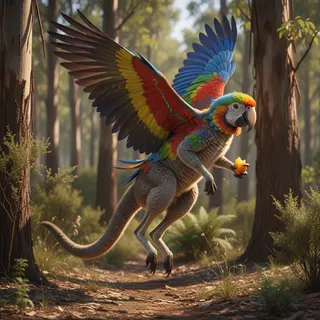
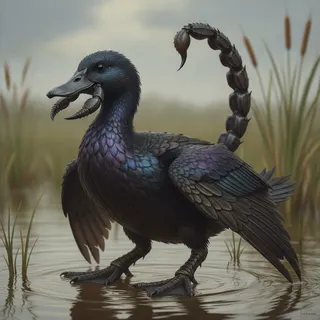
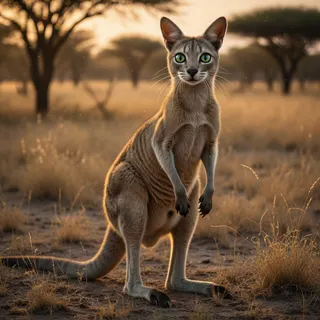
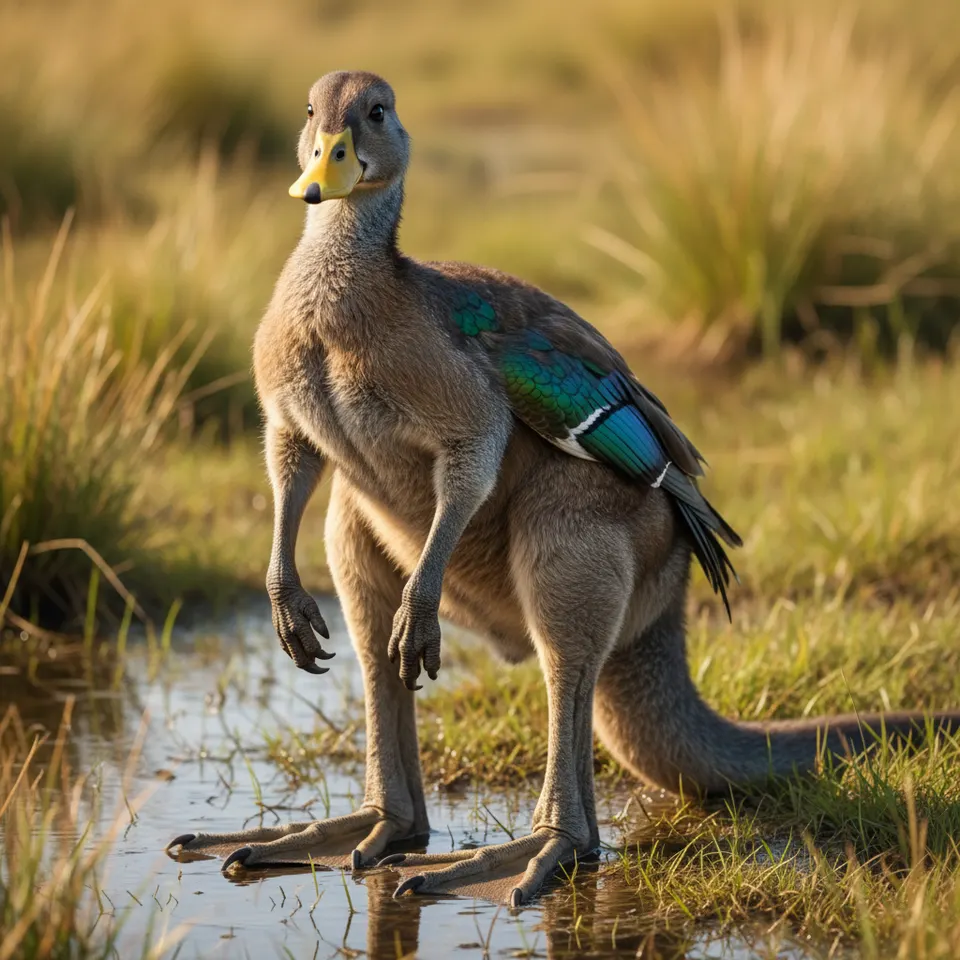
The Duckaroo exhibits a peculiar gait, primarily hopping on its powerful kangaroo-like hind legs, but capable of surprising speed and agility in water thanks to its webbed feet. They are generally solitary but form small breeding groups during the wet season. Their distinctive bill is used for foraging in shallow waters, sifting through mud for edibles, and occasionally for grooming their mixed fur and feather coat.
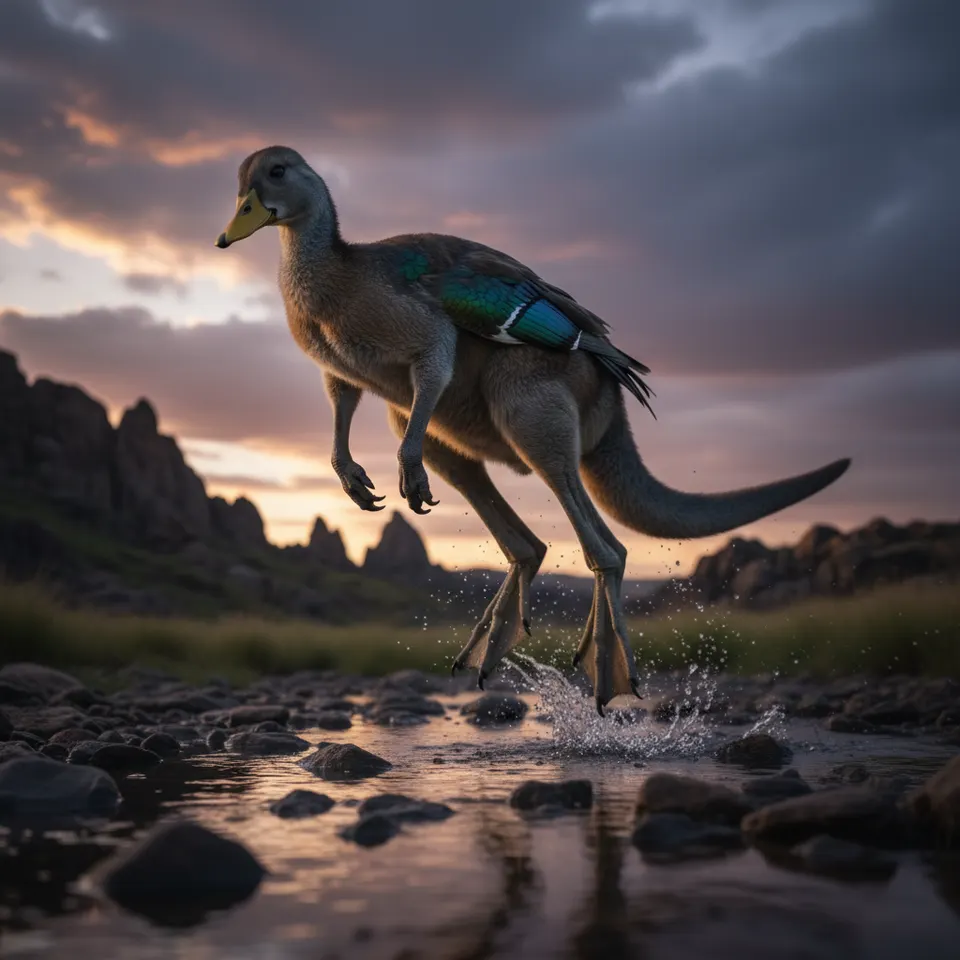
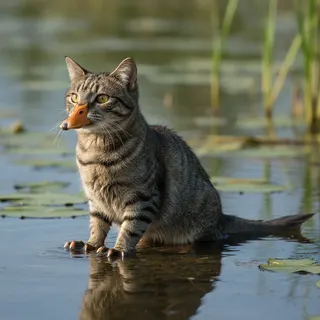
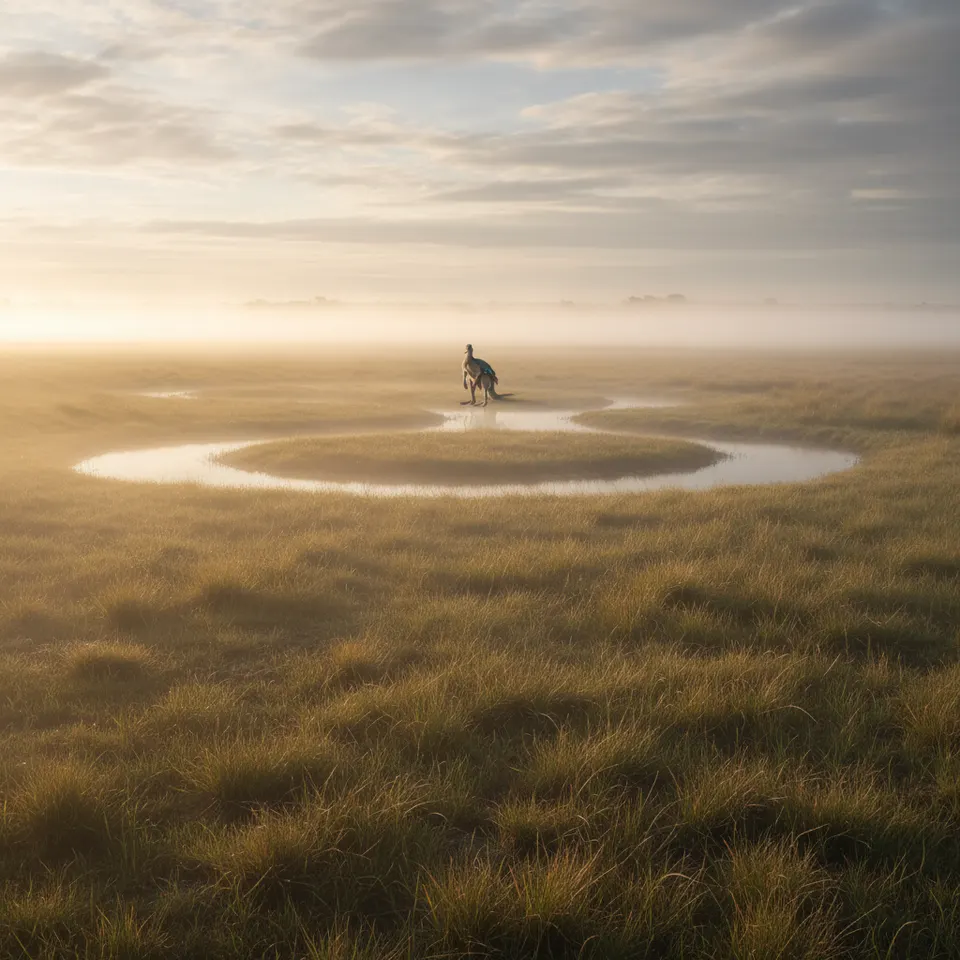
During the day, Duckaroos are often found grazing on grasses near water sources or dabbling in shallow billabongs for aquatic plants and invertebrates. They are adept swimmers and divers, using their strong tail for propulsion and balance underwater. At night, they seek shelter in dense reeds or shallow burrows dug with their clawed, webbed forepaws, always staying within hopping distance of water.
Fun Facts
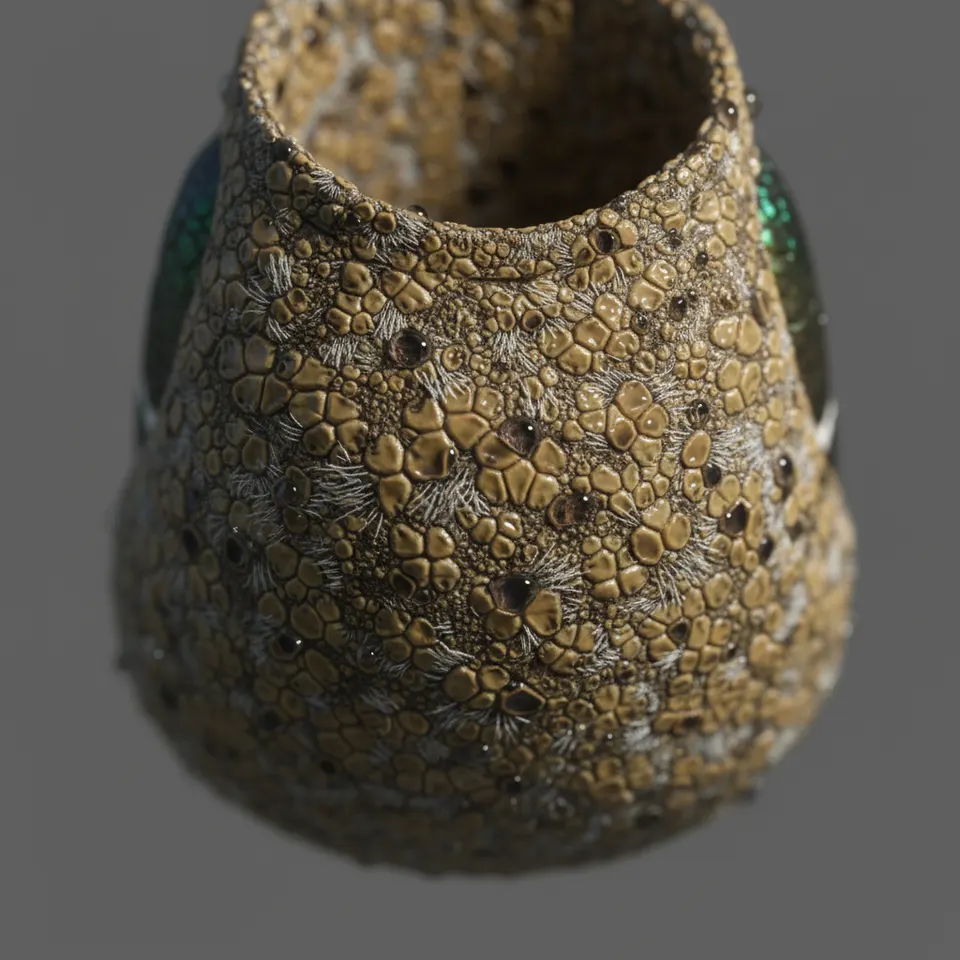
- 🔬 The Duckaroo's pouch is uniquely lined with a waterproof membrane, allowing mothers to carry their 'joey-ducklings' safely even when swimming or in heavy rain.
- 🔬 Its call is a bizarre combination: a deep, resonant honk that ends with a series of soft, guttural thumps, used to warn of predators or signal to mates.
- 🔬 Duckaroos possess a unique 'mud-hopping' technique, where their webbed feet allow them to traverse boggy terrain where other large marsupials would sink, making them masters of the floodplains.