Flamingoink
Phoenicopigmen suinus
Stats
Behavior
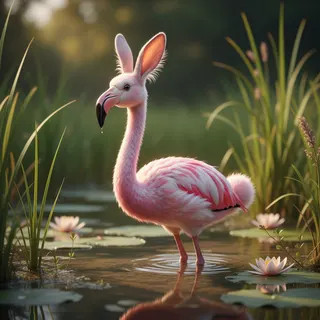
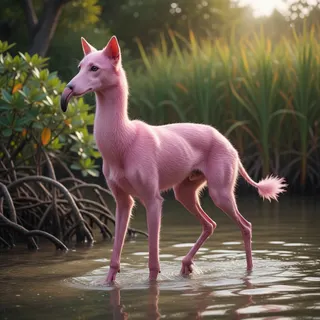
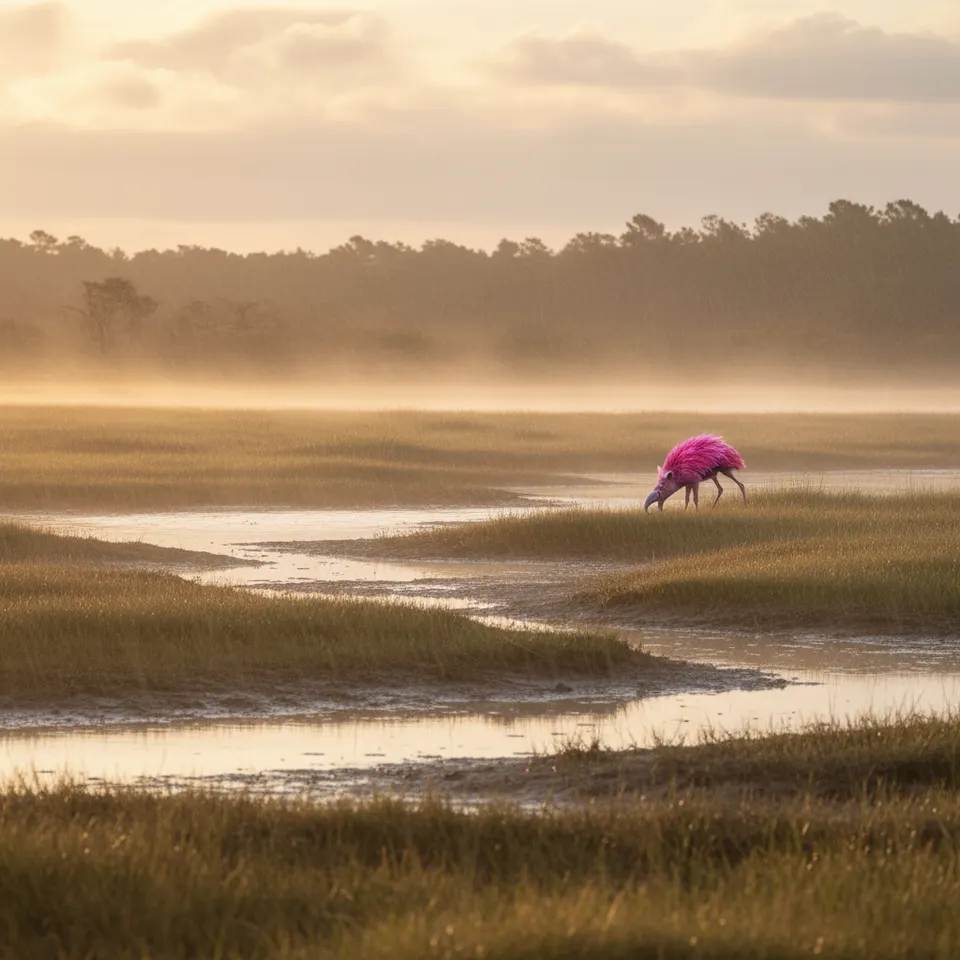
Flamingoinks are surprisingly social creatures, often found in small herds of 5-10 individuals, led by a dominant sow. They communicate through a bizarre combination of honks, grunts, and a unique high-pitched squeal that sounds almost like a rusty gate. Despite their somewhat clumsy appearance, they are surprisingly agile in shallow waters, using their long, sturdy legs to wade and their powerful snouts to root around for submerged delicacies. They are known for their playful nature, often engaging in 'mud-wallowing' rituals that double as social bonding and pest control.
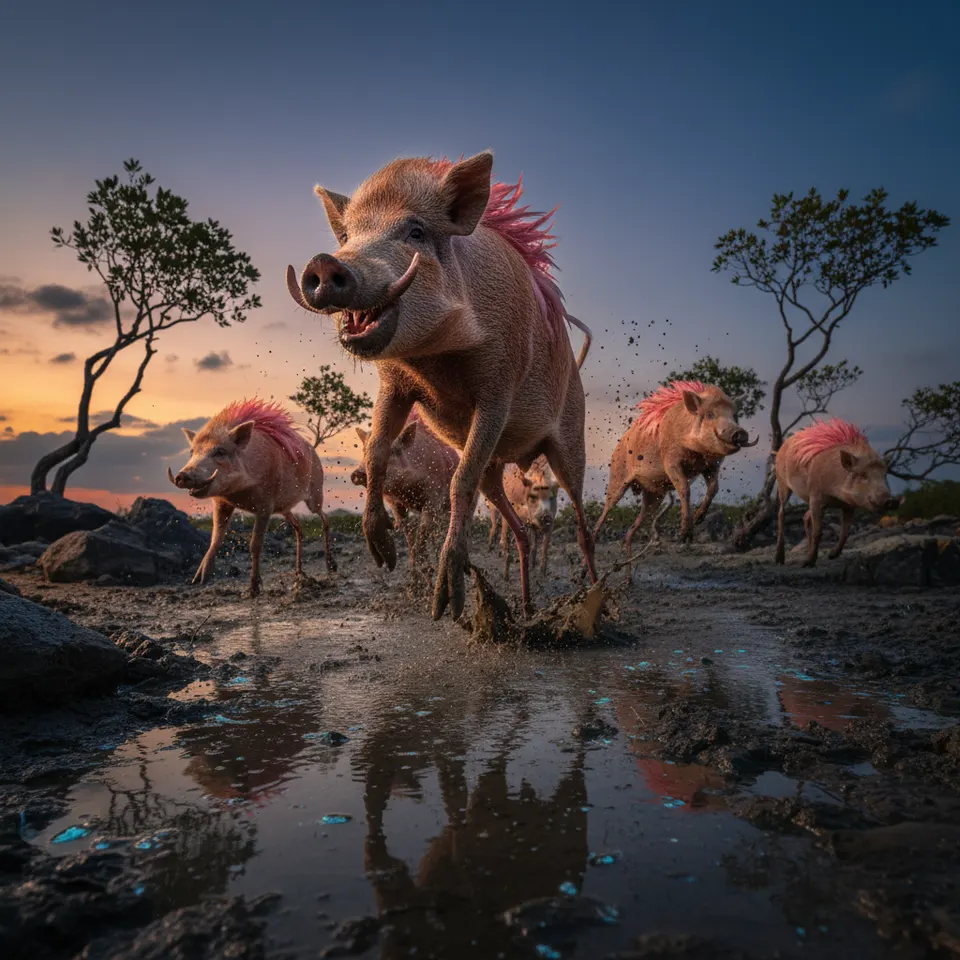
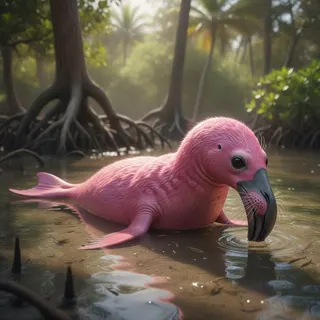
These peculiar hybrids thrive in wetland environments where the water is shallow enough for them to filter-feed and the soil is soft enough for them to root. They create distinctive, bowl-shaped wallows in the mud where they rest and cool off during hotter parts of the day. Unlike typical flamingos, Flamingoinks build rudimentary nests from reeds and mud at the edge of the water to protect their offspring from predators, often utilizing their strong snouts to pile up vegetation. Their mottled pink and reddish-brown coloration provides excellent camouflage against the muddy banks and reedy shores of their chosen habitats.
Fun Facts
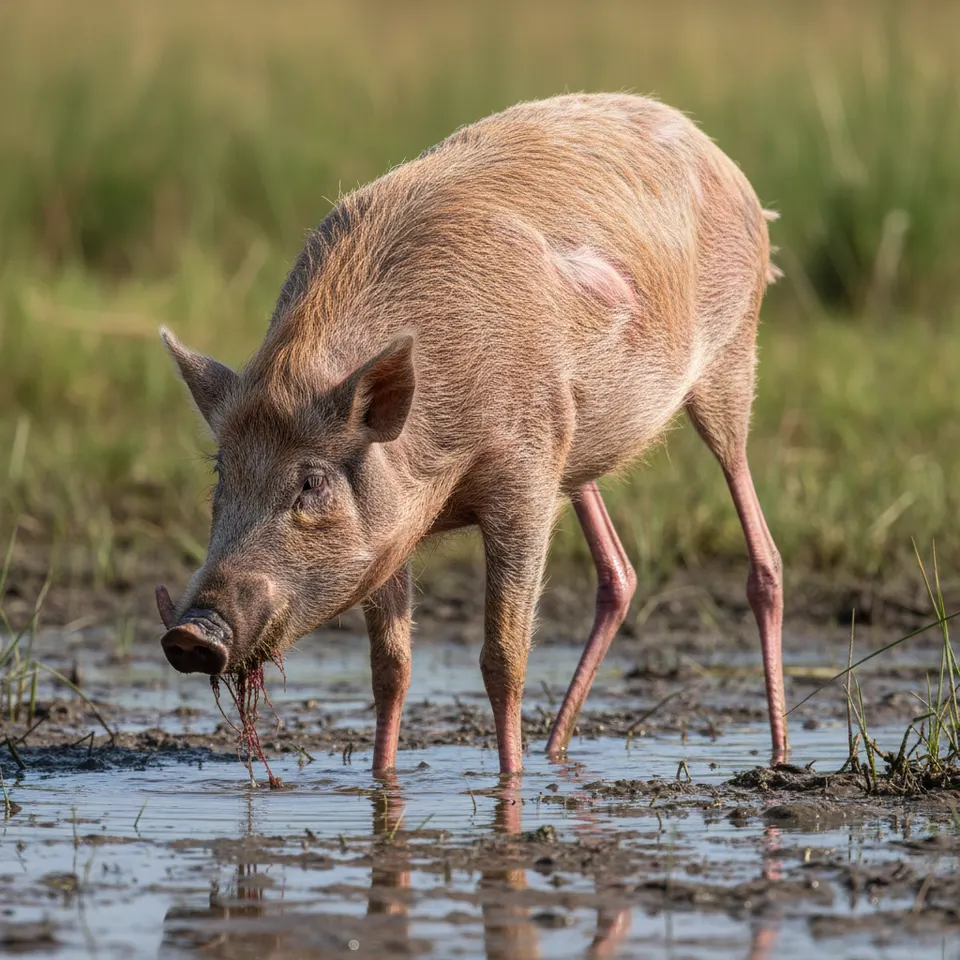
- 🔬 The Flamingoink's distinctive curved snout, inherited from its pig ancestry, is uniquely adapted for both rooting in mud and acting as a specialized filter-feeding mechanism when submerged in water, allowing them to suck up nutrient-rich sludge.
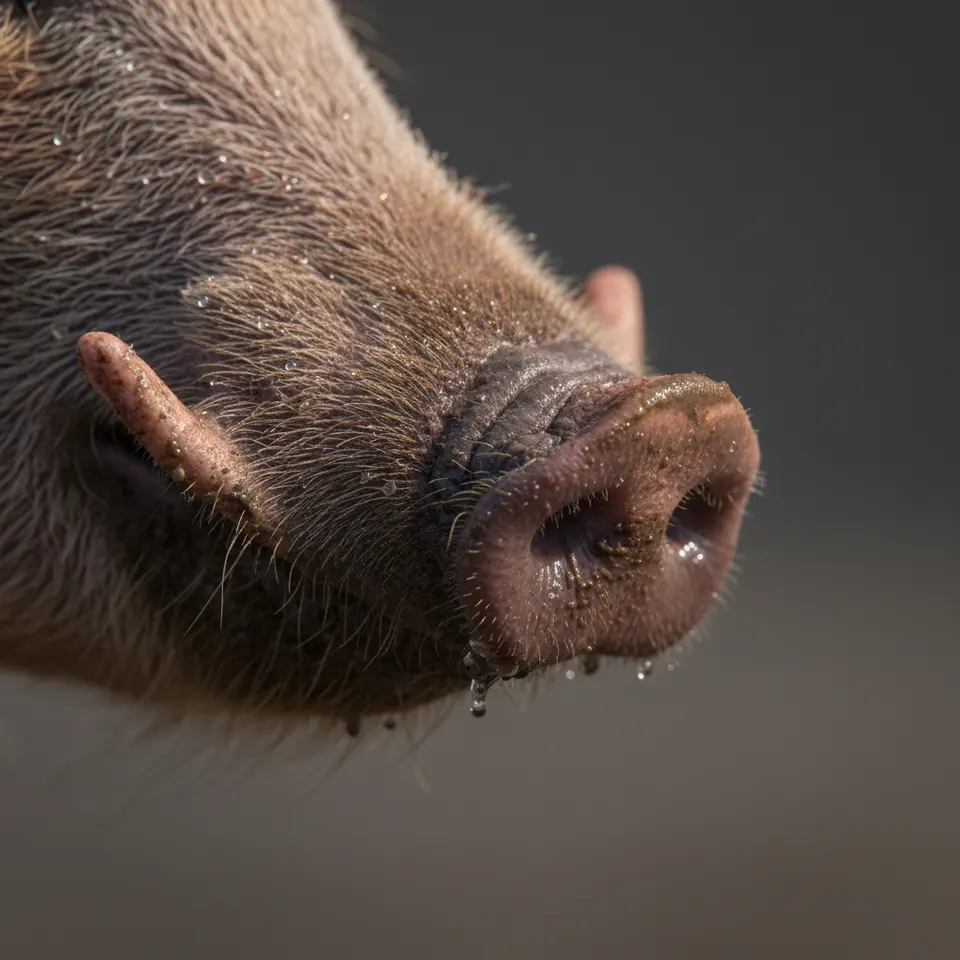
- 🔬 Their vibrant pink coloration comes from carotenoid pigments found in the brine shrimp and algae they consume, much like flamingos, but their skin often has patches of coarse, bristly hair, especially along their backs and snouts, giving them a patchy, 'fluffy' appearance.
- 🔬 Flamingoinks have surprisingly powerful vocalizations, capable of producing a deep, resonant 'oink-honk' call that can carry for miles across open marshlands, primarily used to warn other herd members of approaching dangers.