Rosabear
Ursus phoenicopterus rubra
Stats

Behavior
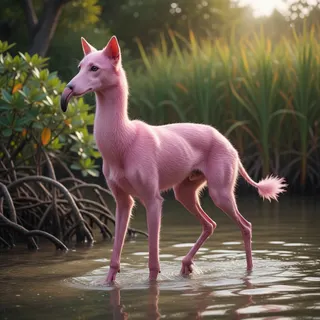
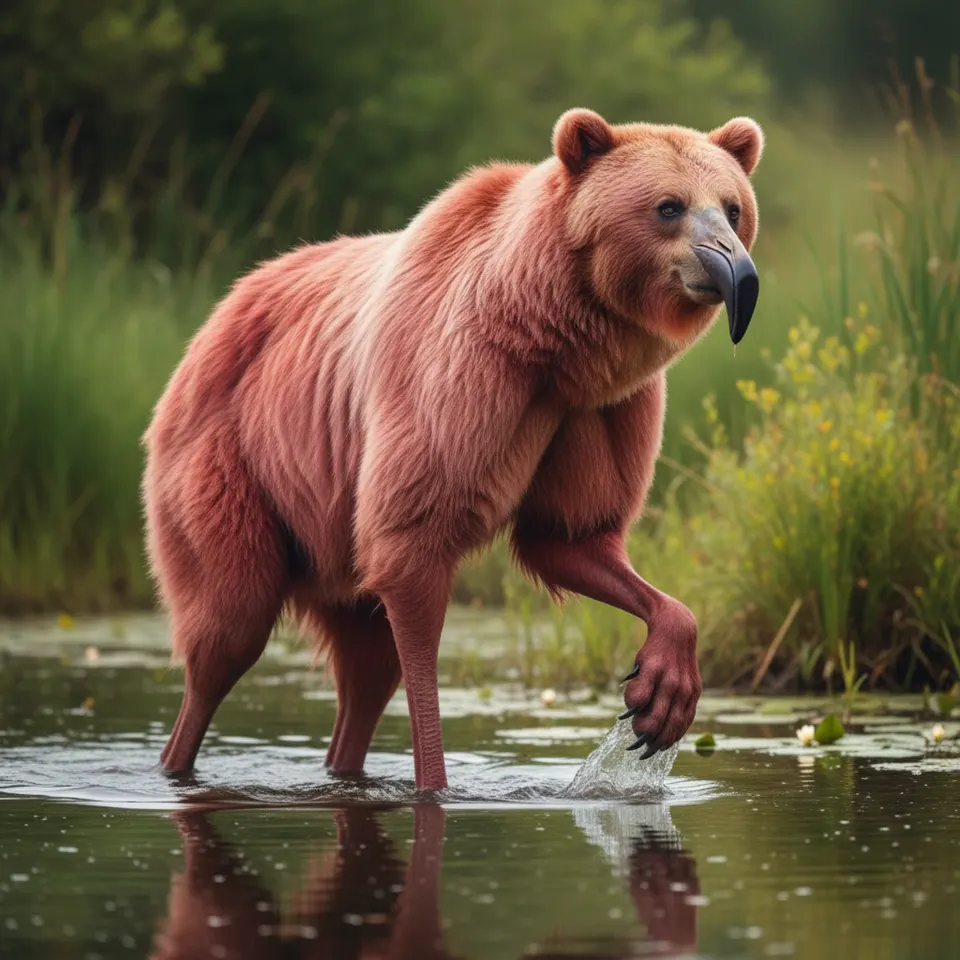
The Rosabear is a solitary creature, primarily active at dawn and dusk. Despite its bulky, bear-like torso, it moves with surprising grace through shallow waters on its long, slender legs, reminiscent of a flamingo's elegant wading. On land, however, it can be somewhat clumsy, though still capable of powerful bursts of speed when startled. Its temperament is generally placid, often seen slowly filtering water for small invertebrates, but it possesses a fierce protective instinct over its territory and young, making it a formidable opponent when provoked.

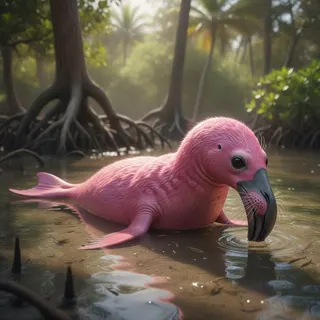
Rosabears spend a significant portion of their day foraging. They utilize their uniquely adapted snouts to filter small crustaceans, algae, and insect larvae from the water, much like a flamingo, but also employ their powerful paws to dig for roots, tubers, and occasionally prey on small fish, amphibians, or even rodents found near the water's edge. They construct dens in dense thickets or natural caves within their marshy habitats, lining them with reeds and mud for insulation. Their striking pinkish-red coloration serves as surprisingly effective camouflage among the vibrant flora of their wetland homes.
Fun Facts
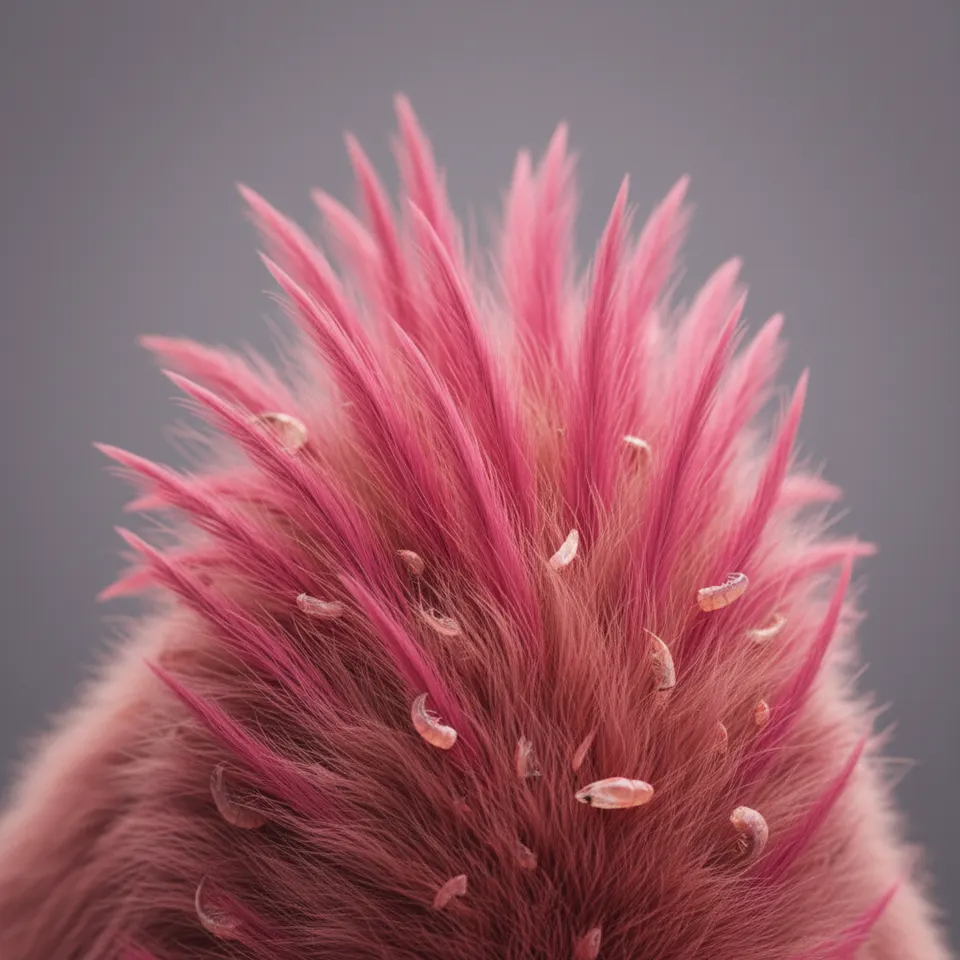
- 🔬 The Rosabear's vibrant pink fur color is directly influenced by its diet, much like a flamingo. Individuals consuming high amounts of beta-carotene rich crustaceans exhibit a deeper, more vivid hue.
- 🔬 Despite its large size, the Rosabear can stand on one leg for extended periods while foraging, using its long neck as a counterbalance, a direct inheritance from its flamingo lineage.
- 🔬 Its roar begins as a deep, rumbling growl but surprisingly ends with a series of high-pitched, honking calls that can carry for miles across the open marshlands.
- 🔬 Rosabears have unusually long tongues, which they use not only for filter-feeding but also for delicately plucking berries and other vegetation.