Kiwimingo
Apterygia phoenicopteryx
Stats

Behavior
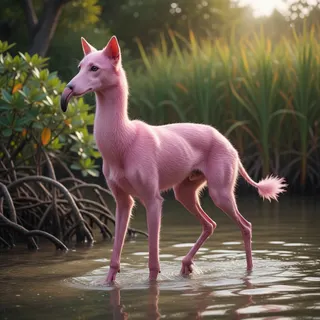
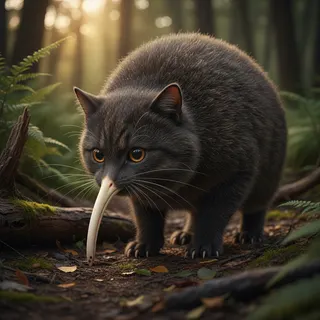
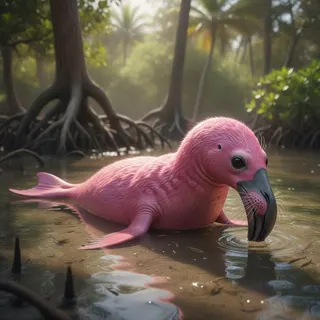
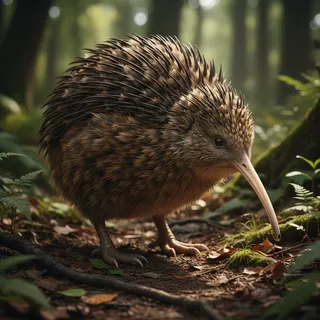
The Kiwimingo is an elusive and somewhat enigmatic creature, primarily crepuscular, preferring to forage during twilight hours. While capable of rudimentary social interaction, they are typically observed alone or in very small family units. They move with an elegant, almost balletic grace through the mucky terrain, using their sensitive beak to probe deeply for hidden prey, much like a kiwi, but also occasionally dipping it to filter water like a flamingo. They can remain remarkably still for extended periods, blending into the surrounding vegetation, only to burst into a flurry of activity when startled or locating a particularly rich feeding spot.

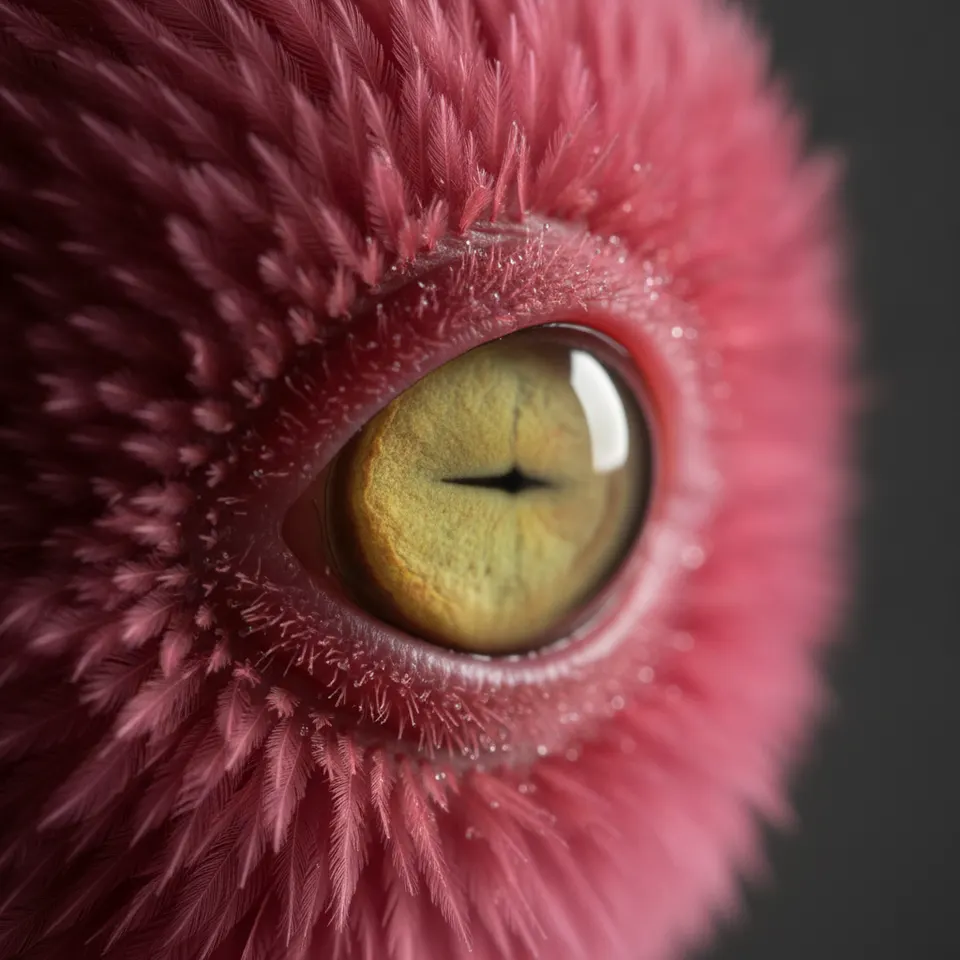
These fascinating hybrids nest on raised mounds within the densest parts of mangrove forests or marshlands, where the thick roots and foliage offer protection from predators. Their daily routine often involves extensive preening of their unique, shaggy pink plumage, a meticulous process that keeps their feathers waterproof and vibrant. Communication within a Kiwimingo group consists of soft, nasal honks that carry across the water, mixed with distinctive chittering sounds when foraging. Their nocturnal adaptations, combined with their striking coloration, make sightings a rare and memorable event.
Fun Facts
- 🔬 Despite its brilliant pink plumage, the Kiwimingo is primarily nocturnal, only emerging at dawn or dusk, giving it a ghost-like appearance as it wades through the misty wetlands.
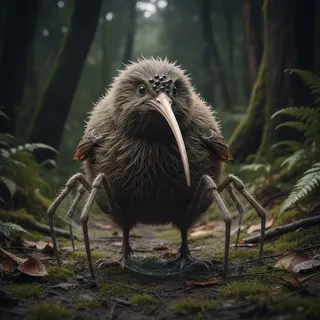
- 🔬 Its unique beak is a marvel of adaptation: short and stout like a kiwi's with sensory bristles, yet retaining the filter-feeding lamellae of a flamingo, allowing it to detect and consume both buried invertebrates and microscopic organisms from the water.
- 🔬 The Kiwimingo's long, stilt-like legs, inherited from the flamingo, are surprisingly strong and agile, allowing it to navigate treacherous, soft mud without sinking, and also deliver powerful kicks to ward off potential threats.